Bar-Ilan U to create center to study PTSD
Bar-Ilan University opens a research center on the psychological and biological aftermath of Oct. 7, led by psychology and social work faculty.
Jessica Russak-Hoffman
3
mins read time
Originally published at
JNS
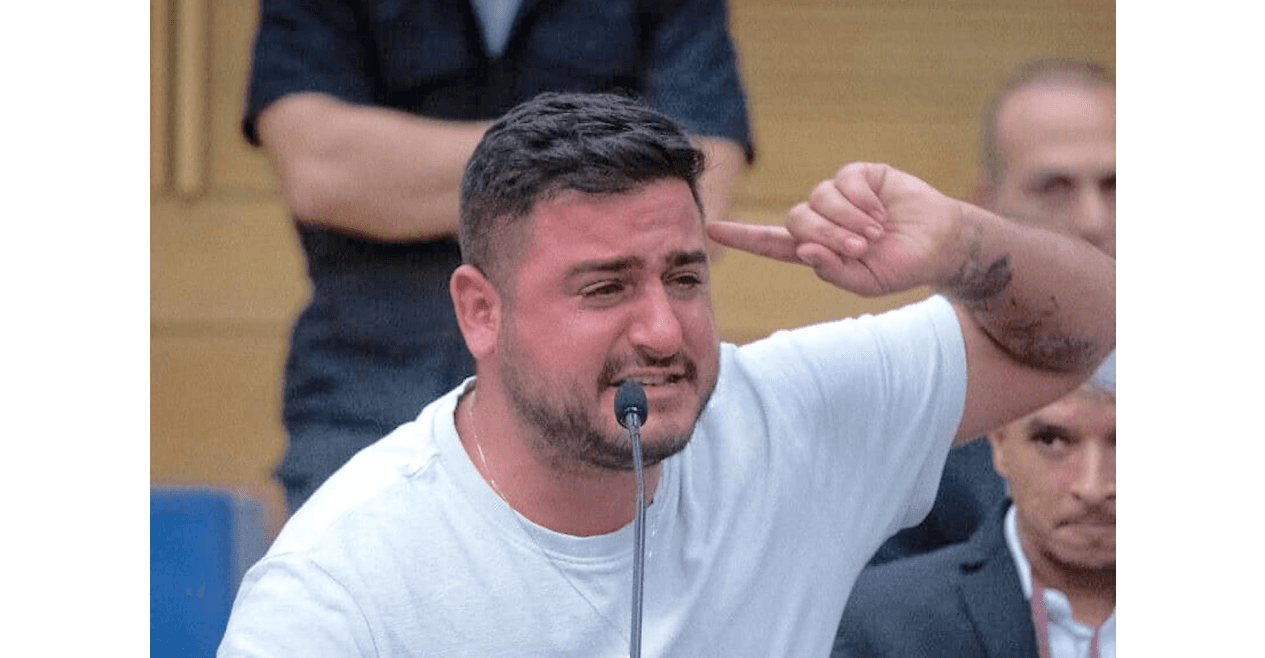
A man cries during an emergency meeting of the lobby for aid to IDF veterans with PTSD and their families at the Knesset in Jerusalem on Aug. 8, 2023. Photo courtesy of Oren Ben Hakoon/Flash90.
Bar-Ilan University plans to create an interdisciplinary research center to study the long-term psychological and biological effects of the Hamas-led Oct. 7, 2023, attacks and the ensuing war. The center, which is to be led by psychology professors Rivka Tuval-Mashiach and Danny Horesh and social work professor Yael Shoval-Zuckerman, will “conduct large-scale studies on the various populations affected by the war, including hostages and their families, soldiers, evacuees from the south and north of the country and professionals such as medical teams, emergency responders and journalists,” it said.
Urgent need
Horesh, professor of clinical psychology at Bar-Ilan and head of its Trauma and Stress Research Lab, said that the initiative emerged from the Ramat Gan university’s existing trauma research community and the urgent need to better understand the effects of the war and to make policy recommendations.
“For years, we know that in our university we are a big hub of trauma research across the campus, but since Oct. 7, it became apparent that we should probably join forces and do something much bigger together,” he told JNS.
The center plans to unite researchers from fields including psychology, neuroscience, biology, medicine, law and social sciences with the goal of examining trauma from multiple perspectives.
ADVERTISEMENT
Practical interventions
“If we’re trying to identify these populations, our aim is to do large-scale and preferably what we call ‘longitudinal studies,’” Horesh said. “We want to take a population and actually follow it over time, to assess not only the psychological state of these populations but also combine it with biological measures.”
He noted that there are physical health effects linked to post-traumatic stress. “PTSD and trauma in general has a lot to do with the body,” he said.
One goal of the initiative is to identify why some people develop severe trauma-related disorders while others remain resilient after experiencing the same events.
“If you take two individuals who were objectively exposed to the same trauma, one individual can go on to be extremely resilient and the other one can develop very severe PTSD,” Horesh told JNS.
Researchers hope the findings will help professionals “be able to identify more accurately, diagnose more accurately and at the end of the day prevent.”
Beyond Post-Traumatic Stress Disorder, researchers will examine broader health consequences.
“Following this kind of mass trauma people are coping with numerous conditions,” Horesh said. “Depression is very prevalent, anxiety is very prevalent, substance abuse is often an issue, as well as numerous physical and somatic conditions.”
The center aims to translate the findings into policy, according to Horesh, who cited the homecoming experiences of Israeli soldiers and prisoners-of-war throughout the history of the Jewish state compared to experiences in the current war.
“The aim is to use findings from these studies to show not only decision makers and policy makers but also society at large what these populations are actually dealing with and what they need from us as a society,” he told JNS.
University officials say that the center will also serve as a training hub for graduate students studying trauma and resilience and will work to translate academic findings into practical interventions to support Israel’s recovery from the war.
Originally published at
JNS
ADVERTISEMENT
Bar-Ilan U to create center to study PTSD
Bar-Ilan University opens a research center on the psychological and biological aftermath of Oct. 7, led by psychology and social work faculty.
Jessica Russak-Hoffman
3
mins read time
Originally published at
JNS
A man cries during an emergency meeting of the lobby for aid to IDF veterans with PTSD and their families at the Knesset in Jerusalem on Aug. 8, 2023. Photo courtesy of Oren Ben Hakoon/Flash90.
Bar-Ilan University plans to create an interdisciplinary research center to study the long-term psychological and biological effects of the Hamas-led Oct. 7, 2023, attacks and the ensuing war. The center, which is to be led by psychology professors Rivka Tuval-Mashiach and Danny Horesh and social work professor Yael Shoval-Zuckerman, will “conduct large-scale studies on the various populations affected by the war, including hostages and their families, soldiers, evacuees from the south and north of the country and professionals such as medical teams, emergency responders and journalists,” it said.
Urgent need
Horesh, professor of clinical psychology at Bar-Ilan and head of its Trauma and Stress Research Lab, said that the initiative emerged from the Ramat Gan university’s existing trauma research community and the urgent need to better understand the effects of the war and to make policy recommendations.
“For years, we know that in our university we are a big hub of trauma research across the campus, but since Oct. 7, it became apparent that we should probably join forces and do something much bigger together,” he told JNS.
The center plans to unite researchers from fields including psychology, neuroscience, biology, medicine, law and social sciences with the goal of examining trauma from multiple perspectives.
ADVERTISEMENT
Practical interventions
“If we’re trying to identify these populations, our aim is to do large-scale and preferably what we call ‘longitudinal studies,’” Horesh said. “We want to take a population and actually follow it over time, to assess not only the psychological state of these populations but also combine it with biological measures.”
He noted that there are physical health effects linked to post-traumatic stress. “PTSD and trauma in general has a lot to do with the body,” he said.
One goal of the initiative is to identify why some people develop severe trauma-related disorders while others remain resilient after experiencing the same events.
“If you take two individuals who were objectively exposed to the same trauma, one individual can go on to be extremely resilient and the other one can develop very severe PTSD,” Horesh told JNS.
Researchers hope the findings will help professionals “be able to identify more accurately, diagnose more accurately and at the end of the day prevent.”
Beyond Post-Traumatic Stress Disorder, researchers will examine broader health consequences.
“Following this kind of mass trauma people are coping with numerous conditions,” Horesh said. “Depression is very prevalent, anxiety is very prevalent, substance abuse is often an issue, as well as numerous physical and somatic conditions.”
The center aims to translate the findings into policy, according to Horesh, who cited the homecoming experiences of Israeli soldiers and prisoners-of-war throughout the history of the Jewish state compared to experiences in the current war.
“The aim is to use findings from these studies to show not only decision makers and policy makers but also society at large what these populations are actually dealing with and what they need from us as a society,” he told JNS.
University officials say that the center will also serve as a training hub for graduate students studying trauma and resilience and will work to translate academic findings into practical interventions to support Israel’s recovery from the war.
Originally published at
JNS
ADVERTISEMENT
Bar-Ilan U to create center to study PTSD
Bar-Ilan University opens a research center on the psychological and biological aftermath of Oct. 7, led by psychology and social work faculty.
Jessica Russak-Hoffman
3
mins read time
Originally published at
JNS
A man cries during an emergency meeting of the lobby for aid to IDF veterans with PTSD and their families at the Knesset in Jerusalem on Aug. 8, 2023. Photo courtesy of Oren Ben Hakoon/Flash90.
Bar-Ilan University plans to create an interdisciplinary research center to study the long-term psychological and biological effects of the Hamas-led Oct. 7, 2023, attacks and the ensuing war. The center, which is to be led by psychology professors Rivka Tuval-Mashiach and Danny Horesh and social work professor Yael Shoval-Zuckerman, will “conduct large-scale studies on the various populations affected by the war, including hostages and their families, soldiers, evacuees from the south and north of the country and professionals such as medical teams, emergency responders and journalists,” it said.
Urgent need
Horesh, professor of clinical psychology at Bar-Ilan and head of its Trauma and Stress Research Lab, said that the initiative emerged from the Ramat Gan university’s existing trauma research community and the urgent need to better understand the effects of the war and to make policy recommendations.
“For years, we know that in our university we are a big hub of trauma research across the campus, but since Oct. 7, it became apparent that we should probably join forces and do something much bigger together,” he told JNS.
The center plans to unite researchers from fields including psychology, neuroscience, biology, medicine, law and social sciences with the goal of examining trauma from multiple perspectives.
ADVERTISEMENT
Practical interventions
“If we’re trying to identify these populations, our aim is to do large-scale and preferably what we call ‘longitudinal studies,’” Horesh said. “We want to take a population and actually follow it over time, to assess not only the psychological state of these populations but also combine it with biological measures.”
He noted that there are physical health effects linked to post-traumatic stress. “PTSD and trauma in general has a lot to do with the body,” he said.
One goal of the initiative is to identify why some people develop severe trauma-related disorders while others remain resilient after experiencing the same events.
“If you take two individuals who were objectively exposed to the same trauma, one individual can go on to be extremely resilient and the other one can develop very severe PTSD,” Horesh told JNS.
Researchers hope the findings will help professionals “be able to identify more accurately, diagnose more accurately and at the end of the day prevent.”
Beyond Post-Traumatic Stress Disorder, researchers will examine broader health consequences.
“Following this kind of mass trauma people are coping with numerous conditions,” Horesh said. “Depression is very prevalent, anxiety is very prevalent, substance abuse is often an issue, as well as numerous physical and somatic conditions.”
The center aims to translate the findings into policy, according to Horesh, who cited the homecoming experiences of Israeli soldiers and prisoners-of-war throughout the history of the Jewish state compared to experiences in the current war.
“The aim is to use findings from these studies to show not only decision makers and policy makers but also society at large what these populations are actually dealing with and what they need from us as a society,” he told JNS.
University officials say that the center will also serve as a training hub for graduate students studying trauma and resilience and will work to translate academic findings into practical interventions to support Israel’s recovery from the war.
Originally published at
JNS
ADVERTISEMENT
Bar-Ilan U to create center to study PTSD
Bar-Ilan University opens a research center on the psychological and biological aftermath of Oct. 7, led by psychology and social work faculty.
Jessica Russak-Hoffman
3
mins read time
Originally published at
JNS
A man cries during an emergency meeting of the lobby for aid to IDF veterans with PTSD and their families at the Knesset in Jerusalem on Aug. 8, 2023. Photo courtesy of Oren Ben Hakoon/Flash90.
Bar-Ilan University plans to create an interdisciplinary research center to study the long-term psychological and biological effects of the Hamas-led Oct. 7, 2023, attacks and the ensuing war. The center, which is to be led by psychology professors Rivka Tuval-Mashiach and Danny Horesh and social work professor Yael Shoval-Zuckerman, will “conduct large-scale studies on the various populations affected by the war, including hostages and their families, soldiers, evacuees from the south and north of the country and professionals such as medical teams, emergency responders and journalists,” it said.
Urgent need
Horesh, professor of clinical psychology at Bar-Ilan and head of its Trauma and Stress Research Lab, said that the initiative emerged from the Ramat Gan university’s existing trauma research community and the urgent need to better understand the effects of the war and to make policy recommendations.
“For years, we know that in our university we are a big hub of trauma research across the campus, but since Oct. 7, it became apparent that we should probably join forces and do something much bigger together,” he told JNS.
The center plans to unite researchers from fields including psychology, neuroscience, biology, medicine, law and social sciences with the goal of examining trauma from multiple perspectives.
ADVERTISEMENT
Practical interventions
“If we’re trying to identify these populations, our aim is to do large-scale and preferably what we call ‘longitudinal studies,’” Horesh said. “We want to take a population and actually follow it over time, to assess not only the psychological state of these populations but also combine it with biological measures.”
He noted that there are physical health effects linked to post-traumatic stress. “PTSD and trauma in general has a lot to do with the body,” he said.
One goal of the initiative is to identify why some people develop severe trauma-related disorders while others remain resilient after experiencing the same events.
“If you take two individuals who were objectively exposed to the same trauma, one individual can go on to be extremely resilient and the other one can develop very severe PTSD,” Horesh told JNS.
Researchers hope the findings will help professionals “be able to identify more accurately, diagnose more accurately and at the end of the day prevent.”
Beyond Post-Traumatic Stress Disorder, researchers will examine broader health consequences.
“Following this kind of mass trauma people are coping with numerous conditions,” Horesh said. “Depression is very prevalent, anxiety is very prevalent, substance abuse is often an issue, as well as numerous physical and somatic conditions.”
The center aims to translate the findings into policy, according to Horesh, who cited the homecoming experiences of Israeli soldiers and prisoners-of-war throughout the history of the Jewish state compared to experiences in the current war.
“The aim is to use findings from these studies to show not only decision makers and policy makers but also society at large what these populations are actually dealing with and what they need from us as a society,” he told JNS.
University officials say that the center will also serve as a training hub for graduate students studying trauma and resilience and will work to translate academic findings into practical interventions to support Israel’s recovery from the war.
ADVERTISEMENT
Originally published at
JNS
ADVERTISEMENT
Related News
World
Israel & Middle East
Full text: Netanyahu’s address at the U.N. General Assembly 2026
Read Prime Minister Benjamin Netanyahu’s complete remarks to world leaders in New York, from Iran and Oct. 7 to the fight against antisemitism.
JNS
September 28, 2026
World
Israel & Middle East
U.S. denies Palestinian representatives again at UN as dispute over ICC, terror payments deepens
The U.S. again barred Palestinian Authority officials from the UN, citing ICC provocations against Israel and unended terror payments.
David Isaac
September 24, 2026

World
Israel & Middle East
Overcoming serious challenges, Israeli team conquers Kilimanjaro
Israelis facing disabilities, illness and loss joined dozens more to summit Mount Kilimanjaro in July, showing what resilience can accomplish.
Howard Blas
September 24, 2026
World
Israel & Middle East
Full text: Netanyahu’s address at the U.N. General Assembly 2026
Read Prime Minister Benjamin Netanyahu’s complete remarks to world leaders in New York, from Iran and Oct. 7 to the fight against antisemitism.
JNS
September 28, 2026
World
Israel & Middle East
U.S. denies Palestinian representatives again at UN as dispute over ICC, terror payments deepens
The U.S. again barred Palestinian Authority officials from the UN, citing ICC provocations against Israel and unended terror payments.
David Isaac
September 24, 2026
World
Israel & Middle East
Overcoming serious challenges, Israeli team conquers Kilimanjaro
Israelis facing disabilities, illness and loss joined dozens more to summit Mount Kilimanjaro in July, showing what resilience can accomplish.
Howard Blas
September 24, 2026

World
Israel & Middle East
Photos give glimpse of how Israelis celebrated Sukkot more than 60 years ago
Four rare KKL-JNF archive photos show how Israelis celebrated Sukkot decades ago, from a Jerusalem sukkah to a festive outdoor gathering.
The Jewish World
September 24, 2026

© 2026 The Jewish World · Since 1965 - The Capital Region's gateway to Jewish life
Designed and Developed by Ta-Da Studios
© 2026 The Jewish World · Since 1965 - The Capital Region's gateway to Jewish life
Designed and Developed by Ta-Da Studios
© 2026 The Jewish World · Since 1965 - The Capital Region's gateway to Jewish life
Designed and Developed by Ta-Da Studios
© 2026 The Jewish World · Since 1965 - The Capital Region's gateway to Jewish life
Designed and Developed by Ta-Da Studios