Defend colleges under siege — to protect democracy
Universities face unprecedented threats to academic freedom and independent research as the Trump administration targets journalists and…
Philip A. Glotzbach
5
mins read time
Originally published at
Philip Glotzbach
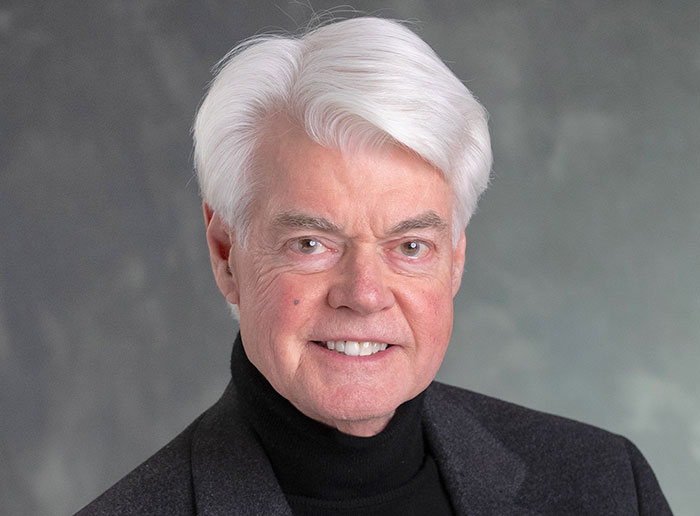
Philip A. Glotzbach
www.philipglotzbach.com
Critical perspectives and inconvenient facts are anathema to would-be autocrats. So, it’s no surprise that President Donald Trump has again placed fact-finders – journalists, inspectors general, nonpartisan governmental data-generating agencies, and the like – squarely in his crosshairs. Make no mistake, truth is out of favor at 1600 Pennsylvania Avenue.
If that were not enough, Trump has launched a vicious campaign to undermine another locus of independent research and critical thought: our colleges and universities. He has promised to “reclaim” them from their “Marxist maniac … and lunatic …” leaders. It’s a familiar pattern. Historically, educational institutions and their faculties appear among the first targets of authoritarian regimes. As do the “dangerous” books scholars write and study with their students.
Under assault
Trump’s current assault on higher ed comes from many directions.
Indiscriminate funding cuts to the NIH, other agencies and now to universities themselves already have jeopardized thousands of medical and scientific research programs, both threatening public health and impeding new discoveries. Trump wants to abolish the Department of Education altogether, without any demonstrated awareness of what it does for millions of students. His Secretary of Education laid off “nearly 50 percent” of DOE staff, eviscerating her department and crippling its data-collection capacity. Before it disappears, however, Trump’s DOE issued a “Dear Colleague” letter to all colleges and universities prohibiting even the discussion of a broad set of ideas relating to race and other “DEI” topics – an obvious assault on academic freedom. Now the DOE is investigating more than 50 universities for “DEI violations.”
In lockstep with radical-right allies such as Christopher Rufo et al., Trump has proposed changing accrediting agencies and standards to “promote conservative values and [allow] state governments to take on the role of accreditors.” In Florida and Hungary, we’ve seen where this leads. More recently, the arrest by I.C.E. of Columbia grad student Mahmoud Khalil, over his prominent role in last year’s protests, sends a clear warning message to international students: Free speech is still permitted – provided it aligns with Trumpian perspectives.
ADVERTISEMENT
Scapegoats for resentment
Colleges and universities make an inviting scapegoat for populist resentment. They already face an array of vexing issues: from public perceptions that they “push political agendas” to fostering an intellectually free and open campus in an age of social media, political hyper-polarization and grievance. Substantial investments in financial aid at almost every school across the country have not alleviated the perception – and in some cases the reality – that high tuition “sticker prices” still present barriers to many poor and working-class students. The intransigence of these and other daunting problems helps explain why the average tenure of a college or university president has slipped below six years.
But we must not allow these formidable challenges to mask the crucial role colleges and universities play within our body politic. Our nation’s founders understood the necessary function of education – from public schools to colleges – in “keeping” our republic. Today colleges and universities also safeguard “America’s national security and competitiveness.” More than ever, U.S. higher education represents a public good that we fail to preserve at our peril.
So, what is to be done?
First, higher education leaders, trustees, alumni, faculty members and students need to partner with commentators, journalists and sympathetic politicians to oppose attacks on the autonomy of higher education – as part of resisting the broader assault on information. Administrators and faculty members alike must model the type of rigorous exchange of ideas that has always been a hallmark of human progress.
Stand for truth
Second, college and university presidents must defy political pressures to abandon their institutions’ fundamental values of truth-seeking, knowledge-building, and critical-thinking. They must articulate and fearlessly defend those principles on every possible occasion. The instinct to remain silent will not serve.
Third, we must champion higher education’s often-underappreciated role in generating, preserving and publicizing research-based data that is essential to informed public debate – especially now that such information is vanishing from government sites.
Fourth, we must support the besieged humanities – history, political theory, philosophy, literature, etc. – which develop the knowledge, conceptual tool-kits and critical capacities that empower citizens to understand and, as is their right, alter political trends.
Lastly, we must understand that undermining higher education’s economic foundations makes it impossible to expand access for students with limited financial means. Indeed, it poses an existential threat to countless colleges and universities. They cannot support democracy if they cease to exist.
George Orwell’s iconic novel “1984” dramatized how impoverished language prevents citizens from opposing a totalitarian political regime. Accordingly, college and university scholars must fight censorship, continue to develop diagnostic concepts such as “state capture” and call out politicians who twist phrases like “weaponization of government” to partisan purposes. Words matter in a democracy.
Despite its challenges, our system of higher education is respected across the globe, and it elevates the lives of countless students every year. For their sake and that of our troubled republic, we need to preserve and protect this national resource against the clear and present danger it confronts.
Now … before it’s too late.
This article first appeared in The Fulcrum on March 29, 2025: https://thefulcrum.us/trump-higher-education
Originally published at
Philip Glotzbach
ADVERTISEMENT
Defend colleges under siege — to protect democracy
Universities face unprecedented threats to academic freedom and independent research as the Trump administration targets journalists and…
Philip A. Glotzbach
5
mins read time
Originally published at
Philip Glotzbach
Philip A. Glotzbach
www.philipglotzbach.com
Critical perspectives and inconvenient facts are anathema to would-be autocrats. So, it’s no surprise that President Donald Trump has again placed fact-finders – journalists, inspectors general, nonpartisan governmental data-generating agencies, and the like – squarely in his crosshairs. Make no mistake, truth is out of favor at 1600 Pennsylvania Avenue.
If that were not enough, Trump has launched a vicious campaign to undermine another locus of independent research and critical thought: our colleges and universities. He has promised to “reclaim” them from their “Marxist maniac … and lunatic …” leaders. It’s a familiar pattern. Historically, educational institutions and their faculties appear among the first targets of authoritarian regimes. As do the “dangerous” books scholars write and study with their students.
Under assault
Trump’s current assault on higher ed comes from many directions.
Indiscriminate funding cuts to the NIH, other agencies and now to universities themselves already have jeopardized thousands of medical and scientific research programs, both threatening public health and impeding new discoveries. Trump wants to abolish the Department of Education altogether, without any demonstrated awareness of what it does for millions of students. His Secretary of Education laid off “nearly 50 percent” of DOE staff, eviscerating her department and crippling its data-collection capacity. Before it disappears, however, Trump’s DOE issued a “Dear Colleague” letter to all colleges and universities prohibiting even the discussion of a broad set of ideas relating to race and other “DEI” topics – an obvious assault on academic freedom. Now the DOE is investigating more than 50 universities for “DEI violations.”
In lockstep with radical-right allies such as Christopher Rufo et al., Trump has proposed changing accrediting agencies and standards to “promote conservative values and [allow] state governments to take on the role of accreditors.” In Florida and Hungary, we’ve seen where this leads. More recently, the arrest by I.C.E. of Columbia grad student Mahmoud Khalil, over his prominent role in last year’s protests, sends a clear warning message to international students: Free speech is still permitted – provided it aligns with Trumpian perspectives.
ADVERTISEMENT
Scapegoats for resentment
Colleges and universities make an inviting scapegoat for populist resentment. They already face an array of vexing issues: from public perceptions that they “push political agendas” to fostering an intellectually free and open campus in an age of social media, political hyper-polarization and grievance. Substantial investments in financial aid at almost every school across the country have not alleviated the perception – and in some cases the reality – that high tuition “sticker prices” still present barriers to many poor and working-class students. The intransigence of these and other daunting problems helps explain why the average tenure of a college or university president has slipped below six years.
But we must not allow these formidable challenges to mask the crucial role colleges and universities play within our body politic. Our nation’s founders understood the necessary function of education – from public schools to colleges – in “keeping” our republic. Today colleges and universities also safeguard “America’s national security and competitiveness.” More than ever, U.S. higher education represents a public good that we fail to preserve at our peril.
So, what is to be done?
First, higher education leaders, trustees, alumni, faculty members and students need to partner with commentators, journalists and sympathetic politicians to oppose attacks on the autonomy of higher education – as part of resisting the broader assault on information. Administrators and faculty members alike must model the type of rigorous exchange of ideas that has always been a hallmark of human progress.
Stand for truth
Second, college and university presidents must defy political pressures to abandon their institutions’ fundamental values of truth-seeking, knowledge-building, and critical-thinking. They must articulate and fearlessly defend those principles on every possible occasion. The instinct to remain silent will not serve.
Third, we must champion higher education’s often-underappreciated role in generating, preserving and publicizing research-based data that is essential to informed public debate – especially now that such information is vanishing from government sites.
Fourth, we must support the besieged humanities – history, political theory, philosophy, literature, etc. – which develop the knowledge, conceptual tool-kits and critical capacities that empower citizens to understand and, as is their right, alter political trends.
Lastly, we must understand that undermining higher education’s economic foundations makes it impossible to expand access for students with limited financial means. Indeed, it poses an existential threat to countless colleges and universities. They cannot support democracy if they cease to exist.
George Orwell’s iconic novel “1984” dramatized how impoverished language prevents citizens from opposing a totalitarian political regime. Accordingly, college and university scholars must fight censorship, continue to develop diagnostic concepts such as “state capture” and call out politicians who twist phrases like “weaponization of government” to partisan purposes. Words matter in a democracy.
Despite its challenges, our system of higher education is respected across the globe, and it elevates the lives of countless students every year. For their sake and that of our troubled republic, we need to preserve and protect this national resource against the clear and present danger it confronts.
Now … before it’s too late.
This article first appeared in The Fulcrum on March 29, 2025: https://thefulcrum.us/trump-higher-education
Originally published at
Philip Glotzbach
ADVERTISEMENT
Defend colleges under siege — to protect democracy
Universities face unprecedented threats to academic freedom and independent research as the Trump administration targets journalists and…
Philip A. Glotzbach
5
mins read time
Originally published at
Philip Glotzbach
Philip A. Glotzbach
www.philipglotzbach.com
Critical perspectives and inconvenient facts are anathema to would-be autocrats. So, it’s no surprise that President Donald Trump has again placed fact-finders – journalists, inspectors general, nonpartisan governmental data-generating agencies, and the like – squarely in his crosshairs. Make no mistake, truth is out of favor at 1600 Pennsylvania Avenue.
If that were not enough, Trump has launched a vicious campaign to undermine another locus of independent research and critical thought: our colleges and universities. He has promised to “reclaim” them from their “Marxist maniac … and lunatic …” leaders. It’s a familiar pattern. Historically, educational institutions and their faculties appear among the first targets of authoritarian regimes. As do the “dangerous” books scholars write and study with their students.
Under assault
Trump’s current assault on higher ed comes from many directions.
Indiscriminate funding cuts to the NIH, other agencies and now to universities themselves already have jeopardized thousands of medical and scientific research programs, both threatening public health and impeding new discoveries. Trump wants to abolish the Department of Education altogether, without any demonstrated awareness of what it does for millions of students. His Secretary of Education laid off “nearly 50 percent” of DOE staff, eviscerating her department and crippling its data-collection capacity. Before it disappears, however, Trump’s DOE issued a “Dear Colleague” letter to all colleges and universities prohibiting even the discussion of a broad set of ideas relating to race and other “DEI” topics – an obvious assault on academic freedom. Now the DOE is investigating more than 50 universities for “DEI violations.”
In lockstep with radical-right allies such as Christopher Rufo et al., Trump has proposed changing accrediting agencies and standards to “promote conservative values and [allow] state governments to take on the role of accreditors.” In Florida and Hungary, we’ve seen where this leads. More recently, the arrest by I.C.E. of Columbia grad student Mahmoud Khalil, over his prominent role in last year’s protests, sends a clear warning message to international students: Free speech is still permitted – provided it aligns with Trumpian perspectives.
ADVERTISEMENT
Scapegoats for resentment
Colleges and universities make an inviting scapegoat for populist resentment. They already face an array of vexing issues: from public perceptions that they “push political agendas” to fostering an intellectually free and open campus in an age of social media, political hyper-polarization and grievance. Substantial investments in financial aid at almost every school across the country have not alleviated the perception – and in some cases the reality – that high tuition “sticker prices” still present barriers to many poor and working-class students. The intransigence of these and other daunting problems helps explain why the average tenure of a college or university president has slipped below six years.
But we must not allow these formidable challenges to mask the crucial role colleges and universities play within our body politic. Our nation’s founders understood the necessary function of education – from public schools to colleges – in “keeping” our republic. Today colleges and universities also safeguard “America’s national security and competitiveness.” More than ever, U.S. higher education represents a public good that we fail to preserve at our peril.
So, what is to be done?
First, higher education leaders, trustees, alumni, faculty members and students need to partner with commentators, journalists and sympathetic politicians to oppose attacks on the autonomy of higher education – as part of resisting the broader assault on information. Administrators and faculty members alike must model the type of rigorous exchange of ideas that has always been a hallmark of human progress.
Stand for truth
Second, college and university presidents must defy political pressures to abandon their institutions’ fundamental values of truth-seeking, knowledge-building, and critical-thinking. They must articulate and fearlessly defend those principles on every possible occasion. The instinct to remain silent will not serve.
Third, we must champion higher education’s often-underappreciated role in generating, preserving and publicizing research-based data that is essential to informed public debate – especially now that such information is vanishing from government sites.
Fourth, we must support the besieged humanities – history, political theory, philosophy, literature, etc. – which develop the knowledge, conceptual tool-kits and critical capacities that empower citizens to understand and, as is their right, alter political trends.
Lastly, we must understand that undermining higher education’s economic foundations makes it impossible to expand access for students with limited financial means. Indeed, it poses an existential threat to countless colleges and universities. They cannot support democracy if they cease to exist.
George Orwell’s iconic novel “1984” dramatized how impoverished language prevents citizens from opposing a totalitarian political regime. Accordingly, college and university scholars must fight censorship, continue to develop diagnostic concepts such as “state capture” and call out politicians who twist phrases like “weaponization of government” to partisan purposes. Words matter in a democracy.
Despite its challenges, our system of higher education is respected across the globe, and it elevates the lives of countless students every year. For their sake and that of our troubled republic, we need to preserve and protect this national resource against the clear and present danger it confronts.
Now … before it’s too late.
This article first appeared in The Fulcrum on March 29, 2025: https://thefulcrum.us/trump-higher-education
Originally published at
Philip Glotzbach
ADVERTISEMENT
Defend colleges under siege — to protect democracy
Universities face unprecedented threats to academic freedom and independent research as the Trump administration targets journalists and…
Philip A. Glotzbach
5
mins read time
Originally published at
Philip Glotzbach
Philip A. Glotzbach
www.philipglotzbach.com
Critical perspectives and inconvenient facts are anathema to would-be autocrats. So, it’s no surprise that President Donald Trump has again placed fact-finders – journalists, inspectors general, nonpartisan governmental data-generating agencies, and the like – squarely in his crosshairs. Make no mistake, truth is out of favor at 1600 Pennsylvania Avenue.
If that were not enough, Trump has launched a vicious campaign to undermine another locus of independent research and critical thought: our colleges and universities. He has promised to “reclaim” them from their “Marxist maniac … and lunatic …” leaders. It’s a familiar pattern. Historically, educational institutions and their faculties appear among the first targets of authoritarian regimes. As do the “dangerous” books scholars write and study with their students.
Under assault
Trump’s current assault on higher ed comes from many directions.
Indiscriminate funding cuts to the NIH, other agencies and now to universities themselves already have jeopardized thousands of medical and scientific research programs, both threatening public health and impeding new discoveries. Trump wants to abolish the Department of Education altogether, without any demonstrated awareness of what it does for millions of students. His Secretary of Education laid off “nearly 50 percent” of DOE staff, eviscerating her department and crippling its data-collection capacity. Before it disappears, however, Trump’s DOE issued a “Dear Colleague” letter to all colleges and universities prohibiting even the discussion of a broad set of ideas relating to race and other “DEI” topics – an obvious assault on academic freedom. Now the DOE is investigating more than 50 universities for “DEI violations.”
In lockstep with radical-right allies such as Christopher Rufo et al., Trump has proposed changing accrediting agencies and standards to “promote conservative values and [allow] state governments to take on the role of accreditors.” In Florida and Hungary, we’ve seen where this leads. More recently, the arrest by I.C.E. of Columbia grad student Mahmoud Khalil, over his prominent role in last year’s protests, sends a clear warning message to international students: Free speech is still permitted – provided it aligns with Trumpian perspectives.
ADVERTISEMENT
Scapegoats for resentment
Colleges and universities make an inviting scapegoat for populist resentment. They already face an array of vexing issues: from public perceptions that they “push political agendas” to fostering an intellectually free and open campus in an age of social media, political hyper-polarization and grievance. Substantial investments in financial aid at almost every school across the country have not alleviated the perception – and in some cases the reality – that high tuition “sticker prices” still present barriers to many poor and working-class students. The intransigence of these and other daunting problems helps explain why the average tenure of a college or university president has slipped below six years.
But we must not allow these formidable challenges to mask the crucial role colleges and universities play within our body politic. Our nation’s founders understood the necessary function of education – from public schools to colleges – in “keeping” our republic. Today colleges and universities also safeguard “America’s national security and competitiveness.” More than ever, U.S. higher education represents a public good that we fail to preserve at our peril.
So, what is to be done?
First, higher education leaders, trustees, alumni, faculty members and students need to partner with commentators, journalists and sympathetic politicians to oppose attacks on the autonomy of higher education – as part of resisting the broader assault on information. Administrators and faculty members alike must model the type of rigorous exchange of ideas that has always been a hallmark of human progress.
Stand for truth
Second, college and university presidents must defy political pressures to abandon their institutions’ fundamental values of truth-seeking, knowledge-building, and critical-thinking. They must articulate and fearlessly defend those principles on every possible occasion. The instinct to remain silent will not serve.
Third, we must champion higher education’s often-underappreciated role in generating, preserving and publicizing research-based data that is essential to informed public debate – especially now that such information is vanishing from government sites.
Fourth, we must support the besieged humanities – history, political theory, philosophy, literature, etc. – which develop the knowledge, conceptual tool-kits and critical capacities that empower citizens to understand and, as is their right, alter political trends.
Lastly, we must understand that undermining higher education’s economic foundations makes it impossible to expand access for students with limited financial means. Indeed, it poses an existential threat to countless colleges and universities. They cannot support democracy if they cease to exist.
George Orwell’s iconic novel “1984” dramatized how impoverished language prevents citizens from opposing a totalitarian political regime. Accordingly, college and university scholars must fight censorship, continue to develop diagnostic concepts such as “state capture” and call out politicians who twist phrases like “weaponization of government” to partisan purposes. Words matter in a democracy.
Despite its challenges, our system of higher education is respected across the globe, and it elevates the lives of countless students every year. For their sake and that of our troubled republic, we need to preserve and protect this national resource against the clear and present danger it confronts.
Now … before it’s too late.
This article first appeared in The Fulcrum on March 29, 2025: https://thefulcrum.us/trump-higher-education
ADVERTISEMENT
Originally published at
Philip Glotzbach
ADVERTISEMENT
Related News
World
Israel & Middle East
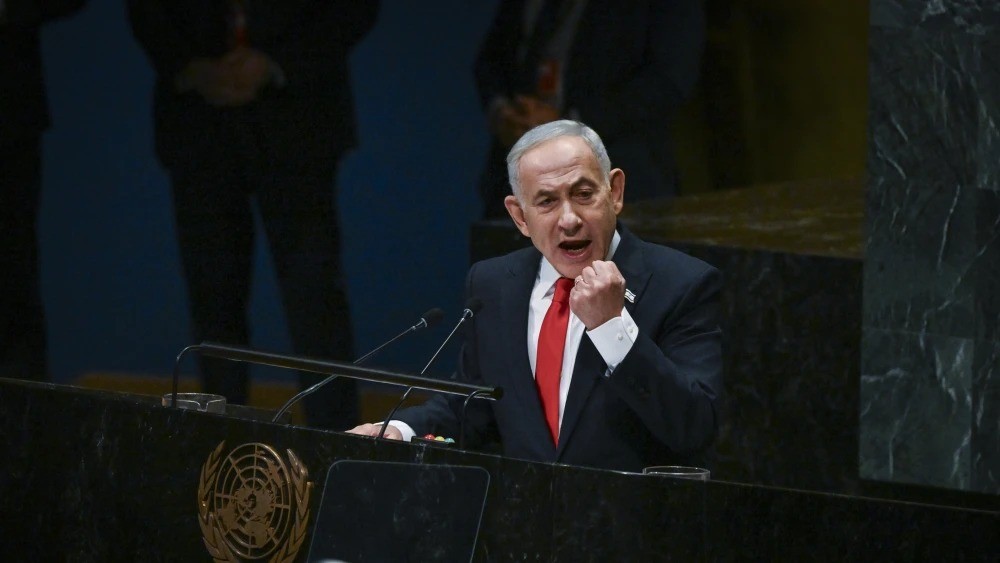
Full text: Netanyahu’s address at the U.N. General Assembly 2026
Read Prime Minister Benjamin Netanyahu’s complete remarks to world leaders in New York, from Iran and Oct. 7 to the fight against antisemitism.
JNS
September 28, 2026
World
Israel & Middle East
U.S. denies Palestinian representatives again at UN as dispute over ICC, terror payments deepens
The U.S. again barred Palestinian Authority officials from the UN, citing ICC provocations against Israel and unended terror payments.
David Isaac
September 24, 2026

World
Israel & Middle East
Overcoming serious challenges, Israeli team conquers Kilimanjaro
Israelis facing disabilities, illness and loss joined dozens more to summit Mount Kilimanjaro in July, showing what resilience can accomplish.
Howard Blas
September 24, 2026
World
Israel & Middle East
Full text: Netanyahu’s address at the U.N. General Assembly 2026
Read Prime Minister Benjamin Netanyahu’s complete remarks to world leaders in New York, from Iran and Oct. 7 to the fight against antisemitism.
JNS
September 28, 2026
World
Israel & Middle East
U.S. denies Palestinian representatives again at UN as dispute over ICC, terror payments deepens
The U.S. again barred Palestinian Authority officials from the UN, citing ICC provocations against Israel and unended terror payments.
David Isaac
September 24, 2026
World
Israel & Middle East
Overcoming serious challenges, Israeli team conquers Kilimanjaro
Israelis facing disabilities, illness and loss joined dozens more to summit Mount Kilimanjaro in July, showing what resilience can accomplish.
Howard Blas
September 24, 2026

World
Israel & Middle East
Photos give glimpse of how Israelis celebrated Sukkot more than 60 years ago
Four rare KKL-JNF archive photos show how Israelis celebrated Sukkot decades ago, from a Jerusalem sukkah to a festive outdoor gathering.
The Jewish World
September 24, 2026

© 2026 The Jewish World · Since 1965 - The Capital Region's gateway to Jewish life
Designed and Developed by Ta-Da Studios
© 2026 The Jewish World · Since 1965 - The Capital Region's gateway to Jewish life
Designed and Developed by Ta-Da Studios
© 2026 The Jewish World · Since 1965 - The Capital Region's gateway to Jewish life
Designed and Developed by Ta-Da Studios
© 2026 The Jewish World · Since 1965 - The Capital Region's gateway to Jewish life
Designed and Developed by Ta-Da Studios