Lustgarten Foundation walk for pancreatic cancer research slated for Sept. 27
Walkers gather in Delmar Sept. 27 for the Albany Walk for Pancreatic Cancer Research, which funds research into a disease more common among Jews.
The Jewish World
2
mins read time
Originally published at
The Jewish World
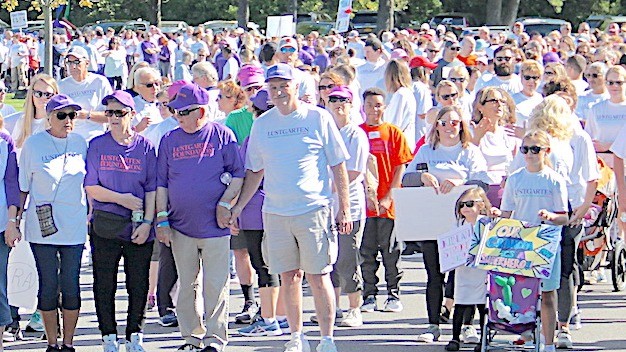
Hundreds marching at a previous Albany Walk for Pancreatic Cancer Research.
ALBANY–Walkers will unite at the Elm Avenue Town Park in Delmar, 261, Elm Ave., on Sunday, Sept. 27, for the Albany Walk for Pancreatic Cancer Research. Those interested may sign up as an individual, join a team, or start a team. Then, they may donate, fund-raise and join the event. Registration begins at 8 a.m., with the walk starting at 10 a.m.
After losing four family members to pancreatic cancer, Shari and Neil Piper organized the first Albany Walk for Pancreatic Cancer Research in 2004. Over a 20-year-period, Neil lost his mother, sister, uncle and brother. “We knew Neil, and most likely our children, were genetically ‘wired’ for pancreatic cancer,” Shari explained. “We could either bury our heads in the sand or become proactive in the fight against pancreatic cancer. We chose to become involved with the Lustgarten Foundation, especially when we learned 100% of every dollar raised, funds pancreatic cancer research with a focus on early detection and a cure for this disease.”
Shari Piper told The Jewish World that pancreatic cancer is the third-leading cause of cancer deaths and has a five-year survival rate of only 12%. “By funding cutting-edge research focused on earlier detection, new treatments and personalized medicine, the Lustgarten Foundation is a force for progress, improving pancreatic cancer outcomes so patients live longer, healthier lives.” Since 2004, the Lustgarten Foundation’s Albany Walk for Pancreatic Cancer Research has raised more than $2 million to support pancreatic cancer research.
This year, an estimated 67,530 Americans will receive a pancreatic cancer diagnosis and approximately 2,930 New Yorkers will die from this disease. While pancreatic cancer accounts for just 3% of all cancers annually diagnosed in the United States, it is the third-leading cause of cancer deaths and has a 5-year survival rate of only 13% — up from the 3% when the Foundation began its work.
Piper added that of special interest to The Jewish World readers, pancreatic cancer is more common in Jews than in the general population, and Ashkenazic Jews have a greater risk than Sephardic Jews. About 1 in 40 Jews in the United States will get pancreatic cancer, compared to 1 in 67 in the overall U.S. population, according to a 2011 study published in the journal Cancer Epidemiology, Biomarkers & Prevention. A growing body of evidence suggests that increased pancreatic cancer risk for Ashkenazic Jews has a genetic basis; these cancers are caused by inherited mutations in specific cancer-associated genes, including the familial breast cancer genes BRCA2 and BRCA1. The risk of cancer to Jews who inherit a defective copy of BRCA2 or BRCA1 varies in different families. The reason for this variation in risk is thought to be dependent on “lifestyle factors” such as smoking, obesity, dietary influences, the inheritance of other cancer susceptibility genes and a certain element of chance.
Shari and Neil Piper, Walk founders and leaders, can provide information at 518-475-1200, or
Also Susan Jacobson, Director, Lustgarten Foundation external and community relations at 914-589-7553
sjacobson@lustgarten.org can provide details.

Originally published at
The Jewish World
ADVERTISEMENT
Lustgarten Foundation walk for pancreatic cancer research slated for Sept. 27
Walkers gather in Delmar Sept. 27 for the Albany Walk for Pancreatic Cancer Research, which funds research into a disease more common among Jews.
The Jewish World
2
mins read time
Originally published at
The Jewish World
Hundreds marching at a previous Albany Walk for Pancreatic Cancer Research.
ALBANY–Walkers will unite at the Elm Avenue Town Park in Delmar, 261, Elm Ave., on Sunday, Sept. 27, for the Albany Walk for Pancreatic Cancer Research. Those interested may sign up as an individual, join a team, or start a team. Then, they may donate, fund-raise and join the event. Registration begins at 8 a.m., with the walk starting at 10 a.m.
After losing four family members to pancreatic cancer, Shari and Neil Piper organized the first Albany Walk for Pancreatic Cancer Research in 2004. Over a 20-year-period, Neil lost his mother, sister, uncle and brother. “We knew Neil, and most likely our children, were genetically ‘wired’ for pancreatic cancer,” Shari explained. “We could either bury our heads in the sand or become proactive in the fight against pancreatic cancer. We chose to become involved with the Lustgarten Foundation, especially when we learned 100% of every dollar raised, funds pancreatic cancer research with a focus on early detection and a cure for this disease.”
Shari Piper told The Jewish World that pancreatic cancer is the third-leading cause of cancer deaths and has a five-year survival rate of only 12%. “By funding cutting-edge research focused on earlier detection, new treatments and personalized medicine, the Lustgarten Foundation is a force for progress, improving pancreatic cancer outcomes so patients live longer, healthier lives.” Since 2004, the Lustgarten Foundation’s Albany Walk for Pancreatic Cancer Research has raised more than $2 million to support pancreatic cancer research.
This year, an estimated 67,530 Americans will receive a pancreatic cancer diagnosis and approximately 2,930 New Yorkers will die from this disease. While pancreatic cancer accounts for just 3% of all cancers annually diagnosed in the United States, it is the third-leading cause of cancer deaths and has a 5-year survival rate of only 13% — up from the 3% when the Foundation began its work.
Piper added that of special interest to The Jewish World readers, pancreatic cancer is more common in Jews than in the general population, and Ashkenazic Jews have a greater risk than Sephardic Jews. About 1 in 40 Jews in the United States will get pancreatic cancer, compared to 1 in 67 in the overall U.S. population, according to a 2011 study published in the journal Cancer Epidemiology, Biomarkers & Prevention. A growing body of evidence suggests that increased pancreatic cancer risk for Ashkenazic Jews has a genetic basis; these cancers are caused by inherited mutations in specific cancer-associated genes, including the familial breast cancer genes BRCA2 and BRCA1. The risk of cancer to Jews who inherit a defective copy of BRCA2 or BRCA1 varies in different families. The reason for this variation in risk is thought to be dependent on “lifestyle factors” such as smoking, obesity, dietary influences, the inheritance of other cancer susceptibility genes and a certain element of chance.
Shari and Neil Piper, Walk founders and leaders, can provide information at 518-475-1200, or
Also Susan Jacobson, Director, Lustgarten Foundation external and community relations at 914-589-7553
sjacobson@lustgarten.org can provide details.
Originally published at
The Jewish World
ADVERTISEMENT
Lustgarten Foundation walk for pancreatic cancer research slated for Sept. 27
Walkers gather in Delmar Sept. 27 for the Albany Walk for Pancreatic Cancer Research, which funds research into a disease more common among Jews.
The Jewish World
2
mins read time
Originally published at
The Jewish World
Hundreds marching at a previous Albany Walk for Pancreatic Cancer Research.
ALBANY–Walkers will unite at the Elm Avenue Town Park in Delmar, 261, Elm Ave., on Sunday, Sept. 27, for the Albany Walk for Pancreatic Cancer Research. Those interested may sign up as an individual, join a team, or start a team. Then, they may donate, fund-raise and join the event. Registration begins at 8 a.m., with the walk starting at 10 a.m.
After losing four family members to pancreatic cancer, Shari and Neil Piper organized the first Albany Walk for Pancreatic Cancer Research in 2004. Over a 20-year-period, Neil lost his mother, sister, uncle and brother. “We knew Neil, and most likely our children, were genetically ‘wired’ for pancreatic cancer,” Shari explained. “We could either bury our heads in the sand or become proactive in the fight against pancreatic cancer. We chose to become involved with the Lustgarten Foundation, especially when we learned 100% of every dollar raised, funds pancreatic cancer research with a focus on early detection and a cure for this disease.”
Shari Piper told The Jewish World that pancreatic cancer is the third-leading cause of cancer deaths and has a five-year survival rate of only 12%. “By funding cutting-edge research focused on earlier detection, new treatments and personalized medicine, the Lustgarten Foundation is a force for progress, improving pancreatic cancer outcomes so patients live longer, healthier lives.” Since 2004, the Lustgarten Foundation’s Albany Walk for Pancreatic Cancer Research has raised more than $2 million to support pancreatic cancer research.
This year, an estimated 67,530 Americans will receive a pancreatic cancer diagnosis and approximately 2,930 New Yorkers will die from this disease. While pancreatic cancer accounts for just 3% of all cancers annually diagnosed in the United States, it is the third-leading cause of cancer deaths and has a 5-year survival rate of only 13% — up from the 3% when the Foundation began its work.
Piper added that of special interest to The Jewish World readers, pancreatic cancer is more common in Jews than in the general population, and Ashkenazic Jews have a greater risk than Sephardic Jews. About 1 in 40 Jews in the United States will get pancreatic cancer, compared to 1 in 67 in the overall U.S. population, according to a 2011 study published in the journal Cancer Epidemiology, Biomarkers & Prevention. A growing body of evidence suggests that increased pancreatic cancer risk for Ashkenazic Jews has a genetic basis; these cancers are caused by inherited mutations in specific cancer-associated genes, including the familial breast cancer genes BRCA2 and BRCA1. The risk of cancer to Jews who inherit a defective copy of BRCA2 or BRCA1 varies in different families. The reason for this variation in risk is thought to be dependent on “lifestyle factors” such as smoking, obesity, dietary influences, the inheritance of other cancer susceptibility genes and a certain element of chance.
Shari and Neil Piper, Walk founders and leaders, can provide information at 518-475-1200, or
Also Susan Jacobson, Director, Lustgarten Foundation external and community relations at 914-589-7553
sjacobson@lustgarten.org can provide details.
Originally published at
The Jewish World
ADVERTISEMENT
Lustgarten Foundation walk for pancreatic cancer research slated for Sept. 27
Walkers gather in Delmar Sept. 27 for the Albany Walk for Pancreatic Cancer Research, which funds research into a disease more common among Jews.
The Jewish World
2
mins read time
Originally published at
The Jewish World
Hundreds marching at a previous Albany Walk for Pancreatic Cancer Research.
ALBANY–Walkers will unite at the Elm Avenue Town Park in Delmar, 261, Elm Ave., on Sunday, Sept. 27, for the Albany Walk for Pancreatic Cancer Research. Those interested may sign up as an individual, join a team, or start a team. Then, they may donate, fund-raise and join the event. Registration begins at 8 a.m., with the walk starting at 10 a.m.
After losing four family members to pancreatic cancer, Shari and Neil Piper organized the first Albany Walk for Pancreatic Cancer Research in 2004. Over a 20-year-period, Neil lost his mother, sister, uncle and brother. “We knew Neil, and most likely our children, were genetically ‘wired’ for pancreatic cancer,” Shari explained. “We could either bury our heads in the sand or become proactive in the fight against pancreatic cancer. We chose to become involved with the Lustgarten Foundation, especially when we learned 100% of every dollar raised, funds pancreatic cancer research with a focus on early detection and a cure for this disease.”
Shari Piper told The Jewish World that pancreatic cancer is the third-leading cause of cancer deaths and has a five-year survival rate of only 12%. “By funding cutting-edge research focused on earlier detection, new treatments and personalized medicine, the Lustgarten Foundation is a force for progress, improving pancreatic cancer outcomes so patients live longer, healthier lives.” Since 2004, the Lustgarten Foundation’s Albany Walk for Pancreatic Cancer Research has raised more than $2 million to support pancreatic cancer research.
This year, an estimated 67,530 Americans will receive a pancreatic cancer diagnosis and approximately 2,930 New Yorkers will die from this disease. While pancreatic cancer accounts for just 3% of all cancers annually diagnosed in the United States, it is the third-leading cause of cancer deaths and has a 5-year survival rate of only 13% — up from the 3% when the Foundation began its work.
Piper added that of special interest to The Jewish World readers, pancreatic cancer is more common in Jews than in the general population, and Ashkenazic Jews have a greater risk than Sephardic Jews. About 1 in 40 Jews in the United States will get pancreatic cancer, compared to 1 in 67 in the overall U.S. population, according to a 2011 study published in the journal Cancer Epidemiology, Biomarkers & Prevention. A growing body of evidence suggests that increased pancreatic cancer risk for Ashkenazic Jews has a genetic basis; these cancers are caused by inherited mutations in specific cancer-associated genes, including the familial breast cancer genes BRCA2 and BRCA1. The risk of cancer to Jews who inherit a defective copy of BRCA2 or BRCA1 varies in different families. The reason for this variation in risk is thought to be dependent on “lifestyle factors” such as smoking, obesity, dietary influences, the inheritance of other cancer susceptibility genes and a certain element of chance.
Shari and Neil Piper, Walk founders and leaders, can provide information at 518-475-1200, or
Also Susan Jacobson, Director, Lustgarten Foundation external and community relations at 914-589-7553
sjacobson@lustgarten.org can provide details.
ADVERTISEMENT
Originally published at
The Jewish World
ADVERTISEMENT
Related News

Local
Events
Mimica Tzezana Hyman to speak of Jewish survival on a Greek island during World War II
Mimica Tzezana Hyman speaks Sept. 29 at B’nai Sholom in Albany on the survival of Zakynthos’s Jewish community during World War II.
The Jewish World
September 23, 2026

Local
Community News
Documentary about Hadassah founder Szold to be screened at Beth Shalom on Sept. 23
Saratoga Jewish Community Arts opens its season Sept. 23 with a documentary on Hadassah founder Henrietta Szold, screening at Beth Shalom.
The Jewish World
September 17, 2026

Local
Community News
Congregation Berith Sholom lists religious school fall session
Congregation Berith Sholom in Troy opens its religious school year Sept. 27, with class times and a program contact for interested families.
The Jewish World
September 17, 2026
Local
Events
Mimica Tzezana Hyman to speak of Jewish survival on a Greek island during World War II
Mimica Tzezana Hyman speaks Sept. 29 at B’nai Sholom in Albany on the survival of Zakynthos’s Jewish community during World War II.
The Jewish World
September 23, 2026
Local
Community News
Documentary about Hadassah founder Szold to be screened at Beth Shalom on Sept. 23
Saratoga Jewish Community Arts opens its season Sept. 23 with a documentary on Hadassah founder Henrietta Szold, screening at Beth Shalom.
The Jewish World
September 17, 2026
Local
Community News
Congregation Berith Sholom lists religious school fall session
Congregation Berith Sholom in Troy opens its religious school year Sept. 27, with class times and a program contact for interested families.
The Jewish World
September 17, 2026

Local
Community News
Local Jewish poets to explore poetry, identity and the contemporary Jewish experience
Congregation Gates of Heaven hosts three Jewish poets for an evening of poetry, conversation and reflection on Sept. 24.
The Jewish World
September 16, 2026

© 2026 The Jewish World · Since 1965 - The Capital Region's gateway to Jewish life
Designed and Developed by Ta-Da Studios
© 2026 The Jewish World · Since 1965 - The Capital Region's gateway to Jewish life
Designed and Developed by Ta-Da Studios
© 2026 The Jewish World · Since 1965 - The Capital Region's gateway to Jewish life
Designed and Developed by Ta-Da Studios
© 2026 The Jewish World · Since 1965 - The Capital Region's gateway to Jewish life
Designed and Developed by Ta-Da Studios