A golem and a jinni find love on the Lower East Side
Mindy Holland revisits Helene Wecker’s Golem and the Jinni trilogy as its final book, The Gates of Midnight, arrives.
Mindy Holland
5
mins read time
Originally published at
The Jewish World

Illustration of the golem and the jinni
Mindy the Book Yenta

Mindy Holland
The Golem and the Jinni
Trilogy by Helene Wecker
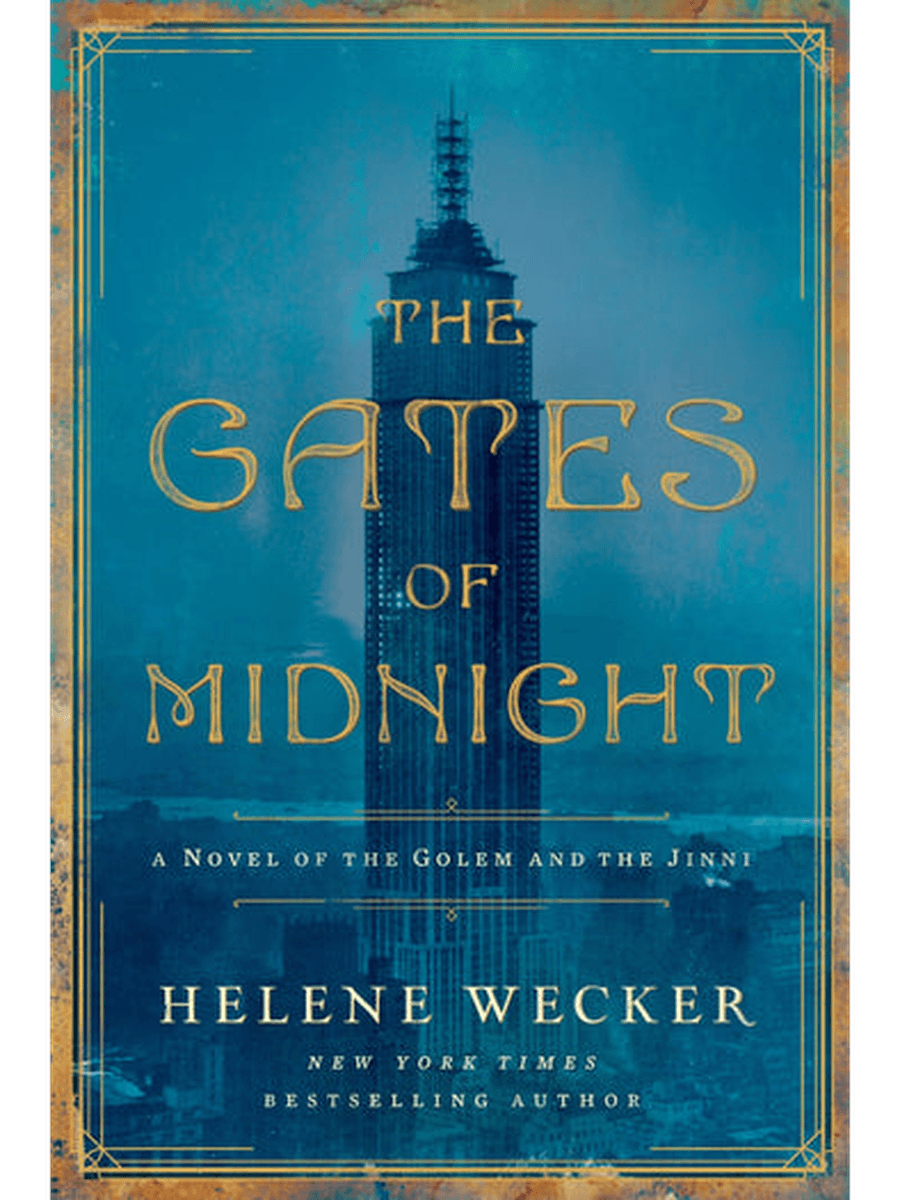
The Gates of Midnight by Helene Wecker
It has been 13 years since Helene Wecker’s The Golem and the Jinni was first published. Back then, I devoured the story and immediately logged onto Goodreads to add it to my list of favorite books. When I learned that the third book in the series, The Gates of Midnight, would be published this month, I was thrilled.
I started listening to the newest installment, but I was having trouble following the story. There were too many characters, too much history and too many details that I had forgotten. A re-read was in order.
Returning to The Golem and the Jinni was no hardship. I enjoyed it just as much the second time. And rereading it reminded me why Wecker’s story has stayed with me for so many years.
I am not a huge lover of fantasy, but Wecker writes fantasy the way I like it: Her fantastical characters are firmly rooted in the real world. The magic is there, but so are the neighborhoods, immigrants, religious traditions, historical events and very human struggles.

Helene Wecker
Tradition vs. Reform
The Golem and the Jinni is, at its heart, an immigration story.
In Poland, a man who desires a wife hires a Kabbalist to create a golem—a creature fashioned from clay and brought to life through mystical means. Chava, the golem, is modest, curious and intelligent. Her creator warns her human master not to awaken her until their steamship reaches New York. But curiosity gets the better of him. Shortly after bringing Chava to life, her master dies, leaving her alone, a brilliant, capable adult with the experience of a newborn babe.
New York of the early 20th century comes vividly to life. Wecker showcases the lower east side and its Jewish immigrants. She highlights conflicts within families over traditional Judaism and Reform Judaism, and tensions between newly arrived Eastern European Jews and the more established German Jewish community.
But this is also a quiet romance.
In a tinsmith shop in New York’s Little Syria, a craftsman repairing an old copper flask accidentally releases Ahmad, a jinni. Once a free spirit who could fly and enter people’s dreams, Ahmad is trapped in human form by a piece of iron fused to his arm. Because iron is anathema to his kind, his new human existence is particularly ironic. Nevertheless, he becomes a skilled metalworker while remaining emotionally separate from the humans around him.
When the two magical creatures meet, sparks fly.
ADVERTISEMENT
Different kinds of outsiders
Both Chava and Ahmad are outsiders, but they wear their outsider status very differently. Chava makes friends, tries to help others and quietly attempts to make the world a better place without drawing attention to herself. Ahmad is focused on his own pleasures, freedom and artistic pursuits.
As their stories unfold, Wecker introduces readers to the Jewish and Syrian communities of New York while exploring what it means to be human, to belong and to build a life in a new world. The novel is filled with memorable supporting characters and the simple pleasures of exceptional storytelling.
Near the end of the first book, we discover that the golem and the jinni both have a creator who wants to control them. That revelation sets the stage for the second book, The Hidden Palace.
The sequel takes readers to Syria in the years leading up to World War II. We follow the wealthy Sophia Winston as she travels in search of a cure for the supernatural condition she acquired after her encounter with the jinni. Meanwhile, Ahmad and Chava remain in New York as the city changes around them. Chava attends college and eventually finds an opportunity to teach at a Jewish orphanage, where she discovers that another golem has been living.
And now comes the final part, The Gates of Midnight. Set 30 years after the events of the first novel, it brings readers back into the remarkably expansive world Wecker has created. My attempt to jump directly into the audiobook reminded me just how much history and mythology has accumulated across the trilogy. These are not books that can easily be picked up and read in isolation.
That is not a criticism. It is an invitation.
Community vs. identity
Wecker has created a world so rich and nuanced that returning to it is a pleasure. Jewish culture, history and psychology are woven throughout the trilogy, but the books are never simply about being Jewish. They are about outsiders, immigrants and the complicated process of becoming part of a community without losing the identity that brought you there.
That theme feels particularly meaningful in a series populated by magical creatures who are, in many ways, searching for the same thing as the human immigrants surrounding them: a place to belong.
I came to this series because I have always been fascinated by golems. I stayed because of Wecker’s exquisite storytelling, her richly drawn characters and her ability to make a fantastical story feel deeply grounded in history.
If you enjoy history, adventure, a little romance and a touch of magic, The Golem and the Jinni trilogy is worth discovering—or rediscovering.
You don’t have to be a New Yorker or Jewish to love these books. But it doesn’t hurt.
I also highly recommend the audio versions.
Yenta’s Rating: 5 stars
Jewish Rating: 4 magen Davids
Mindy Miner Holland is a school librarian at Shenendehowa Schools. She is the board chair of the Jewish Federation of Northeastern NY. Past president of Congregation Gates of Heaven, she earned her Master’s in Library Science from the University at Albany.
Originally published at
The Jewish World
ADVERTISEMENT
A golem and a jinni find love on the Lower East Side
Mindy Holland revisits Helene Wecker’s Golem and the Jinni trilogy as its final book, The Gates of Midnight, arrives.
Mindy Holland
5
mins read time
Originally published at
The Jewish World
Illustration of the golem and the jinni
Mindy the Book Yenta
Mindy Holland
The Golem and the Jinni
Trilogy by Helene Wecker
The Gates of Midnight by Helene Wecker
It has been 13 years since Helene Wecker’s The Golem and the Jinni was first published. Back then, I devoured the story and immediately logged onto Goodreads to add it to my list of favorite books. When I learned that the third book in the series, The Gates of Midnight, would be published this month, I was thrilled.
I started listening to the newest installment, but I was having trouble following the story. There were too many characters, too much history and too many details that I had forgotten. A re-read was in order.
Returning to The Golem and the Jinni was no hardship. I enjoyed it just as much the second time. And rereading it reminded me why Wecker’s story has stayed with me for so many years.
I am not a huge lover of fantasy, but Wecker writes fantasy the way I like it: Her fantastical characters are firmly rooted in the real world. The magic is there, but so are the neighborhoods, immigrants, religious traditions, historical events and very human struggles.
Helene Wecker
Tradition vs. Reform
The Golem and the Jinni is, at its heart, an immigration story.
In Poland, a man who desires a wife hires a Kabbalist to create a golem—a creature fashioned from clay and brought to life through mystical means. Chava, the golem, is modest, curious and intelligent. Her creator warns her human master not to awaken her until their steamship reaches New York. But curiosity gets the better of him. Shortly after bringing Chava to life, her master dies, leaving her alone, a brilliant, capable adult with the experience of a newborn babe.
New York of the early 20th century comes vividly to life. Wecker showcases the lower east side and its Jewish immigrants. She highlights conflicts within families over traditional Judaism and Reform Judaism, and tensions between newly arrived Eastern European Jews and the more established German Jewish community.
But this is also a quiet romance.
In a tinsmith shop in New York’s Little Syria, a craftsman repairing an old copper flask accidentally releases Ahmad, a jinni. Once a free spirit who could fly and enter people’s dreams, Ahmad is trapped in human form by a piece of iron fused to his arm. Because iron is anathema to his kind, his new human existence is particularly ironic. Nevertheless, he becomes a skilled metalworker while remaining emotionally separate from the humans around him.
When the two magical creatures meet, sparks fly.
ADVERTISEMENT
Different kinds of outsiders
Both Chava and Ahmad are outsiders, but they wear their outsider status very differently. Chava makes friends, tries to help others and quietly attempts to make the world a better place without drawing attention to herself. Ahmad is focused on his own pleasures, freedom and artistic pursuits.
As their stories unfold, Wecker introduces readers to the Jewish and Syrian communities of New York while exploring what it means to be human, to belong and to build a life in a new world. The novel is filled with memorable supporting characters and the simple pleasures of exceptional storytelling.
Near the end of the first book, we discover that the golem and the jinni both have a creator who wants to control them. That revelation sets the stage for the second book, The Hidden Palace.
The sequel takes readers to Syria in the years leading up to World War II. We follow the wealthy Sophia Winston as she travels in search of a cure for the supernatural condition she acquired after her encounter with the jinni. Meanwhile, Ahmad and Chava remain in New York as the city changes around them. Chava attends college and eventually finds an opportunity to teach at a Jewish orphanage, where she discovers that another golem has been living.
And now comes the final part, The Gates of Midnight. Set 30 years after the events of the first novel, it brings readers back into the remarkably expansive world Wecker has created. My attempt to jump directly into the audiobook reminded me just how much history and mythology has accumulated across the trilogy. These are not books that can easily be picked up and read in isolation.
That is not a criticism. It is an invitation.
Community vs. identity
Wecker has created a world so rich and nuanced that returning to it is a pleasure. Jewish culture, history and psychology are woven throughout the trilogy, but the books are never simply about being Jewish. They are about outsiders, immigrants and the complicated process of becoming part of a community without losing the identity that brought you there.
That theme feels particularly meaningful in a series populated by magical creatures who are, in many ways, searching for the same thing as the human immigrants surrounding them: a place to belong.
I came to this series because I have always been fascinated by golems. I stayed because of Wecker’s exquisite storytelling, her richly drawn characters and her ability to make a fantastical story feel deeply grounded in history.
If you enjoy history, adventure, a little romance and a touch of magic, The Golem and the Jinni trilogy is worth discovering—or rediscovering.
You don’t have to be a New Yorker or Jewish to love these books. But it doesn’t hurt.
I also highly recommend the audio versions.
Yenta’s Rating: 5 stars
Jewish Rating: 4 magen Davids
Mindy Miner Holland is a school librarian at Shenendehowa Schools. She is the board chair of the Jewish Federation of Northeastern NY. Past president of Congregation Gates of Heaven, she earned her Master’s in Library Science from the University at Albany.
Originally published at
The Jewish World
ADVERTISEMENT
A golem and a jinni find love on the Lower East Side
Mindy Holland revisits Helene Wecker’s Golem and the Jinni trilogy as its final book, The Gates of Midnight, arrives.
Mindy Holland
5
mins read time
Originally published at
The Jewish World
Illustration of the golem and the jinni
Mindy the Book Yenta
Mindy Holland
The Golem and the Jinni
Trilogy by Helene Wecker
The Gates of Midnight by Helene Wecker
It has been 13 years since Helene Wecker’s The Golem and the Jinni was first published. Back then, I devoured the story and immediately logged onto Goodreads to add it to my list of favorite books. When I learned that the third book in the series, The Gates of Midnight, would be published this month, I was thrilled.
I started listening to the newest installment, but I was having trouble following the story. There were too many characters, too much history and too many details that I had forgotten. A re-read was in order.
Returning to The Golem and the Jinni was no hardship. I enjoyed it just as much the second time. And rereading it reminded me why Wecker’s story has stayed with me for so many years.
I am not a huge lover of fantasy, but Wecker writes fantasy the way I like it: Her fantastical characters are firmly rooted in the real world. The magic is there, but so are the neighborhoods, immigrants, religious traditions, historical events and very human struggles.
Helene Wecker
Tradition vs. Reform
The Golem and the Jinni is, at its heart, an immigration story.
In Poland, a man who desires a wife hires a Kabbalist to create a golem—a creature fashioned from clay and brought to life through mystical means. Chava, the golem, is modest, curious and intelligent. Her creator warns her human master not to awaken her until their steamship reaches New York. But curiosity gets the better of him. Shortly after bringing Chava to life, her master dies, leaving her alone, a brilliant, capable adult with the experience of a newborn babe.
New York of the early 20th century comes vividly to life. Wecker showcases the lower east side and its Jewish immigrants. She highlights conflicts within families over traditional Judaism and Reform Judaism, and tensions between newly arrived Eastern European Jews and the more established German Jewish community.
But this is also a quiet romance.
In a tinsmith shop in New York’s Little Syria, a craftsman repairing an old copper flask accidentally releases Ahmad, a jinni. Once a free spirit who could fly and enter people’s dreams, Ahmad is trapped in human form by a piece of iron fused to his arm. Because iron is anathema to his kind, his new human existence is particularly ironic. Nevertheless, he becomes a skilled metalworker while remaining emotionally separate from the humans around him.
When the two magical creatures meet, sparks fly.
ADVERTISEMENT
Different kinds of outsiders
Both Chava and Ahmad are outsiders, but they wear their outsider status very differently. Chava makes friends, tries to help others and quietly attempts to make the world a better place without drawing attention to herself. Ahmad is focused on his own pleasures, freedom and artistic pursuits.
As their stories unfold, Wecker introduces readers to the Jewish and Syrian communities of New York while exploring what it means to be human, to belong and to build a life in a new world. The novel is filled with memorable supporting characters and the simple pleasures of exceptional storytelling.
Near the end of the first book, we discover that the golem and the jinni both have a creator who wants to control them. That revelation sets the stage for the second book, The Hidden Palace.
The sequel takes readers to Syria in the years leading up to World War II. We follow the wealthy Sophia Winston as she travels in search of a cure for the supernatural condition she acquired after her encounter with the jinni. Meanwhile, Ahmad and Chava remain in New York as the city changes around them. Chava attends college and eventually finds an opportunity to teach at a Jewish orphanage, where she discovers that another golem has been living.
And now comes the final part, The Gates of Midnight. Set 30 years after the events of the first novel, it brings readers back into the remarkably expansive world Wecker has created. My attempt to jump directly into the audiobook reminded me just how much history and mythology has accumulated across the trilogy. These are not books that can easily be picked up and read in isolation.
That is not a criticism. It is an invitation.
Community vs. identity
Wecker has created a world so rich and nuanced that returning to it is a pleasure. Jewish culture, history and psychology are woven throughout the trilogy, but the books are never simply about being Jewish. They are about outsiders, immigrants and the complicated process of becoming part of a community without losing the identity that brought you there.
That theme feels particularly meaningful in a series populated by magical creatures who are, in many ways, searching for the same thing as the human immigrants surrounding them: a place to belong.
I came to this series because I have always been fascinated by golems. I stayed because of Wecker’s exquisite storytelling, her richly drawn characters and her ability to make a fantastical story feel deeply grounded in history.
If you enjoy history, adventure, a little romance and a touch of magic, The Golem and the Jinni trilogy is worth discovering—or rediscovering.
You don’t have to be a New Yorker or Jewish to love these books. But it doesn’t hurt.
I also highly recommend the audio versions.
Yenta’s Rating: 5 stars
Jewish Rating: 4 magen Davids
Mindy Miner Holland is a school librarian at Shenendehowa Schools. She is the board chair of the Jewish Federation of Northeastern NY. Past president of Congregation Gates of Heaven, she earned her Master’s in Library Science from the University at Albany.
Originally published at
The Jewish World
ADVERTISEMENT
A golem and a jinni find love on the Lower East Side
Mindy Holland revisits Helene Wecker’s Golem and the Jinni trilogy as its final book, The Gates of Midnight, arrives.
Mindy Holland
5
mins read time
Originally published at
The Jewish World
Illustration of the golem and the jinni
Mindy the Book Yenta
Mindy Holland
The Golem and the Jinni
Trilogy by Helene Wecker
The Gates of Midnight by Helene Wecker
It has been 13 years since Helene Wecker’s The Golem and the Jinni was first published. Back then, I devoured the story and immediately logged onto Goodreads to add it to my list of favorite books. When I learned that the third book in the series, The Gates of Midnight, would be published this month, I was thrilled.
I started listening to the newest installment, but I was having trouble following the story. There were too many characters, too much history and too many details that I had forgotten. A re-read was in order.
Returning to The Golem and the Jinni was no hardship. I enjoyed it just as much the second time. And rereading it reminded me why Wecker’s story has stayed with me for so many years.
I am not a huge lover of fantasy, but Wecker writes fantasy the way I like it: Her fantastical characters are firmly rooted in the real world. The magic is there, but so are the neighborhoods, immigrants, religious traditions, historical events and very human struggles.
Helene Wecker
Tradition vs. Reform
The Golem and the Jinni is, at its heart, an immigration story.
In Poland, a man who desires a wife hires a Kabbalist to create a golem—a creature fashioned from clay and brought to life through mystical means. Chava, the golem, is modest, curious and intelligent. Her creator warns her human master not to awaken her until their steamship reaches New York. But curiosity gets the better of him. Shortly after bringing Chava to life, her master dies, leaving her alone, a brilliant, capable adult with the experience of a newborn babe.
New York of the early 20th century comes vividly to life. Wecker showcases the lower east side and its Jewish immigrants. She highlights conflicts within families over traditional Judaism and Reform Judaism, and tensions between newly arrived Eastern European Jews and the more established German Jewish community.
But this is also a quiet romance.
In a tinsmith shop in New York’s Little Syria, a craftsman repairing an old copper flask accidentally releases Ahmad, a jinni. Once a free spirit who could fly and enter people’s dreams, Ahmad is trapped in human form by a piece of iron fused to his arm. Because iron is anathema to his kind, his new human existence is particularly ironic. Nevertheless, he becomes a skilled metalworker while remaining emotionally separate from the humans around him.
When the two magical creatures meet, sparks fly.
ADVERTISEMENT
Different kinds of outsiders
Both Chava and Ahmad are outsiders, but they wear their outsider status very differently. Chava makes friends, tries to help others and quietly attempts to make the world a better place without drawing attention to herself. Ahmad is focused on his own pleasures, freedom and artistic pursuits.
As their stories unfold, Wecker introduces readers to the Jewish and Syrian communities of New York while exploring what it means to be human, to belong and to build a life in a new world. The novel is filled with memorable supporting characters and the simple pleasures of exceptional storytelling.
Near the end of the first book, we discover that the golem and the jinni both have a creator who wants to control them. That revelation sets the stage for the second book, The Hidden Palace.
The sequel takes readers to Syria in the years leading up to World War II. We follow the wealthy Sophia Winston as she travels in search of a cure for the supernatural condition she acquired after her encounter with the jinni. Meanwhile, Ahmad and Chava remain in New York as the city changes around them. Chava attends college and eventually finds an opportunity to teach at a Jewish orphanage, where she discovers that another golem has been living.
And now comes the final part, The Gates of Midnight. Set 30 years after the events of the first novel, it brings readers back into the remarkably expansive world Wecker has created. My attempt to jump directly into the audiobook reminded me just how much history and mythology has accumulated across the trilogy. These are not books that can easily be picked up and read in isolation.
That is not a criticism. It is an invitation.
Community vs. identity
Wecker has created a world so rich and nuanced that returning to it is a pleasure. Jewish culture, history and psychology are woven throughout the trilogy, but the books are never simply about being Jewish. They are about outsiders, immigrants and the complicated process of becoming part of a community without losing the identity that brought you there.
That theme feels particularly meaningful in a series populated by magical creatures who are, in many ways, searching for the same thing as the human immigrants surrounding them: a place to belong.
I came to this series because I have always been fascinated by golems. I stayed because of Wecker’s exquisite storytelling, her richly drawn characters and her ability to make a fantastical story feel deeply grounded in history.
If you enjoy history, adventure, a little romance and a touch of magic, The Golem and the Jinni trilogy is worth discovering—or rediscovering.
You don’t have to be a New Yorker or Jewish to love these books. But it doesn’t hurt.
I also highly recommend the audio versions.
Yenta’s Rating: 5 stars
Jewish Rating: 4 magen Davids
Mindy Miner Holland is a school librarian at Shenendehowa Schools. She is the board chair of the Jewish Federation of Northeastern NY. Past president of Congregation Gates of Heaven, she earned her Master’s in Library Science from the University at Albany.
ADVERTISEMENT
Originally published at
The Jewish World
ADVERTISEMENT
Related News

Culture
Arts & Entertainment
Yiddish Book Center offers memoir writing course and study of writer Rokhl Feygenberg
A new online course pairs close reading of a Yiddish memoir with hands-on writing exercises over four Tuesday evenings on Zoom.
The Jewish World
October 1, 2026

Culture
Arts & Entertainment
How to oppose the ‘final solution’
Mindy Holland reviews Dara Horn’s provocative new book on antisemitism, curiosity, and why Jewish peoplehood needs defending.
Mindy Holland
September 24, 2026

Culture
Food & Travel
Trio of observances: 9/11, Shabbat and Rosh Hashanah
Ethel G. Hofman marks a rare trifecta of 9/11, Shabbat and Rosh Hashanah with recipes for a sweet new year, from crown challah to honey cake.
Ethel G. Hofman
September 10, 2026
Culture
Arts & Entertainment
Yiddish Book Center offers memoir writing course and study of writer Rokhl Feygenberg
A new online course pairs close reading of a Yiddish memoir with hands-on writing exercises over four Tuesday evenings on Zoom.
The Jewish World
October 1, 2026
Culture
Arts & Entertainment
How to oppose the ‘final solution’
Mindy Holland reviews Dara Horn’s provocative new book on antisemitism, curiosity, and why Jewish peoplehood needs defending.
Mindy Holland
September 24, 2026
Culture
Food & Travel
Trio of observances: 9/11, Shabbat and Rosh Hashanah
Ethel G. Hofman marks a rare trifecta of 9/11, Shabbat and Rosh Hashanah with recipes for a sweet new year, from crown challah to honey cake.
Ethel G. Hofman
September 10, 2026

Culture
Arts & Entertainment
Jews who embraced play and toys featured in Strong National Museum exhibit
A Strong National Museum of Play display in Rochester traces the outsized Jewish role in the American toy and game industry, from Barbie to Hasbro.
Menachem Wecker
September 10, 2026

© 2026 The Jewish World · Since 1965 - The Capital Region's gateway to Jewish life
Designed and Developed by Ta-Da Studios
© 2026 The Jewish World · Since 1965 - The Capital Region's gateway to Jewish life
Designed and Developed by Ta-Da Studios
© 2026 The Jewish World · Since 1965 - The Capital Region's gateway to Jewish life
Designed and Developed by Ta-Da Studios
© 2026 The Jewish World · Since 1965 - The Capital Region's gateway to Jewish life
Designed and Developed by Ta-Da Studios