Prisoner releases are a terror victim’s nightmare
A terror victim’s family expresses concerns as Israel releases imprisoned terrorists in hostage exchange deals, fearing dangerous precedent from…
The Jewish World
5
mins read time
Originally published at
The Jewish World
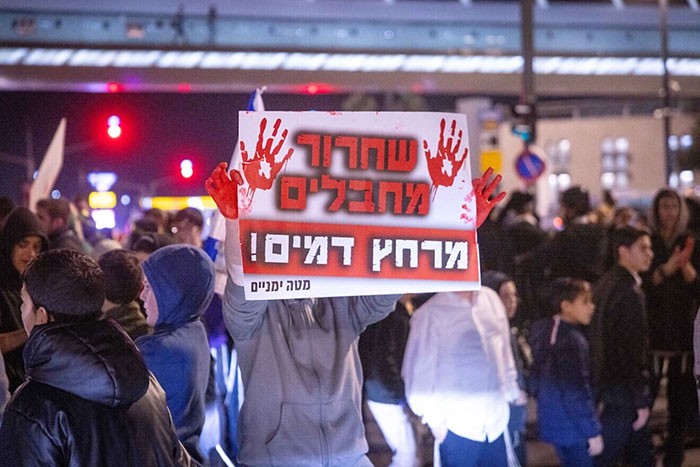
Demonstrators protest against the current hostage deal with Hamas, at the entrance to Jerusalem, on Jan. 16, 2025. Photo courtesy of Chaim Goldberg/Flash90.
I knew this day would come. Ever since Israel began to release prisoners as a “goodwill” measure and for hostages, I knew that the time would come when terrorists with “blood on their hands” would be released.
Joy is tempered
As if the result of freeing terror prisoners in 2011 in exchange for the release of Israeli soldier Gilad Shalit, who had been held by Hamas for five years, wasn’t enough of a warning, the next round of releases will be just as troublesome for Israelis.
Following the murder of my daughter Alisa in a 1995 terror attack in Kfar Darom, Israel was able to capture, convict and sentence to life in prison some of the terrorists involved in her death. While they sit today in a maximum-security prison under life sentences, I am sure they are smiling more than usual because of the potential of their being included in the list of those soon-to-be-released prisoners.
Sure, the Israeli hostage families are delighted over the prospect of being united with their loved ones who have been held captive for more than a year in indescribable conditions below ground in Gaza. I’m delighted, too, that families will be reunited, but my joy is tempered by knowing that these terrorists are being turned loose to commit terror again.
Significant risks
This is not my first experience coping with Israel’s determination to release prisoners. Twice before in the last 25 years when prisoner releases were being carried out, I eagerly sought the list of prisoners being released. And when I did get it, I carefully combed the list of Arabic names transliterated into Hebrew looking for the names Nidal Moustafa Bouri, Ahmed Douad Abu Dachi, Maram Ibrahim Salameh and Al-Halim Saheb Omar Balbasi, each serving life sentences for the Kfar Darom bombing. Unlike the United States, Israel does not have a death penalty for terrorists.
There are good reasons to not release convicted terrorists. While such decisions are often driven by diplomatic, security or humanitarian considerations, they carry significant risks and negative implications. The current deal to release prisoners is harmful to Israel, and, in the long run, Western society for several reasons.
The release of prisoners diminishes Israel’s deterrence against terrorism. If it is Israel’s policy of harsh consequences for those who commit acts of terror to deter potential attackers, then releasing such prisoners undermines this goal, signaling to its enemies that even those responsible for the deaths of innocent citizens may eventually be freed. The perception of accountability is weakened.
The release of terrorists emboldens groups such as Hamas and Palestine Islamic Jihad to commit terror attacks, believing that the price for their actions may not be permanent incarceration. When prisoners with blood on their hands are released, it is celebrated as a victory by terrorist organizations. They portray such releases as evidence of their strength and ability to pressure Israel.
Public celebrations, parades and the glorification of released prisoners not only boost the morale of these organizations but also strengthen their standing among supporters. This can lead to increased recruitment, fundraising and operational activity, thereby escalating threats to Israeli security.
Releasing prisoners, particularly those convicted of murder, can erode public trust in the government and judicial system as it is viewed as undermining the rule of law. Many Israelis feel that such decisions betray the memory of victims and the principles of justice. Victims and the families of victims often bear lifelong scars, both physical and emotional. The outrage and anguish are palpable. We feel that they and the suffering of their loved ones have been tossed aside for political expediency.
ADVERTISEMENT
Kidnappings incentivized
Perhaps the most dangerous consequence of releasing prisoners with blood on their hands is the potential to incentivize kidnappings and hostage-taking. Terrorist organizations have historically used Israeli captives as leverage to negotiate the release of prisoners. For example, the 2011 exchange of more than 1,000 prisoners, including many with blood on their hands, for Shalit set a precedent that such tactics could yield significant results.
Case in point: Yahya Sinwar, the orchestrator of the Oct. 7 attacks and their aftermath, was serving multiple life sentences for orchestrating the murders of both Israelis and Palestinians accused of collaborating with Israel. Released in the Shalit prisoner exchange, he ascended to a senior leadership position within Hamas, becoming its de facto leader in Gaza until he was killed by the Israel Defense Forces last year.
As David M. Weinberg, senior fellow and director of the Jerusalem-based Misgav Institute for National Security and Zionist Strategy, wrote last year: “The danger of mass-releasing Palestinian terrorists is clear. A deal that frees vicious murderers of Israeli Jews … in exchange for Israel’s innocent suffering hostages endangers even more Israeli lives down the road—and that road is not notably long.”
Originally published at
The Jewish World
ADVERTISEMENT
Prisoner releases are a terror victim’s nightmare
A terror victim’s family expresses concerns as Israel releases imprisoned terrorists in hostage exchange deals, fearing dangerous precedent from…
The Jewish World
5
mins read time
Originally published at
The Jewish World
Demonstrators protest against the current hostage deal with Hamas, at the entrance to Jerusalem, on Jan. 16, 2025. Photo courtesy of Chaim Goldberg/Flash90.
I knew this day would come. Ever since Israel began to release prisoners as a “goodwill” measure and for hostages, I knew that the time would come when terrorists with “blood on their hands” would be released.
Joy is tempered
As if the result of freeing terror prisoners in 2011 in exchange for the release of Israeli soldier Gilad Shalit, who had been held by Hamas for five years, wasn’t enough of a warning, the next round of releases will be just as troublesome for Israelis.
Following the murder of my daughter Alisa in a 1995 terror attack in Kfar Darom, Israel was able to capture, convict and sentence to life in prison some of the terrorists involved in her death. While they sit today in a maximum-security prison under life sentences, I am sure they are smiling more than usual because of the potential of their being included in the list of those soon-to-be-released prisoners.
Sure, the Israeli hostage families are delighted over the prospect of being united with their loved ones who have been held captive for more than a year in indescribable conditions below ground in Gaza. I’m delighted, too, that families will be reunited, but my joy is tempered by knowing that these terrorists are being turned loose to commit terror again.
Significant risks
This is not my first experience coping with Israel’s determination to release prisoners. Twice before in the last 25 years when prisoner releases were being carried out, I eagerly sought the list of prisoners being released. And when I did get it, I carefully combed the list of Arabic names transliterated into Hebrew looking for the names Nidal Moustafa Bouri, Ahmed Douad Abu Dachi, Maram Ibrahim Salameh and Al-Halim Saheb Omar Balbasi, each serving life sentences for the Kfar Darom bombing. Unlike the United States, Israel does not have a death penalty for terrorists.
There are good reasons to not release convicted terrorists. While such decisions are often driven by diplomatic, security or humanitarian considerations, they carry significant risks and negative implications. The current deal to release prisoners is harmful to Israel, and, in the long run, Western society for several reasons.
The release of prisoners diminishes Israel’s deterrence against terrorism. If it is Israel’s policy of harsh consequences for those who commit acts of terror to deter potential attackers, then releasing such prisoners undermines this goal, signaling to its enemies that even those responsible for the deaths of innocent citizens may eventually be freed. The perception of accountability is weakened.
The release of terrorists emboldens groups such as Hamas and Palestine Islamic Jihad to commit terror attacks, believing that the price for their actions may not be permanent incarceration. When prisoners with blood on their hands are released, it is celebrated as a victory by terrorist organizations. They portray such releases as evidence of their strength and ability to pressure Israel.
Public celebrations, parades and the glorification of released prisoners not only boost the morale of these organizations but also strengthen their standing among supporters. This can lead to increased recruitment, fundraising and operational activity, thereby escalating threats to Israeli security.
Releasing prisoners, particularly those convicted of murder, can erode public trust in the government and judicial system as it is viewed as undermining the rule of law. Many Israelis feel that such decisions betray the memory of victims and the principles of justice. Victims and the families of victims often bear lifelong scars, both physical and emotional. The outrage and anguish are palpable. We feel that they and the suffering of their loved ones have been tossed aside for political expediency.
ADVERTISEMENT
Kidnappings incentivized
Perhaps the most dangerous consequence of releasing prisoners with blood on their hands is the potential to incentivize kidnappings and hostage-taking. Terrorist organizations have historically used Israeli captives as leverage to negotiate the release of prisoners. For example, the 2011 exchange of more than 1,000 prisoners, including many with blood on their hands, for Shalit set a precedent that such tactics could yield significant results.
Case in point: Yahya Sinwar, the orchestrator of the Oct. 7 attacks and their aftermath, was serving multiple life sentences for orchestrating the murders of both Israelis and Palestinians accused of collaborating with Israel. Released in the Shalit prisoner exchange, he ascended to a senior leadership position within Hamas, becoming its de facto leader in Gaza until he was killed by the Israel Defense Forces last year.
As David M. Weinberg, senior fellow and director of the Jerusalem-based Misgav Institute for National Security and Zionist Strategy, wrote last year: “The danger of mass-releasing Palestinian terrorists is clear. A deal that frees vicious murderers of Israeli Jews … in exchange for Israel’s innocent suffering hostages endangers even more Israeli lives down the road—and that road is not notably long.”
Originally published at
The Jewish World
ADVERTISEMENT
Prisoner releases are a terror victim’s nightmare
A terror victim’s family expresses concerns as Israel releases imprisoned terrorists in hostage exchange deals, fearing dangerous precedent from…
The Jewish World
5
mins read time
Originally published at
The Jewish World
Demonstrators protest against the current hostage deal with Hamas, at the entrance to Jerusalem, on Jan. 16, 2025. Photo courtesy of Chaim Goldberg/Flash90.
I knew this day would come. Ever since Israel began to release prisoners as a “goodwill” measure and for hostages, I knew that the time would come when terrorists with “blood on their hands” would be released.
Joy is tempered
As if the result of freeing terror prisoners in 2011 in exchange for the release of Israeli soldier Gilad Shalit, who had been held by Hamas for five years, wasn’t enough of a warning, the next round of releases will be just as troublesome for Israelis.
Following the murder of my daughter Alisa in a 1995 terror attack in Kfar Darom, Israel was able to capture, convict and sentence to life in prison some of the terrorists involved in her death. While they sit today in a maximum-security prison under life sentences, I am sure they are smiling more than usual because of the potential of their being included in the list of those soon-to-be-released prisoners.
Sure, the Israeli hostage families are delighted over the prospect of being united with their loved ones who have been held captive for more than a year in indescribable conditions below ground in Gaza. I’m delighted, too, that families will be reunited, but my joy is tempered by knowing that these terrorists are being turned loose to commit terror again.
Significant risks
This is not my first experience coping with Israel’s determination to release prisoners. Twice before in the last 25 years when prisoner releases were being carried out, I eagerly sought the list of prisoners being released. And when I did get it, I carefully combed the list of Arabic names transliterated into Hebrew looking for the names Nidal Moustafa Bouri, Ahmed Douad Abu Dachi, Maram Ibrahim Salameh and Al-Halim Saheb Omar Balbasi, each serving life sentences for the Kfar Darom bombing. Unlike the United States, Israel does not have a death penalty for terrorists.
There are good reasons to not release convicted terrorists. While such decisions are often driven by diplomatic, security or humanitarian considerations, they carry significant risks and negative implications. The current deal to release prisoners is harmful to Israel, and, in the long run, Western society for several reasons.
The release of prisoners diminishes Israel’s deterrence against terrorism. If it is Israel’s policy of harsh consequences for those who commit acts of terror to deter potential attackers, then releasing such prisoners undermines this goal, signaling to its enemies that even those responsible for the deaths of innocent citizens may eventually be freed. The perception of accountability is weakened.
The release of terrorists emboldens groups such as Hamas and Palestine Islamic Jihad to commit terror attacks, believing that the price for their actions may not be permanent incarceration. When prisoners with blood on their hands are released, it is celebrated as a victory by terrorist organizations. They portray such releases as evidence of their strength and ability to pressure Israel.
Public celebrations, parades and the glorification of released prisoners not only boost the morale of these organizations but also strengthen their standing among supporters. This can lead to increased recruitment, fundraising and operational activity, thereby escalating threats to Israeli security.
Releasing prisoners, particularly those convicted of murder, can erode public trust in the government and judicial system as it is viewed as undermining the rule of law. Many Israelis feel that such decisions betray the memory of victims and the principles of justice. Victims and the families of victims often bear lifelong scars, both physical and emotional. The outrage and anguish are palpable. We feel that they and the suffering of their loved ones have been tossed aside for political expediency.
ADVERTISEMENT
Kidnappings incentivized
Perhaps the most dangerous consequence of releasing prisoners with blood on their hands is the potential to incentivize kidnappings and hostage-taking. Terrorist organizations have historically used Israeli captives as leverage to negotiate the release of prisoners. For example, the 2011 exchange of more than 1,000 prisoners, including many with blood on their hands, for Shalit set a precedent that such tactics could yield significant results.
Case in point: Yahya Sinwar, the orchestrator of the Oct. 7 attacks and their aftermath, was serving multiple life sentences for orchestrating the murders of both Israelis and Palestinians accused of collaborating with Israel. Released in the Shalit prisoner exchange, he ascended to a senior leadership position within Hamas, becoming its de facto leader in Gaza until he was killed by the Israel Defense Forces last year.
As David M. Weinberg, senior fellow and director of the Jerusalem-based Misgav Institute for National Security and Zionist Strategy, wrote last year: “The danger of mass-releasing Palestinian terrorists is clear. A deal that frees vicious murderers of Israeli Jews … in exchange for Israel’s innocent suffering hostages endangers even more Israeli lives down the road—and that road is not notably long.”
Originally published at
The Jewish World
ADVERTISEMENT
Prisoner releases are a terror victim’s nightmare
A terror victim’s family expresses concerns as Israel releases imprisoned terrorists in hostage exchange deals, fearing dangerous precedent from…
The Jewish World
5
mins read time
Originally published at
The Jewish World
Demonstrators protest against the current hostage deal with Hamas, at the entrance to Jerusalem, on Jan. 16, 2025. Photo courtesy of Chaim Goldberg/Flash90.
I knew this day would come. Ever since Israel began to release prisoners as a “goodwill” measure and for hostages, I knew that the time would come when terrorists with “blood on their hands” would be released.
Joy is tempered
As if the result of freeing terror prisoners in 2011 in exchange for the release of Israeli soldier Gilad Shalit, who had been held by Hamas for five years, wasn’t enough of a warning, the next round of releases will be just as troublesome for Israelis.
Following the murder of my daughter Alisa in a 1995 terror attack in Kfar Darom, Israel was able to capture, convict and sentence to life in prison some of the terrorists involved in her death. While they sit today in a maximum-security prison under life sentences, I am sure they are smiling more than usual because of the potential of their being included in the list of those soon-to-be-released prisoners.
Sure, the Israeli hostage families are delighted over the prospect of being united with their loved ones who have been held captive for more than a year in indescribable conditions below ground in Gaza. I’m delighted, too, that families will be reunited, but my joy is tempered by knowing that these terrorists are being turned loose to commit terror again.
Significant risks
This is not my first experience coping with Israel’s determination to release prisoners. Twice before in the last 25 years when prisoner releases were being carried out, I eagerly sought the list of prisoners being released. And when I did get it, I carefully combed the list of Arabic names transliterated into Hebrew looking for the names Nidal Moustafa Bouri, Ahmed Douad Abu Dachi, Maram Ibrahim Salameh and Al-Halim Saheb Omar Balbasi, each serving life sentences for the Kfar Darom bombing. Unlike the United States, Israel does not have a death penalty for terrorists.
There are good reasons to not release convicted terrorists. While such decisions are often driven by diplomatic, security or humanitarian considerations, they carry significant risks and negative implications. The current deal to release prisoners is harmful to Israel, and, in the long run, Western society for several reasons.
The release of prisoners diminishes Israel’s deterrence against terrorism. If it is Israel’s policy of harsh consequences for those who commit acts of terror to deter potential attackers, then releasing such prisoners undermines this goal, signaling to its enemies that even those responsible for the deaths of innocent citizens may eventually be freed. The perception of accountability is weakened.
The release of terrorists emboldens groups such as Hamas and Palestine Islamic Jihad to commit terror attacks, believing that the price for their actions may not be permanent incarceration. When prisoners with blood on their hands are released, it is celebrated as a victory by terrorist organizations. They portray such releases as evidence of their strength and ability to pressure Israel.
Public celebrations, parades and the glorification of released prisoners not only boost the morale of these organizations but also strengthen their standing among supporters. This can lead to increased recruitment, fundraising and operational activity, thereby escalating threats to Israeli security.
Releasing prisoners, particularly those convicted of murder, can erode public trust in the government and judicial system as it is viewed as undermining the rule of law. Many Israelis feel that such decisions betray the memory of victims and the principles of justice. Victims and the families of victims often bear lifelong scars, both physical and emotional. The outrage and anguish are palpable. We feel that they and the suffering of their loved ones have been tossed aside for political expediency.
ADVERTISEMENT
Kidnappings incentivized
Perhaps the most dangerous consequence of releasing prisoners with blood on their hands is the potential to incentivize kidnappings and hostage-taking. Terrorist organizations have historically used Israeli captives as leverage to negotiate the release of prisoners. For example, the 2011 exchange of more than 1,000 prisoners, including many with blood on their hands, for Shalit set a precedent that such tactics could yield significant results.
Case in point: Yahya Sinwar, the orchestrator of the Oct. 7 attacks and their aftermath, was serving multiple life sentences for orchestrating the murders of both Israelis and Palestinians accused of collaborating with Israel. Released in the Shalit prisoner exchange, he ascended to a senior leadership position within Hamas, becoming its de facto leader in Gaza until he was killed by the Israel Defense Forces last year.
As David M. Weinberg, senior fellow and director of the Jerusalem-based Misgav Institute for National Security and Zionist Strategy, wrote last year: “The danger of mass-releasing Palestinian terrorists is clear. A deal that frees vicious murderers of Israeli Jews … in exchange for Israel’s innocent suffering hostages endangers even more Israeli lives down the road—and that road is not notably long.”
ADVERTISEMENT
Originally published at
The Jewish World
ADVERTISEMENT
Related News

World
Israel & Middle East
U.S. denies Palestinian representatives again at UN as dispute over ICC, terror payments deepens
The U.S. again barred Palestinian Authority officials from the UN, citing ICC provocations against Israel and unended terror payments.
David Isaac
September 24, 2026

World
Israel & Middle East
Who gets the shekels this new year? Israel’s changing charity map
Jgive and the Central Fund for Israel say holiday giving is shifting toward PTSD care and homegrown Israeli donors since Oct. 7, not drying up.
Judith Segaloff
September 24, 2026

World
Israel & Middle East
Israeli envoy to DC says doctors ‘fighting to save life’ of son after car-ramming attack
Ambassador Yechiel Leiter says his son Neria, wounded in a car-ramming attack in Samaria, needs a miracle as doctors fight to save his life.
Andrew Bernard
September 23, 2026
World
Israel & Middle East
U.S. denies Palestinian representatives again at UN as dispute over ICC, terror payments deepens
The U.S. again barred Palestinian Authority officials from the UN, citing ICC provocations against Israel and unended terror payments.
David Isaac
September 24, 2026
World
Israel & Middle East
Who gets the shekels this new year? Israel’s changing charity map
Jgive and the Central Fund for Israel say holiday giving is shifting toward PTSD care and homegrown Israeli donors since Oct. 7, not drying up.
Judith Segaloff
September 24, 2026
World
Israel & Middle East
Israeli envoy to DC says doctors ‘fighting to save life’ of son after car-ramming attack
Ambassador Yechiel Leiter says his son Neria, wounded in a car-ramming attack in Samaria, needs a miracle as doctors fight to save his life.
Andrew Bernard
September 23, 2026
World
Israel & Middle East
UN head opens G.A., accuses Israel of ‘bulldozing’ road to peace; others also blast Israel
UN chief Guterres accuses Israel of blocking Mideast peace at the General Assembly, as Jordan’s King Abdullah also criticizes Israel’s policies.
Mike Wagenheim
September 23, 2026

© 2026 The Jewish World · Since 1965 - The Capital Region's gateway to Jewish life
Designed and Developed by Ta-Da Studios
© 2026 The Jewish World · Since 1965 - The Capital Region's gateway to Jewish life
Designed and Developed by Ta-Da Studios
© 2026 The Jewish World · Since 1965 - The Capital Region's gateway to Jewish life
Designed and Developed by Ta-Da Studios
© 2026 The Jewish World · Since 1965 - The Capital Region's gateway to Jewish life
Designed and Developed by Ta-Da Studios