UN head opens G.A., accuses Israel of ‘bulldozing’ road to peace; others also blast Israel
UN chief Guterres accuses Israel of blocking Mideast peace at the General Assembly, as Jordan’s King Abdullah also criticizes Israel’s policies.
Mike Wagenheim
4
mins read time
Originally published at
JNS
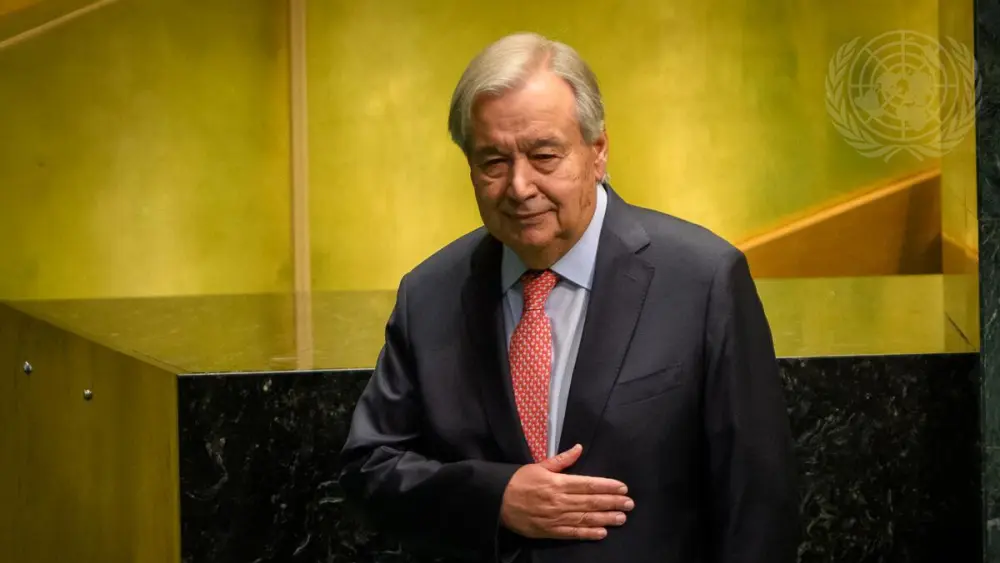
U.N. Secretary-General António Guterres after his address to the general debate of the General Assembly’s 81st session in New York City, Sept. 22, 2026. Photo courtesy of Loey Felipe/U.N.
In his final United Nations General Assembly address as U.N. secretary-general, António Guterres accused Israel of “bulldozing the path to peace” in Judea and Samaria and “raising the specter of ethnic cleansing.”
The U.N. chief kicked off the annual high-level debate week telling attendees that “so-called ceasefires” across the Middle East “have amounted to little more than ‘lesser fires.’”
He appealed to world leaders gathered in New York City to “send a clear message” that “the fighting must stop” and that “humanitarian aid must flow” while “navigational rights and freedoms must be fully restored in accordance with international law” in the Strait of Hormuz.
Guterres also said that there has been an “onslaught on Palestinians in Gaza, with a scale of killing and destruction unlike anything I have witnessed in all my years as secretary-general.”
The United Nations has said that an estimated 500,000 people have been killed in Ethiopia in the Tigray War between 2020 to 2022. That number is almost seven times larger than the number of victims in Gaza that Hamas officials claim.
Guterres has been secretary-general since 2017.
The secretary-general noted the “abhorrent terror attacks by Hamas on Oct. 7” but didn’t differentiate between Palestinian civilians and terrorists killed in Gaza.
(Sept. 23, 2026 / JNS)
The Israeli Foreign Ministry criticized Jordanian King Abdullah II on Wednesday, Sept. 23, following his speech at the United Nations General Assembly against Israel’s policies in Gaza and Judea and Samaria, which he claimed violate international law.
“It is particularly amusing to hear King Abdullah II of Jordan speak so passionately about international law and the rights of Palestinians in Judea and Samaria,” the ministry wrote on X, invoking the orders of his father, King Hussein, in 1988 to revoke the citizenship of Palestinians living in Judea and Samaria “overnight” and “in complete violation of international law.”
“Palestinians in Judea and Samaria lost the right to vote or run for the Jordanian parliament, work in the Jordanian civil service, or receive funding from the Hashemite Kingdom. Their Jordanian passports were confiscated or not renewed. They were classified as foreign nationals. Their entry into Jordan and their ability to remain there were restricted,” the ministry continued.
“Tell us more about international law,” it added.
Another clash between King Hussein and the Palestinians took place in 1970, known as “Black September.” The Jordanian Army was ordered to take action against the Palestine Liberation Organization, comprising of Palestinian fedayeen guerrillas that relocated to Jordan after the Six-Day War in 1967 and had engaged in terrorist activities within the Hashemite Kingdom.
Inflicting thousands of casualties on PLO forces, led by Yasser Arafat, the Palestinian militants were ultimately compelled to leave Jordan in 1971. Relocating to Lebanon via Syria, the PLO then became involved in the Lebanese Civil War from 1975 to 1990, while continuing to carry out terror attacks against Israel.
King Abdullah spoke at the General Debate of the 81st Session of UNGA in New York on Tuesday, dedicating the bulk of his address to lash out at the Jewish state.
He accused Israel of implementing an expansionist policy in Gaza, Judea and Samaria, and Syria, “testing how far it can go.”
He went as far as saying that “This Israeli government’s expansionist appetite is now a regional threat” and its “sense of impunity has reached terrifying levels.”
The Jordanian leader then told the delegates in the hall that they have tools such as “sanctions, asset freezes, embargoes, diplomatic isolation” that have been used elsewhere.
“Any threat to our northern border or our water security is a threat to our national security,” King Abdullah added, claiming that Israel has imposed “new facts on the ground,” including around “vital water resources.”
Jerusalem and Amman signed a peace treaty in 1994, as Jordan became the second Arab country to normalize relations with the Jewish state after Egypt.
The treaty includes Israel’s agreement to provide Jordan with 50,000,000 cubic meters of water per year and to help Jordan use desalination technology, as well as for Jordan to own 75% of the water from the Yarmouk River, which runs through Jordan, Syria, and Israel.
Israel’s Prime Minister Benjamin Netanyahu is set to speak at the General Assembly on Thursday, Sept. 24.
Originally published at: https://www.jns.org/news/world/un-head-opens-general-assembly-accusing-israel-of-bulldozing-road-to-peace-specter-of-ethnic-cleansing
Originally published at
JNS

UN head opens G.A., accuses Israel of ‘bulldozing’ road to peace; others also blast Israel
UN chief Guterres accuses Israel of blocking Mideast peace at the General Assembly, as Jordan’s King Abdullah also criticizes Israel’s policies.
Mike Wagenheim
4
mins read time
Originally published at
JNS
U.N. Secretary-General António Guterres after his address to the general debate of the General Assembly’s 81st session in New York City, Sept. 22, 2026. Photo courtesy of Loey Felipe/U.N.
In his final United Nations General Assembly address as U.N. secretary-general, António Guterres accused Israel of “bulldozing the path to peace” in Judea and Samaria and “raising the specter of ethnic cleansing.”
The U.N. chief kicked off the annual high-level debate week telling attendees that “so-called ceasefires” across the Middle East “have amounted to little more than ‘lesser fires.’”
He appealed to world leaders gathered in New York City to “send a clear message” that “the fighting must stop” and that “humanitarian aid must flow” while “navigational rights and freedoms must be fully restored in accordance with international law” in the Strait of Hormuz.
Guterres also said that there has been an “onslaught on Palestinians in Gaza, with a scale of killing and destruction unlike anything I have witnessed in all my years as secretary-general.”
The United Nations has said that an estimated 500,000 people have been killed in Ethiopia in the Tigray War between 2020 to 2022. That number is almost seven times larger than the number of victims in Gaza that Hamas officials claim.
Guterres has been secretary-general since 2017.
The secretary-general noted the “abhorrent terror attacks by Hamas on Oct. 7” but didn’t differentiate between Palestinian civilians and terrorists killed in Gaza.
(Sept. 23, 2026 / JNS)
The Israeli Foreign Ministry criticized Jordanian King Abdullah II on Wednesday, Sept. 23, following his speech at the United Nations General Assembly against Israel’s policies in Gaza and Judea and Samaria, which he claimed violate international law.
“It is particularly amusing to hear King Abdullah II of Jordan speak so passionately about international law and the rights of Palestinians in Judea and Samaria,” the ministry wrote on X, invoking the orders of his father, King Hussein, in 1988 to revoke the citizenship of Palestinians living in Judea and Samaria “overnight” and “in complete violation of international law.”
“Palestinians in Judea and Samaria lost the right to vote or run for the Jordanian parliament, work in the Jordanian civil service, or receive funding from the Hashemite Kingdom. Their Jordanian passports were confiscated or not renewed. They were classified as foreign nationals. Their entry into Jordan and their ability to remain there were restricted,” the ministry continued.
“Tell us more about international law,” it added.
Another clash between King Hussein and the Palestinians took place in 1970, known as “Black September.” The Jordanian Army was ordered to take action against the Palestine Liberation Organization, comprising of Palestinian fedayeen guerrillas that relocated to Jordan after the Six-Day War in 1967 and had engaged in terrorist activities within the Hashemite Kingdom.
Inflicting thousands of casualties on PLO forces, led by Yasser Arafat, the Palestinian militants were ultimately compelled to leave Jordan in 1971. Relocating to Lebanon via Syria, the PLO then became involved in the Lebanese Civil War from 1975 to 1990, while continuing to carry out terror attacks against Israel.
King Abdullah spoke at the General Debate of the 81st Session of UNGA in New York on Tuesday, dedicating the bulk of his address to lash out at the Jewish state.
He accused Israel of implementing an expansionist policy in Gaza, Judea and Samaria, and Syria, “testing how far it can go.”
He went as far as saying that “This Israeli government’s expansionist appetite is now a regional threat” and its “sense of impunity has reached terrifying levels.”
The Jordanian leader then told the delegates in the hall that they have tools such as “sanctions, asset freezes, embargoes, diplomatic isolation” that have been used elsewhere.
“Any threat to our northern border or our water security is a threat to our national security,” King Abdullah added, claiming that Israel has imposed “new facts on the ground,” including around “vital water resources.”
Jerusalem and Amman signed a peace treaty in 1994, as Jordan became the second Arab country to normalize relations with the Jewish state after Egypt.
The treaty includes Israel’s agreement to provide Jordan with 50,000,000 cubic meters of water per year and to help Jordan use desalination technology, as well as for Jordan to own 75% of the water from the Yarmouk River, which runs through Jordan, Syria, and Israel.
Israel’s Prime Minister Benjamin Netanyahu is set to speak at the General Assembly on Thursday, Sept. 24.
Originally published at: https://www.jns.org/news/world/un-head-opens-general-assembly-accusing-israel-of-bulldozing-road-to-peace-specter-of-ethnic-cleansing
Originally published at
JNS
UN head opens G.A., accuses Israel of ‘bulldozing’ road to peace; others also blast Israel
UN chief Guterres accuses Israel of blocking Mideast peace at the General Assembly, as Jordan’s King Abdullah also criticizes Israel’s policies.
Mike Wagenheim
4
mins read time
Originally published at
JNS
U.N. Secretary-General António Guterres after his address to the general debate of the General Assembly’s 81st session in New York City, Sept. 22, 2026. Photo courtesy of Loey Felipe/U.N.
In his final United Nations General Assembly address as U.N. secretary-general, António Guterres accused Israel of “bulldozing the path to peace” in Judea and Samaria and “raising the specter of ethnic cleansing.”
The U.N. chief kicked off the annual high-level debate week telling attendees that “so-called ceasefires” across the Middle East “have amounted to little more than ‘lesser fires.’”
He appealed to world leaders gathered in New York City to “send a clear message” that “the fighting must stop” and that “humanitarian aid must flow” while “navigational rights and freedoms must be fully restored in accordance with international law” in the Strait of Hormuz.
Guterres also said that there has been an “onslaught on Palestinians in Gaza, with a scale of killing and destruction unlike anything I have witnessed in all my years as secretary-general.”
The United Nations has said that an estimated 500,000 people have been killed in Ethiopia in the Tigray War between 2020 to 2022. That number is almost seven times larger than the number of victims in Gaza that Hamas officials claim.
Guterres has been secretary-general since 2017.
The secretary-general noted the “abhorrent terror attacks by Hamas on Oct. 7” but didn’t differentiate between Palestinian civilians and terrorists killed in Gaza.
(Sept. 23, 2026 / JNS)
The Israeli Foreign Ministry criticized Jordanian King Abdullah II on Wednesday, Sept. 23, following his speech at the United Nations General Assembly against Israel’s policies in Gaza and Judea and Samaria, which he claimed violate international law.
“It is particularly amusing to hear King Abdullah II of Jordan speak so passionately about international law and the rights of Palestinians in Judea and Samaria,” the ministry wrote on X, invoking the orders of his father, King Hussein, in 1988 to revoke the citizenship of Palestinians living in Judea and Samaria “overnight” and “in complete violation of international law.”
“Palestinians in Judea and Samaria lost the right to vote or run for the Jordanian parliament, work in the Jordanian civil service, or receive funding from the Hashemite Kingdom. Their Jordanian passports were confiscated or not renewed. They were classified as foreign nationals. Their entry into Jordan and their ability to remain there were restricted,” the ministry continued.
“Tell us more about international law,” it added.
Another clash between King Hussein and the Palestinians took place in 1970, known as “Black September.” The Jordanian Army was ordered to take action against the Palestine Liberation Organization, comprising of Palestinian fedayeen guerrillas that relocated to Jordan after the Six-Day War in 1967 and had engaged in terrorist activities within the Hashemite Kingdom.
Inflicting thousands of casualties on PLO forces, led by Yasser Arafat, the Palestinian militants were ultimately compelled to leave Jordan in 1971. Relocating to Lebanon via Syria, the PLO then became involved in the Lebanese Civil War from 1975 to 1990, while continuing to carry out terror attacks against Israel.
King Abdullah spoke at the General Debate of the 81st Session of UNGA in New York on Tuesday, dedicating the bulk of his address to lash out at the Jewish state.
He accused Israel of implementing an expansionist policy in Gaza, Judea and Samaria, and Syria, “testing how far it can go.”
He went as far as saying that “This Israeli government’s expansionist appetite is now a regional threat” and its “sense of impunity has reached terrifying levels.”
The Jordanian leader then told the delegates in the hall that they have tools such as “sanctions, asset freezes, embargoes, diplomatic isolation” that have been used elsewhere.
“Any threat to our northern border or our water security is a threat to our national security,” King Abdullah added, claiming that Israel has imposed “new facts on the ground,” including around “vital water resources.”
Jerusalem and Amman signed a peace treaty in 1994, as Jordan became the second Arab country to normalize relations with the Jewish state after Egypt.
The treaty includes Israel’s agreement to provide Jordan with 50,000,000 cubic meters of water per year and to help Jordan use desalination technology, as well as for Jordan to own 75% of the water from the Yarmouk River, which runs through Jordan, Syria, and Israel.
Israel’s Prime Minister Benjamin Netanyahu is set to speak at the General Assembly on Thursday, Sept. 24.
Originally published at: https://www.jns.org/news/world/un-head-opens-general-assembly-accusing-israel-of-bulldozing-road-to-peace-specter-of-ethnic-cleansing
Originally published at
JNS
UN head opens G.A., accuses Israel of ‘bulldozing’ road to peace; others also blast Israel
UN chief Guterres accuses Israel of blocking Mideast peace at the General Assembly, as Jordan’s King Abdullah also criticizes Israel’s policies.
Mike Wagenheim
4
mins read time
Originally published at
JNS
U.N. Secretary-General António Guterres after his address to the general debate of the General Assembly’s 81st session in New York City, Sept. 22, 2026. Photo courtesy of Loey Felipe/U.N.
In his final United Nations General Assembly address as U.N. secretary-general, António Guterres accused Israel of “bulldozing the path to peace” in Judea and Samaria and “raising the specter of ethnic cleansing.”
The U.N. chief kicked off the annual high-level debate week telling attendees that “so-called ceasefires” across the Middle East “have amounted to little more than ‘lesser fires.’”
He appealed to world leaders gathered in New York City to “send a clear message” that “the fighting must stop” and that “humanitarian aid must flow” while “navigational rights and freedoms must be fully restored in accordance with international law” in the Strait of Hormuz.
Guterres also said that there has been an “onslaught on Palestinians in Gaza, with a scale of killing and destruction unlike anything I have witnessed in all my years as secretary-general.”
The United Nations has said that an estimated 500,000 people have been killed in Ethiopia in the Tigray War between 2020 to 2022. That number is almost seven times larger than the number of victims in Gaza that Hamas officials claim.
Guterres has been secretary-general since 2017.
The secretary-general noted the “abhorrent terror attacks by Hamas on Oct. 7” but didn’t differentiate between Palestinian civilians and terrorists killed in Gaza.
(Sept. 23, 2026 / JNS)
The Israeli Foreign Ministry criticized Jordanian King Abdullah II on Wednesday, Sept. 23, following his speech at the United Nations General Assembly against Israel’s policies in Gaza and Judea and Samaria, which he claimed violate international law.
“It is particularly amusing to hear King Abdullah II of Jordan speak so passionately about international law and the rights of Palestinians in Judea and Samaria,” the ministry wrote on X, invoking the orders of his father, King Hussein, in 1988 to revoke the citizenship of Palestinians living in Judea and Samaria “overnight” and “in complete violation of international law.”
“Palestinians in Judea and Samaria lost the right to vote or run for the Jordanian parliament, work in the Jordanian civil service, or receive funding from the Hashemite Kingdom. Their Jordanian passports were confiscated or not renewed. They were classified as foreign nationals. Their entry into Jordan and their ability to remain there were restricted,” the ministry continued.
“Tell us more about international law,” it added.
Another clash between King Hussein and the Palestinians took place in 1970, known as “Black September.” The Jordanian Army was ordered to take action against the Palestine Liberation Organization, comprising of Palestinian fedayeen guerrillas that relocated to Jordan after the Six-Day War in 1967 and had engaged in terrorist activities within the Hashemite Kingdom.
Inflicting thousands of casualties on PLO forces, led by Yasser Arafat, the Palestinian militants were ultimately compelled to leave Jordan in 1971. Relocating to Lebanon via Syria, the PLO then became involved in the Lebanese Civil War from 1975 to 1990, while continuing to carry out terror attacks against Israel.
King Abdullah spoke at the General Debate of the 81st Session of UNGA in New York on Tuesday, dedicating the bulk of his address to lash out at the Jewish state.
He accused Israel of implementing an expansionist policy in Gaza, Judea and Samaria, and Syria, “testing how far it can go.”
He went as far as saying that “This Israeli government’s expansionist appetite is now a regional threat” and its “sense of impunity has reached terrifying levels.”
The Jordanian leader then told the delegates in the hall that they have tools such as “sanctions, asset freezes, embargoes, diplomatic isolation” that have been used elsewhere.
“Any threat to our northern border or our water security is a threat to our national security,” King Abdullah added, claiming that Israel has imposed “new facts on the ground,” including around “vital water resources.”
Jerusalem and Amman signed a peace treaty in 1994, as Jordan became the second Arab country to normalize relations with the Jewish state after Egypt.
The treaty includes Israel’s agreement to provide Jordan with 50,000,000 cubic meters of water per year and to help Jordan use desalination technology, as well as for Jordan to own 75% of the water from the Yarmouk River, which runs through Jordan, Syria, and Israel.
Israel’s Prime Minister Benjamin Netanyahu is set to speak at the General Assembly on Thursday, Sept. 24.
Originally published at: https://www.jns.org/news/world/un-head-opens-general-assembly-accusing-israel-of-bulldozing-road-to-peace-specter-of-ethnic-cleansing
Originally published at
JNS
Related News
World
Israel & Middle East
U.S. denies Palestinian representatives again at UN as dispute over ICC, terror payments deepens
The U.S. again barred Palestinian Authority officials from the UN, citing ICC provocations against Israel and unended terror payments.
David Isaac
September 24, 2026

World
Israel & Middle East
Who gets the shekels this new year? Israel’s changing charity map
Jgive and the Central Fund for Israel say holiday giving is shifting toward PTSD care and homegrown Israeli donors since Oct. 7, not drying up.
Judith Segaloff
September 24, 2026

World
Israel & Middle East
Israeli envoy to DC says doctors ‘fighting to save life’ of son after car-ramming attack
Ambassador Yechiel Leiter says his son Neria, wounded in a car-ramming attack in Samaria, needs a miracle as doctors fight to save his life.
Andrew Bernard
September 23, 2026
World
Israel & Middle East
U.S. denies Palestinian representatives again at UN as dispute over ICC, terror payments deepens
The U.S. again barred Palestinian Authority officials from the UN, citing ICC provocations against Israel and unended terror payments.
David Isaac
September 24, 2026
World
Israel & Middle East
Who gets the shekels this new year? Israel’s changing charity map
Jgive and the Central Fund for Israel say holiday giving is shifting toward PTSD care and homegrown Israeli donors since Oct. 7, not drying up.
Judith Segaloff
September 24, 2026
World
Israel & Middle East
Israeli envoy to DC says doctors ‘fighting to save life’ of son after car-ramming attack
Ambassador Yechiel Leiter says his son Neria, wounded in a car-ramming attack in Samaria, needs a miracle as doctors fight to save his life.
Andrew Bernard
September 23, 2026

World
Israel & Middle East
Ukrainian President Zelenskyy honors Sharansky in Kyiv
Zelenskyy awarded Sharansky Ukraine’s Order of Merit for his Holocaust memory and outreach work.
Canaan Lidor
September 2, 2026

© 2026 The Jewish World · Since 1965 - The Capital Region's gateway to Jewish life
Designed and Developed by Ta-Da Studios
© 2026 The Jewish World · Since 1965 - The Capital Region's gateway to Jewish life
Designed and Developed by Ta-Da Studios
© 2026 The Jewish World · Since 1965 - The Capital Region's gateway to Jewish life
Designed and Developed by Ta-Da Studios
© 2026 The Jewish World · Since 1965 - The Capital Region's gateway to Jewish life
Designed and Developed by Ta-Da Studios