Where did the Dead Sea Scrolls come from?
A new international project is using AI and chemistry to trace where the Dead Sea Scrolls were written, copied, and hidden.
The Jewish World
4
mins read time
Originally published at
The Jewish World

The Qumran caves in the Judean Desert are among the main sites where the Dead Sea Scrolls were discovered. The new international research project seeks to trace the origins of the ancient manuscripts. Photo courtesy of Shai Halevi, Israel Antiquities Authority.
The European Research Council (ERC) has awarded Professor Mladen Popović of the University of Groningen a €2.5 million Advanced Grant for a five-year international research project that will investigate one of the most fundamental questions in Dead Sea Scrolls scholarship: where were the scrolls produced and copied, and what can their origins reveal about centers of learning, scribal culture, and the transmission of knowledge in ancient Judea?
The project, Tracing Scribes and Scrolls, brings together researchers from the University of Groningen, the Israel Antiquities Authority, and laboratories and research institutions across Europe. By combining state-of-the-art chemical analysis, artificial intelligence, paleography, and codicology, the research aims to reconstruct the geographical and cultural contexts in which the scrolls were produced.
Questions
The Dead Sea Scrolls, under the guardianship of the Israel Antiquities Authority in Jerusalem, comprise one of the most significant archaeological discoveries of the 20th century. They include the earliest known manuscripts of many books of the Hebrew Bible, together with a remarkable collection of Jewish literary works dating from the late Second Temple period. Despite decades of research, the precise locations where many of the scrolls were manufactured, prepared, and copied remain unknown.
Were at least some of the scrolls written at Qumran by a Jewish community living in seclusion there? Were others brought from additional centers of scribal activity in Judea, perhaps from Jerusalem, and hidden in the caves in times of danger? Or did the caves also serve as a library, or as a kind of ancient genizah? These questions stand at the heart of the new project.
Prof. Popović, one of the world’s leading authorities on the Dead Sea Scrolls, will lead a multidisciplinary team of historians, archaeologists, material scientists, chemists, and artificial intelligence specialists over the next five years. ERC Advanced Grants are among Europe’s most prestigious research awards, supporting internationally recognized researchers in pursuing ambitious, high-impact scientific research.
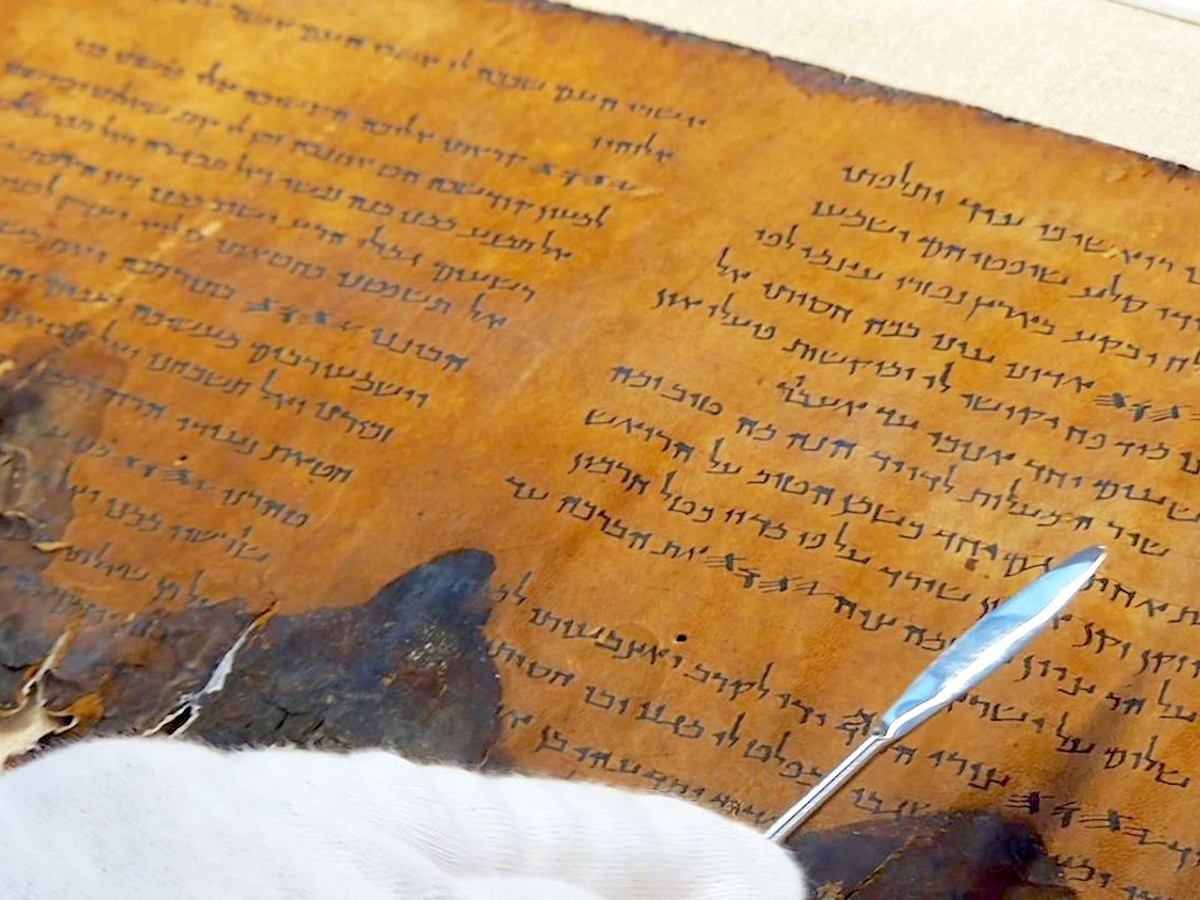
A fragment of a 2,000-year-old Psalms Scroll. Photo courtesy of Yoli Schwartz, Israel Antiquities Authority.
ADVERTISEMENT
Chemical data
Working in close collaboration with the Israel Antiquities Authority, the team will analyze approximately 250 samples from the Authority’s Dead Sea Scrolls collection, including parchment, papyrus, and ink. For the first time, papyri from Egypt will be examined alongside papyri from Qumran and other Judean Desert sites, allowing researchers to compare their chemical signatures directly. These analyses are expected to help identify the material “fingerprints” of the scrolls, reveal the provenance of raw materials, identify production practices, and uncover connections between different centers of scribal activity.
The chemical data will be processed using advanced artificial intelligence tools capable of identifying complex patterns that are difficult to detect through conventional analysis. These results will then be integrated with paleographic studies of handwriting, codicological analysis of the physical construction of the scrolls—including sheet preparation, column layout, margins, and stitching techniques—as well as linguistic and literary evidence.
ADVERTISEMENT
Use of AI
Together, these complementary approaches will enable researchers to develop an unprecedented model for mapping the more than 25,000 Dead Sea Scroll fragments preserved by the Israel Antiquities Authority. The project aims to place individual manuscripts and scribes within their geographical and chronological contexts while identifying centers of writing, learning, literary production, and knowledge transmission in ancient Judea—and potentially beyond.
According to Popović “This is the largest research project to date to use artificial intelligence to investigate the cultural context of the Dead Sea Scrolls. These manuscripts provide an extraordinary window into the intellectual world of ancient Judea. By combining advanced laboratory analysis with the study of ancient handwriting and the remarkable advances in artificial intelligence made in recent years, we are now able to address questions that were previously beyond our reach: who copied these manuscripts, where they were produced, how knowledge circulated, and the role these texts played within the society of their time.”
Dr. Ilit Cohen-Ofri of the Israel Antiquities Authority and one of the collaborators on the project, said: “The research will create an unprecedented database on the chemical composition of samples from the Dead Sea Scrolls. The Israel Antiquities Authority is entrusted with the preservation, documentation, and study of the Dead Sea Scrolls, and we continue to invest significant effort in advancing their scientific investigation. In recent years we have come to recognize the wealth of information that can be recovered from the materials themselves—parchment, papyrus, and ink—revealing hidden insights preserved within thousands of manuscript fragments that have survived for more than two millennia. Participating in an international project of this scale enables the Israel Antiquities Authority to contribute its expertise in material analysis of artifacts to some of the most important questions in Dead Sea Scrolls research, benefiting both the scholarly community and the broader public.”
Originally published at
The Jewish World
ADVERTISEMENT
Where did the Dead Sea Scrolls come from?
A new international project is using AI and chemistry to trace where the Dead Sea Scrolls were written, copied, and hidden.
The Jewish World
4
mins read time
Originally published at
The Jewish World
The Qumran caves in the Judean Desert are among the main sites where the Dead Sea Scrolls were discovered. The new international research project seeks to trace the origins of the ancient manuscripts. Photo courtesy of Shai Halevi, Israel Antiquities Authority.
The European Research Council (ERC) has awarded Professor Mladen Popović of the University of Groningen a €2.5 million Advanced Grant for a five-year international research project that will investigate one of the most fundamental questions in Dead Sea Scrolls scholarship: where were the scrolls produced and copied, and what can their origins reveal about centers of learning, scribal culture, and the transmission of knowledge in ancient Judea?
The project, Tracing Scribes and Scrolls, brings together researchers from the University of Groningen, the Israel Antiquities Authority, and laboratories and research institutions across Europe. By combining state-of-the-art chemical analysis, artificial intelligence, paleography, and codicology, the research aims to reconstruct the geographical and cultural contexts in which the scrolls were produced.
Questions
The Dead Sea Scrolls, under the guardianship of the Israel Antiquities Authority in Jerusalem, comprise one of the most significant archaeological discoveries of the 20th century. They include the earliest known manuscripts of many books of the Hebrew Bible, together with a remarkable collection of Jewish literary works dating from the late Second Temple period. Despite decades of research, the precise locations where many of the scrolls were manufactured, prepared, and copied remain unknown.
Were at least some of the scrolls written at Qumran by a Jewish community living in seclusion there? Were others brought from additional centers of scribal activity in Judea, perhaps from Jerusalem, and hidden in the caves in times of danger? Or did the caves also serve as a library, or as a kind of ancient genizah? These questions stand at the heart of the new project.
Prof. Popović, one of the world’s leading authorities on the Dead Sea Scrolls, will lead a multidisciplinary team of historians, archaeologists, material scientists, chemists, and artificial intelligence specialists over the next five years. ERC Advanced Grants are among Europe’s most prestigious research awards, supporting internationally recognized researchers in pursuing ambitious, high-impact scientific research.
A fragment of a 2,000-year-old Psalms Scroll. Photo courtesy of Yoli Schwartz, Israel Antiquities Authority.
ADVERTISEMENT
Chemical data
Working in close collaboration with the Israel Antiquities Authority, the team will analyze approximately 250 samples from the Authority’s Dead Sea Scrolls collection, including parchment, papyrus, and ink. For the first time, papyri from Egypt will be examined alongside papyri from Qumran and other Judean Desert sites, allowing researchers to compare their chemical signatures directly. These analyses are expected to help identify the material “fingerprints” of the scrolls, reveal the provenance of raw materials, identify production practices, and uncover connections between different centers of scribal activity.
The chemical data will be processed using advanced artificial intelligence tools capable of identifying complex patterns that are difficult to detect through conventional analysis. These results will then be integrated with paleographic studies of handwriting, codicological analysis of the physical construction of the scrolls—including sheet preparation, column layout, margins, and stitching techniques—as well as linguistic and literary evidence.
ADVERTISEMENT
Use of AI
Together, these complementary approaches will enable researchers to develop an unprecedented model for mapping the more than 25,000 Dead Sea Scroll fragments preserved by the Israel Antiquities Authority. The project aims to place individual manuscripts and scribes within their geographical and chronological contexts while identifying centers of writing, learning, literary production, and knowledge transmission in ancient Judea—and potentially beyond.
According to Popović “This is the largest research project to date to use artificial intelligence to investigate the cultural context of the Dead Sea Scrolls. These manuscripts provide an extraordinary window into the intellectual world of ancient Judea. By combining advanced laboratory analysis with the study of ancient handwriting and the remarkable advances in artificial intelligence made in recent years, we are now able to address questions that were previously beyond our reach: who copied these manuscripts, where they were produced, how knowledge circulated, and the role these texts played within the society of their time.”
Dr. Ilit Cohen-Ofri of the Israel Antiquities Authority and one of the collaborators on the project, said: “The research will create an unprecedented database on the chemical composition of samples from the Dead Sea Scrolls. The Israel Antiquities Authority is entrusted with the preservation, documentation, and study of the Dead Sea Scrolls, and we continue to invest significant effort in advancing their scientific investigation. In recent years we have come to recognize the wealth of information that can be recovered from the materials themselves—parchment, papyrus, and ink—revealing hidden insights preserved within thousands of manuscript fragments that have survived for more than two millennia. Participating in an international project of this scale enables the Israel Antiquities Authority to contribute its expertise in material analysis of artifacts to some of the most important questions in Dead Sea Scrolls research, benefiting both the scholarly community and the broader public.”
Originally published at
The Jewish World
ADVERTISEMENT
Where did the Dead Sea Scrolls come from?
A new international project is using AI and chemistry to trace where the Dead Sea Scrolls were written, copied, and hidden.
The Jewish World
4
mins read time
Originally published at
The Jewish World
The Qumran caves in the Judean Desert are among the main sites where the Dead Sea Scrolls were discovered. The new international research project seeks to trace the origins of the ancient manuscripts. Photo courtesy of Shai Halevi, Israel Antiquities Authority.
The European Research Council (ERC) has awarded Professor Mladen Popović of the University of Groningen a €2.5 million Advanced Grant for a five-year international research project that will investigate one of the most fundamental questions in Dead Sea Scrolls scholarship: where were the scrolls produced and copied, and what can their origins reveal about centers of learning, scribal culture, and the transmission of knowledge in ancient Judea?
The project, Tracing Scribes and Scrolls, brings together researchers from the University of Groningen, the Israel Antiquities Authority, and laboratories and research institutions across Europe. By combining state-of-the-art chemical analysis, artificial intelligence, paleography, and codicology, the research aims to reconstruct the geographical and cultural contexts in which the scrolls were produced.
Questions
The Dead Sea Scrolls, under the guardianship of the Israel Antiquities Authority in Jerusalem, comprise one of the most significant archaeological discoveries of the 20th century. They include the earliest known manuscripts of many books of the Hebrew Bible, together with a remarkable collection of Jewish literary works dating from the late Second Temple period. Despite decades of research, the precise locations where many of the scrolls were manufactured, prepared, and copied remain unknown.
Were at least some of the scrolls written at Qumran by a Jewish community living in seclusion there? Were others brought from additional centers of scribal activity in Judea, perhaps from Jerusalem, and hidden in the caves in times of danger? Or did the caves also serve as a library, or as a kind of ancient genizah? These questions stand at the heart of the new project.
Prof. Popović, one of the world’s leading authorities on the Dead Sea Scrolls, will lead a multidisciplinary team of historians, archaeologists, material scientists, chemists, and artificial intelligence specialists over the next five years. ERC Advanced Grants are among Europe’s most prestigious research awards, supporting internationally recognized researchers in pursuing ambitious, high-impact scientific research.
A fragment of a 2,000-year-old Psalms Scroll. Photo courtesy of Yoli Schwartz, Israel Antiquities Authority.
ADVERTISEMENT
Chemical data
Working in close collaboration with the Israel Antiquities Authority, the team will analyze approximately 250 samples from the Authority’s Dead Sea Scrolls collection, including parchment, papyrus, and ink. For the first time, papyri from Egypt will be examined alongside papyri from Qumran and other Judean Desert sites, allowing researchers to compare their chemical signatures directly. These analyses are expected to help identify the material “fingerprints” of the scrolls, reveal the provenance of raw materials, identify production practices, and uncover connections between different centers of scribal activity.
The chemical data will be processed using advanced artificial intelligence tools capable of identifying complex patterns that are difficult to detect through conventional analysis. These results will then be integrated with paleographic studies of handwriting, codicological analysis of the physical construction of the scrolls—including sheet preparation, column layout, margins, and stitching techniques—as well as linguistic and literary evidence.
ADVERTISEMENT
Use of AI
Together, these complementary approaches will enable researchers to develop an unprecedented model for mapping the more than 25,000 Dead Sea Scroll fragments preserved by the Israel Antiquities Authority. The project aims to place individual manuscripts and scribes within their geographical and chronological contexts while identifying centers of writing, learning, literary production, and knowledge transmission in ancient Judea—and potentially beyond.
According to Popović “This is the largest research project to date to use artificial intelligence to investigate the cultural context of the Dead Sea Scrolls. These manuscripts provide an extraordinary window into the intellectual world of ancient Judea. By combining advanced laboratory analysis with the study of ancient handwriting and the remarkable advances in artificial intelligence made in recent years, we are now able to address questions that were previously beyond our reach: who copied these manuscripts, where they were produced, how knowledge circulated, and the role these texts played within the society of their time.”
Dr. Ilit Cohen-Ofri of the Israel Antiquities Authority and one of the collaborators on the project, said: “The research will create an unprecedented database on the chemical composition of samples from the Dead Sea Scrolls. The Israel Antiquities Authority is entrusted with the preservation, documentation, and study of the Dead Sea Scrolls, and we continue to invest significant effort in advancing their scientific investigation. In recent years we have come to recognize the wealth of information that can be recovered from the materials themselves—parchment, papyrus, and ink—revealing hidden insights preserved within thousands of manuscript fragments that have survived for more than two millennia. Participating in an international project of this scale enables the Israel Antiquities Authority to contribute its expertise in material analysis of artifacts to some of the most important questions in Dead Sea Scrolls research, benefiting both the scholarly community and the broader public.”
Originally published at
The Jewish World
ADVERTISEMENT
Where did the Dead Sea Scrolls come from?
A new international project is using AI and chemistry to trace where the Dead Sea Scrolls were written, copied, and hidden.
The Jewish World
4
mins read time
Originally published at
The Jewish World
The Qumran caves in the Judean Desert are among the main sites where the Dead Sea Scrolls were discovered. The new international research project seeks to trace the origins of the ancient manuscripts. Photo courtesy of Shai Halevi, Israel Antiquities Authority.
The European Research Council (ERC) has awarded Professor Mladen Popović of the University of Groningen a €2.5 million Advanced Grant for a five-year international research project that will investigate one of the most fundamental questions in Dead Sea Scrolls scholarship: where were the scrolls produced and copied, and what can their origins reveal about centers of learning, scribal culture, and the transmission of knowledge in ancient Judea?
The project, Tracing Scribes and Scrolls, brings together researchers from the University of Groningen, the Israel Antiquities Authority, and laboratories and research institutions across Europe. By combining state-of-the-art chemical analysis, artificial intelligence, paleography, and codicology, the research aims to reconstruct the geographical and cultural contexts in which the scrolls were produced.
Questions
The Dead Sea Scrolls, under the guardianship of the Israel Antiquities Authority in Jerusalem, comprise one of the most significant archaeological discoveries of the 20th century. They include the earliest known manuscripts of many books of the Hebrew Bible, together with a remarkable collection of Jewish literary works dating from the late Second Temple period. Despite decades of research, the precise locations where many of the scrolls were manufactured, prepared, and copied remain unknown.
Were at least some of the scrolls written at Qumran by a Jewish community living in seclusion there? Were others brought from additional centers of scribal activity in Judea, perhaps from Jerusalem, and hidden in the caves in times of danger? Or did the caves also serve as a library, or as a kind of ancient genizah? These questions stand at the heart of the new project.
Prof. Popović, one of the world’s leading authorities on the Dead Sea Scrolls, will lead a multidisciplinary team of historians, archaeologists, material scientists, chemists, and artificial intelligence specialists over the next five years. ERC Advanced Grants are among Europe’s most prestigious research awards, supporting internationally recognized researchers in pursuing ambitious, high-impact scientific research.
A fragment of a 2,000-year-old Psalms Scroll. Photo courtesy of Yoli Schwartz, Israel Antiquities Authority.
ADVERTISEMENT
Chemical data
Working in close collaboration with the Israel Antiquities Authority, the team will analyze approximately 250 samples from the Authority’s Dead Sea Scrolls collection, including parchment, papyrus, and ink. For the first time, papyri from Egypt will be examined alongside papyri from Qumran and other Judean Desert sites, allowing researchers to compare their chemical signatures directly. These analyses are expected to help identify the material “fingerprints” of the scrolls, reveal the provenance of raw materials, identify production practices, and uncover connections between different centers of scribal activity.
The chemical data will be processed using advanced artificial intelligence tools capable of identifying complex patterns that are difficult to detect through conventional analysis. These results will then be integrated with paleographic studies of handwriting, codicological analysis of the physical construction of the scrolls—including sheet preparation, column layout, margins, and stitching techniques—as well as linguistic and literary evidence.
ADVERTISEMENT
Use of AI
Together, these complementary approaches will enable researchers to develop an unprecedented model for mapping the more than 25,000 Dead Sea Scroll fragments preserved by the Israel Antiquities Authority. The project aims to place individual manuscripts and scribes within their geographical and chronological contexts while identifying centers of writing, learning, literary production, and knowledge transmission in ancient Judea—and potentially beyond.
According to Popović “This is the largest research project to date to use artificial intelligence to investigate the cultural context of the Dead Sea Scrolls. These manuscripts provide an extraordinary window into the intellectual world of ancient Judea. By combining advanced laboratory analysis with the study of ancient handwriting and the remarkable advances in artificial intelligence made in recent years, we are now able to address questions that were previously beyond our reach: who copied these manuscripts, where they were produced, how knowledge circulated, and the role these texts played within the society of their time.”
Dr. Ilit Cohen-Ofri of the Israel Antiquities Authority and one of the collaborators on the project, said: “The research will create an unprecedented database on the chemical composition of samples from the Dead Sea Scrolls. The Israel Antiquities Authority is entrusted with the preservation, documentation, and study of the Dead Sea Scrolls, and we continue to invest significant effort in advancing their scientific investigation. In recent years we have come to recognize the wealth of information that can be recovered from the materials themselves—parchment, papyrus, and ink—revealing hidden insights preserved within thousands of manuscript fragments that have survived for more than two millennia. Participating in an international project of this scale enables the Israel Antiquities Authority to contribute its expertise in material analysis of artifacts to some of the most important questions in Dead Sea Scrolls research, benefiting both the scholarly community and the broader public.”
Originally published at
The Jewish World
ADVERTISEMENT
Related News

World
Israel & Middle East
Full text: Netanyahu’s address at the U.N. General Assembly 2026
Read Prime Minister Benjamin Netanyahu’s complete remarks to world leaders in New York, from Iran and Oct. 7 to the fight against antisemitism.
JNS
September 28, 2026

World
Israel & Middle East
Photos give glimpse of how Israelis celebrated Sukkot more than 60 years ago
Four rare KKL-JNF archive photos show how Israelis celebrated Sukkot decades ago, from a Jerusalem sukkah to a festive outdoor gathering.
The Jewish World
September 24, 2026

World
Religion & Philosophy
Walking into the new year: Who is with us?
Rabbi Yossy Goldman on the Chasidic parable of the King in the Field, and what should really drive us through the Days of Awe.
Rabbi Yossy Goldman
September 3, 2026
World
Israel & Middle East
Full text: Netanyahu’s address at the U.N. General Assembly 2026
Read Prime Minister Benjamin Netanyahu’s complete remarks to world leaders in New York, from Iran and Oct. 7 to the fight against antisemitism.
JNS
September 28, 2026
World
Israel & Middle East
Photos give glimpse of how Israelis celebrated Sukkot more than 60 years ago
Four rare KKL-JNF archive photos show how Israelis celebrated Sukkot decades ago, from a Jerusalem sukkah to a festive outdoor gathering.
The Jewish World
September 24, 2026
World
Religion & Philosophy
Walking into the new year: Who is with us?
Rabbi Yossy Goldman on the Chasidic parable of the King in the Field, and what should really drive us through the Days of Awe.
Rabbi Yossy Goldman
September 3, 2026

World
Israel & Middle East
Ukrainian President Zelenskyy honors Sharansky in Kyiv
Zelenskyy awarded Sharansky Ukraine’s Order of Merit for his Holocaust memory and outreach work.
Canaan Lidor
September 2, 2026

© 2026 The Jewish World · Since 1965 - The Capital Region's gateway to Jewish life
Designed and Developed by Ta-Da Studios
© 2026 The Jewish World · Since 1965 - The Capital Region's gateway to Jewish life
Designed and Developed by Ta-Da Studios
© 2026 The Jewish World · Since 1965 - The Capital Region's gateway to Jewish life
Designed and Developed by Ta-Da Studios
© 2026 The Jewish World · Since 1965 - The Capital Region's gateway to Jewish life
Designed and Developed by Ta-Da Studios