IDF launches largest strike on Hezbollah since start of ‘Roaring Lion’
Israel hit roughly 100 Hezbollah targets across Lebanon in 10 minutes, its largest strike since ‘Operation Roaring Lion’ began.
Charles Bybelezer
3
mins read time
Originally published at
JNS
Natan Galula
3
mins read time
Originally published at
JNS
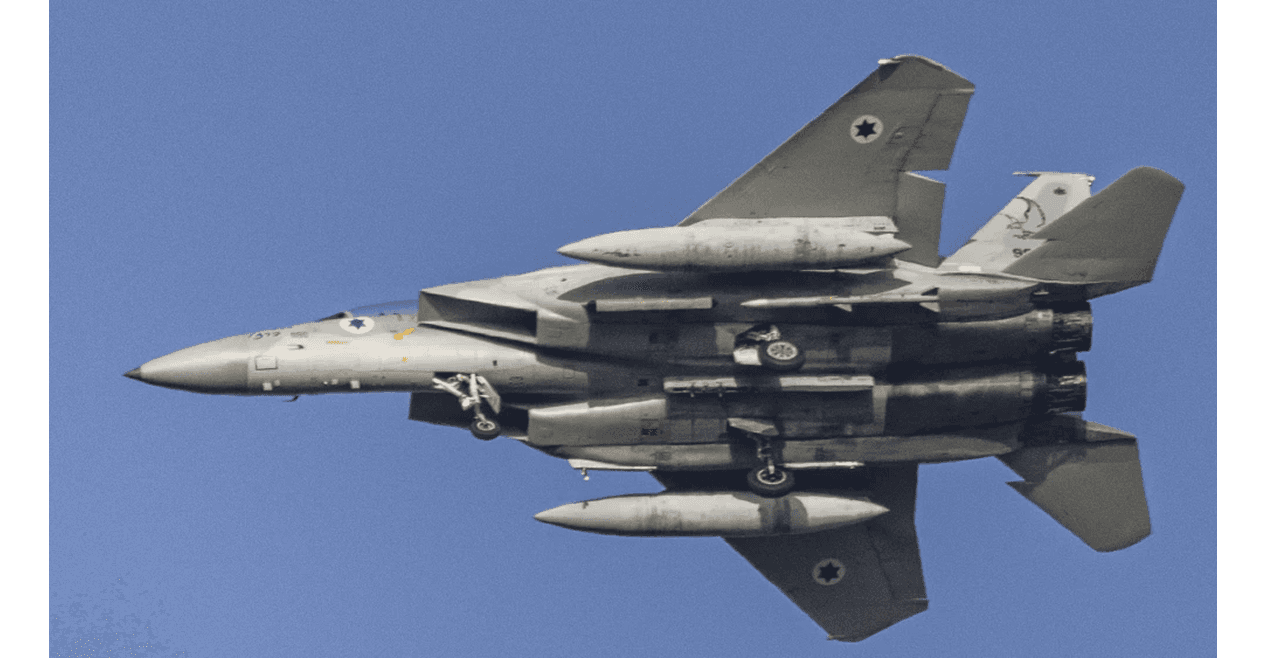
Israeli Air Force fighter jet seen in central Israel amid the ongoing war between Israel-U.S. and Iran, March 18, 2026. Photo courtesy of Nati Shohat/Flash90.
The Israel Defense Forces on Wednesday, April 8, carried out its largest coordinated strikes against Hezbollah terror targets in Lebanon since the start of “Operation Roaring Lion,” hitting about 100 sites across multiple areas simultaneously within 10 minutes.
The large-scale wave of attacks targeted Hezbollah headquarters, military infrastructure and command-and-control centers in Beirut, the Beqaa Valley and Southern Lebanon, according to the Israeli army.
Damage to Iran’s proxy
The targets included intelligence command centers and central headquarters used to direct and plan attacks against IDF troops and Israeli civilians; infrastructure tied to Hezbollah’s rocket and naval units; and assets belonging to the Radwan Force and the Aerial (127) Unit.
The IDF said the operation was based on precise intelligence and had been planned over several weeks by the Operations Directorate, Intelligence Directorate, Israeli Air Force and Northern Command to “deepen the damage” to Iran’s Lebanese proxy.
“Most of the infrastructure that was struck was located within the heart of the civilian population, as part of Hezbollah’s cynical exploitation of Lebanese civilians as human shields in order to safeguard its operations,” the military said. Prior to the strikes, measures were taken to mitigate harm to uninvolved individuals as much as possible, it added.
“The Hezbollah terror organization deliberately decided to join the war, operating on behalf of the Iranian terror regime while harming the State of Lebanon and its civilians. The State of Lebanon and its civilians must refuse Hezbollah’s entrenchment in civilian areas and its weapon build-up capabilities,” the IDF continued.
Hundreds of terrorists hit
Israeli Defense Minister Israel Katz said in a recorded video that hundreds of terrorists were hit in the IAF surprise attack, which constituted “the largest concentrated strike Hezbollah has suffered since the ‘Pager Operation.’” Katz was referring to the Mossad’s Sept. 17-18, 2024,
ADVERTISEMENT
Katz further congratulated the IDF on the “flawless execution, and ... Prime Minister Benjamin Netanyahu for leading the decision and insisting on separating the arenas between Iran and Lebanon.” He went on to say that Jerusalem has insisted on distinguishing between Iran and Lebanon, so that Israel can “change the reality in Lebanon and remove threats from the residents of the north.”
The minister further vowed that Israel is not the same as it was prior to Oct. 7 and will not tolerate any threat or harm to its citizens, something that Hezbollah Secretary-General Naim Qassem “did not understand.”
Qassem’s “personal turn will also come,” Katz threatened, referring to the fate of his predecessor, Hassan Nasrallah, who was eliminated on Sep. 27, 2024.
Removing threats
“We promised to bring security to the residents of the north—and that is exactly what we will do,” he added. The IDF had confirmed earlier Wednesday that “>ceasefire agreed by the United States and Iran.
Netanyahu issued a statement expressing support for the truce, but said it “does not include Lebanon.”
IDF Chief of Staff Lt. Gen. Eyal Zamir said on Tuesday, April 6, that troops are “deepening the multi-focal effort to degrade the Hezbollah terrorist organization.”
“We continue to establish a forward defense posture to prevent direct fire toward our communities, while simultaneously operating against surface-to-surface fire,” he said.
“In every encounter, our troops prevail over Hezbollah. War carries heavy costs, and we will continue to act to remove threats against our civilians,” he added.
The IDF has struck more than 3,500 targets and killed more than 1,000 Hezbollah terrorists in Lebanon since the Iranian-backed group entered the war in support of Tehran on March 2.
Hezbollah began firing rockets and suicide drones at Israel after the assassination of Iranian Supreme Leader Ayatollah Ali Khamenei, who was targeted in the opening strikes of “Operation Roaring Lion” on Feb. 28.
In response to Hezbollah’s violation of the U.S.-brokered Nov. 27, 2024, truce agreement, Jerusalem launched an aerial campaign against the Iranian proxy and ordered IDF troops to advance and take control of additional areas in Southern Lebanon to halt cross-border attacks.
Originally published at
JNS
Originally published at
JNS
ADVERTISEMENT
IDF launches largest strike on Hezbollah since start of ‘Roaring Lion’
Israel hit roughly 100 Hezbollah targets across Lebanon in 10 minutes, its largest strike since ‘Operation Roaring Lion’ began.
Charles Bybelezer
3
mins read time
Originally published at
JNS
Natan Galula
3
mins read time
Originally published at
JNS
Israeli Air Force fighter jet seen in central Israel amid the ongoing war between Israel-U.S. and Iran, March 18, 2026. Photo courtesy of Nati Shohat/Flash90.
The Israel Defense Forces on Wednesday, April 8, carried out its largest coordinated strikes against Hezbollah terror targets in Lebanon since the start of “Operation Roaring Lion,” hitting about 100 sites across multiple areas simultaneously within 10 minutes.
The large-scale wave of attacks targeted Hezbollah headquarters, military infrastructure and command-and-control centers in Beirut, the Beqaa Valley and Southern Lebanon, according to the Israeli army.
Damage to Iran’s proxy
The targets included intelligence command centers and central headquarters used to direct and plan attacks against IDF troops and Israeli civilians; infrastructure tied to Hezbollah’s rocket and naval units; and assets belonging to the Radwan Force and the Aerial (127) Unit.
The IDF said the operation was based on precise intelligence and had been planned over several weeks by the Operations Directorate, Intelligence Directorate, Israeli Air Force and Northern Command to “deepen the damage” to Iran’s Lebanese proxy.
“Most of the infrastructure that was struck was located within the heart of the civilian population, as part of Hezbollah’s cynical exploitation of Lebanese civilians as human shields in order to safeguard its operations,” the military said. Prior to the strikes, measures were taken to mitigate harm to uninvolved individuals as much as possible, it added.
“The Hezbollah terror organization deliberately decided to join the war, operating on behalf of the Iranian terror regime while harming the State of Lebanon and its civilians. The State of Lebanon and its civilians must refuse Hezbollah’s entrenchment in civilian areas and its weapon build-up capabilities,” the IDF continued.
Hundreds of terrorists hit
Israeli Defense Minister Israel Katz said in a recorded video that hundreds of terrorists were hit in the IAF surprise attack, which constituted “the largest concentrated strike Hezbollah has suffered since the ‘Pager Operation.’” Katz was referring to the Mossad’s Sept. 17-18, 2024,
ADVERTISEMENT
Katz further congratulated the IDF on the “flawless execution, and ... Prime Minister Benjamin Netanyahu for leading the decision and insisting on separating the arenas between Iran and Lebanon.” He went on to say that Jerusalem has insisted on distinguishing between Iran and Lebanon, so that Israel can “change the reality in Lebanon and remove threats from the residents of the north.”
The minister further vowed that Israel is not the same as it was prior to Oct. 7 and will not tolerate any threat or harm to its citizens, something that Hezbollah Secretary-General Naim Qassem “did not understand.”
Qassem’s “personal turn will also come,” Katz threatened, referring to the fate of his predecessor, Hassan Nasrallah, who was eliminated on Sep. 27, 2024.
Removing threats
“We promised to bring security to the residents of the north—and that is exactly what we will do,” he added. The IDF had confirmed earlier Wednesday that “>ceasefire agreed by the United States and Iran.
Netanyahu issued a statement expressing support for the truce, but said it “does not include Lebanon.”
IDF Chief of Staff Lt. Gen. Eyal Zamir said on Tuesday, April 6, that troops are “deepening the multi-focal effort to degrade the Hezbollah terrorist organization.”
“We continue to establish a forward defense posture to prevent direct fire toward our communities, while simultaneously operating against surface-to-surface fire,” he said.
“In every encounter, our troops prevail over Hezbollah. War carries heavy costs, and we will continue to act to remove threats against our civilians,” he added.
The IDF has struck more than 3,500 targets and killed more than 1,000 Hezbollah terrorists in Lebanon since the Iranian-backed group entered the war in support of Tehran on March 2.
Hezbollah began firing rockets and suicide drones at Israel after the assassination of Iranian Supreme Leader Ayatollah Ali Khamenei, who was targeted in the opening strikes of “Operation Roaring Lion” on Feb. 28.
In response to Hezbollah’s violation of the U.S.-brokered Nov. 27, 2024, truce agreement, Jerusalem launched an aerial campaign against the Iranian proxy and ordered IDF troops to advance and take control of additional areas in Southern Lebanon to halt cross-border attacks.
Originally published at
JNS
Originally published at
JNS
ADVERTISEMENT
IDF launches largest strike on Hezbollah since start of ‘Roaring Lion’
Israel hit roughly 100 Hezbollah targets across Lebanon in 10 minutes, its largest strike since ‘Operation Roaring Lion’ began.
Charles Bybelezer
3
mins read time
Originally published at
JNS
Natan Galula
3
mins read time
Originally published at
JNS
Israeli Air Force fighter jet seen in central Israel amid the ongoing war between Israel-U.S. and Iran, March 18, 2026. Photo courtesy of Nati Shohat/Flash90.
The Israel Defense Forces on Wednesday, April 8, carried out its largest coordinated strikes against Hezbollah terror targets in Lebanon since the start of “Operation Roaring Lion,” hitting about 100 sites across multiple areas simultaneously within 10 minutes.
The large-scale wave of attacks targeted Hezbollah headquarters, military infrastructure and command-and-control centers in Beirut, the Beqaa Valley and Southern Lebanon, according to the Israeli army.
Damage to Iran’s proxy
The targets included intelligence command centers and central headquarters used to direct and plan attacks against IDF troops and Israeli civilians; infrastructure tied to Hezbollah’s rocket and naval units; and assets belonging to the Radwan Force and the Aerial (127) Unit.
The IDF said the operation was based on precise intelligence and had been planned over several weeks by the Operations Directorate, Intelligence Directorate, Israeli Air Force and Northern Command to “deepen the damage” to Iran’s Lebanese proxy.
“Most of the infrastructure that was struck was located within the heart of the civilian population, as part of Hezbollah’s cynical exploitation of Lebanese civilians as human shields in order to safeguard its operations,” the military said. Prior to the strikes, measures were taken to mitigate harm to uninvolved individuals as much as possible, it added.
“The Hezbollah terror organization deliberately decided to join the war, operating on behalf of the Iranian terror regime while harming the State of Lebanon and its civilians. The State of Lebanon and its civilians must refuse Hezbollah’s entrenchment in civilian areas and its weapon build-up capabilities,” the IDF continued.
Hundreds of terrorists hit
Israeli Defense Minister Israel Katz said in a recorded video that hundreds of terrorists were hit in the IAF surprise attack, which constituted “the largest concentrated strike Hezbollah has suffered since the ‘Pager Operation.’” Katz was referring to the Mossad’s Sept. 17-18, 2024,
ADVERTISEMENT
Katz further congratulated the IDF on the “flawless execution, and ... Prime Minister Benjamin Netanyahu for leading the decision and insisting on separating the arenas between Iran and Lebanon.” He went on to say that Jerusalem has insisted on distinguishing between Iran and Lebanon, so that Israel can “change the reality in Lebanon and remove threats from the residents of the north.”
The minister further vowed that Israel is not the same as it was prior to Oct. 7 and will not tolerate any threat or harm to its citizens, something that Hezbollah Secretary-General Naim Qassem “did not understand.”
Qassem’s “personal turn will also come,” Katz threatened, referring to the fate of his predecessor, Hassan Nasrallah, who was eliminated on Sep. 27, 2024.
Removing threats
“We promised to bring security to the residents of the north—and that is exactly what we will do,” he added. The IDF had confirmed earlier Wednesday that “>ceasefire agreed by the United States and Iran.
Netanyahu issued a statement expressing support for the truce, but said it “does not include Lebanon.”
IDF Chief of Staff Lt. Gen. Eyal Zamir said on Tuesday, April 6, that troops are “deepening the multi-focal effort to degrade the Hezbollah terrorist organization.”
“We continue to establish a forward defense posture to prevent direct fire toward our communities, while simultaneously operating against surface-to-surface fire,” he said.
“In every encounter, our troops prevail over Hezbollah. War carries heavy costs, and we will continue to act to remove threats against our civilians,” he added.
The IDF has struck more than 3,500 targets and killed more than 1,000 Hezbollah terrorists in Lebanon since the Iranian-backed group entered the war in support of Tehran on March 2.
Hezbollah began firing rockets and suicide drones at Israel after the assassination of Iranian Supreme Leader Ayatollah Ali Khamenei, who was targeted in the opening strikes of “Operation Roaring Lion” on Feb. 28.
In response to Hezbollah’s violation of the U.S.-brokered Nov. 27, 2024, truce agreement, Jerusalem launched an aerial campaign against the Iranian proxy and ordered IDF troops to advance and take control of additional areas in Southern Lebanon to halt cross-border attacks.
Originally published at
JNS
Originally published at
JNS
ADVERTISEMENT
IDF launches largest strike on Hezbollah since start of ‘Roaring Lion’
Israel hit roughly 100 Hezbollah targets across Lebanon in 10 minutes, its largest strike since ‘Operation Roaring Lion’ began.
Charles Bybelezer
3
mins read time
Originally published at
JNS
Natan Galula
3
mins read time
Originally published at
JNS
Israeli Air Force fighter jet seen in central Israel amid the ongoing war between Israel-U.S. and Iran, March 18, 2026. Photo courtesy of Nati Shohat/Flash90.
The Israel Defense Forces on Wednesday, April 8, carried out its largest coordinated strikes against Hezbollah terror targets in Lebanon since the start of “Operation Roaring Lion,” hitting about 100 sites across multiple areas simultaneously within 10 minutes.
The large-scale wave of attacks targeted Hezbollah headquarters, military infrastructure and command-and-control centers in Beirut, the Beqaa Valley and Southern Lebanon, according to the Israeli army.
Damage to Iran’s proxy
The targets included intelligence command centers and central headquarters used to direct and plan attacks against IDF troops and Israeli civilians; infrastructure tied to Hezbollah’s rocket and naval units; and assets belonging to the Radwan Force and the Aerial (127) Unit.
The IDF said the operation was based on precise intelligence and had been planned over several weeks by the Operations Directorate, Intelligence Directorate, Israeli Air Force and Northern Command to “deepen the damage” to Iran’s Lebanese proxy.
“Most of the infrastructure that was struck was located within the heart of the civilian population, as part of Hezbollah’s cynical exploitation of Lebanese civilians as human shields in order to safeguard its operations,” the military said. Prior to the strikes, measures were taken to mitigate harm to uninvolved individuals as much as possible, it added.
“The Hezbollah terror organization deliberately decided to join the war, operating on behalf of the Iranian terror regime while harming the State of Lebanon and its civilians. The State of Lebanon and its civilians must refuse Hezbollah’s entrenchment in civilian areas and its weapon build-up capabilities,” the IDF continued.
Hundreds of terrorists hit
Israeli Defense Minister Israel Katz said in a recorded video that hundreds of terrorists were hit in the IAF surprise attack, which constituted “the largest concentrated strike Hezbollah has suffered since the ‘Pager Operation.’” Katz was referring to the Mossad’s Sept. 17-18, 2024,
ADVERTISEMENT
Katz further congratulated the IDF on the “flawless execution, and ... Prime Minister Benjamin Netanyahu for leading the decision and insisting on separating the arenas between Iran and Lebanon.” He went on to say that Jerusalem has insisted on distinguishing between Iran and Lebanon, so that Israel can “change the reality in Lebanon and remove threats from the residents of the north.”
The minister further vowed that Israel is not the same as it was prior to Oct. 7 and will not tolerate any threat or harm to its citizens, something that Hezbollah Secretary-General Naim Qassem “did not understand.”
Qassem’s “personal turn will also come,” Katz threatened, referring to the fate of his predecessor, Hassan Nasrallah, who was eliminated on Sep. 27, 2024.
Removing threats
“We promised to bring security to the residents of the north—and that is exactly what we will do,” he added. The IDF had confirmed earlier Wednesday that “>ceasefire agreed by the United States and Iran.
Netanyahu issued a statement expressing support for the truce, but said it “does not include Lebanon.”
IDF Chief of Staff Lt. Gen. Eyal Zamir said on Tuesday, April 6, that troops are “deepening the multi-focal effort to degrade the Hezbollah terrorist organization.”
“We continue to establish a forward defense posture to prevent direct fire toward our communities, while simultaneously operating against surface-to-surface fire,” he said.
“In every encounter, our troops prevail over Hezbollah. War carries heavy costs, and we will continue to act to remove threats against our civilians,” he added.
The IDF has struck more than 3,500 targets and killed more than 1,000 Hezbollah terrorists in Lebanon since the Iranian-backed group entered the war in support of Tehran on March 2.
Hezbollah began firing rockets and suicide drones at Israel after the assassination of Iranian Supreme Leader Ayatollah Ali Khamenei, who was targeted in the opening strikes of “Operation Roaring Lion” on Feb. 28.
In response to Hezbollah’s violation of the U.S.-brokered Nov. 27, 2024, truce agreement, Jerusalem launched an aerial campaign against the Iranian proxy and ordered IDF troops to advance and take control of additional areas in Southern Lebanon to halt cross-border attacks.
ADVERTISEMENT
Originally published at
JNS
Originally published at
JNS
ADVERTISEMENT
Related News

World
Israel & Middle East
‘Life grows around the pain’: Three years after Oct. 7, a widow raises the couple’s son
Three years after her husband was killed on Oct. 7, Anat Meir describes raising their young son Shaked and the grief that remains.
Tania Shalom Michaelian
October 8, 2026

World
Israel & Middle East
‘I just needed to function’: IDF officer recalls battle for Zikim on Oct. 7
Capt. Ariel Armbrister, 23, describes the decisions she made at the Zikim base near Gaza as the Hamas attack began.
Josh Hasten
October 8, 2026

World
U.S. / National
FBI: Minnesota teen arrested for ISIS-style attack plan on Mall of America due to its Jewish owners
An 18-year-old Minnesota man was arrested after allegedly buying an AK-47-style rifle from an undercover FBI agent to attack the mall on Oct. 24.
JNS
October 8, 2026
World
Israel & Middle East
‘Life grows around the pain’: Three years after Oct. 7, a widow raises the couple’s son
Three years after her husband was killed on Oct. 7, Anat Meir describes raising their young son Shaked and the grief that remains.
Tania Shalom Michaelian
October 8, 2026
World
Israel & Middle East
‘I just needed to function’: IDF officer recalls battle for Zikim on Oct. 7
Capt. Ariel Armbrister, 23, describes the decisions she made at the Zikim base near Gaza as the Hamas attack began.
Josh Hasten
October 8, 2026
World
U.S. / National
FBI: Minnesota teen arrested for ISIS-style attack plan on Mall of America due to its Jewish owners
An 18-year-old Minnesota man was arrested after allegedly buying an AK-47-style rifle from an undercover FBI agent to attack the mall on Oct. 24.
JNS
October 8, 2026
World
Israel & Middle East
Full text: Netanyahu’s address at the U.N. General Assembly 2026
Read Prime Minister Benjamin Netanyahu’s complete remarks to world leaders in New York, from Iran and Oct. 7 to the fight against antisemitism.
JNS
September 28, 2026

© 2026 The Jewish World · Since 1965 - The Capital Region's gateway to Jewish life
Designed and Developed by Ta-Da Studios
© 2026 The Jewish World · Since 1965 - The Capital Region's gateway to Jewish life
Designed and Developed by Ta-Da Studios
© 2026 The Jewish World · Since 1965 - The Capital Region's gateway to Jewish life
Designed and Developed by Ta-Da Studios
© 2026 The Jewish World · Since 1965 - The Capital Region's gateway to Jewish life
Designed and Developed by Ta-Da Studios