Israeli cabinet votes to recognize Armenian Genocide
A unanimous cabinet vote on Gideon Sa’ar’s proposal puts Israel on track to become the 35th country to recognize the Armenian Genocide.
JNS
2
mins read time
Originally published at
JNS
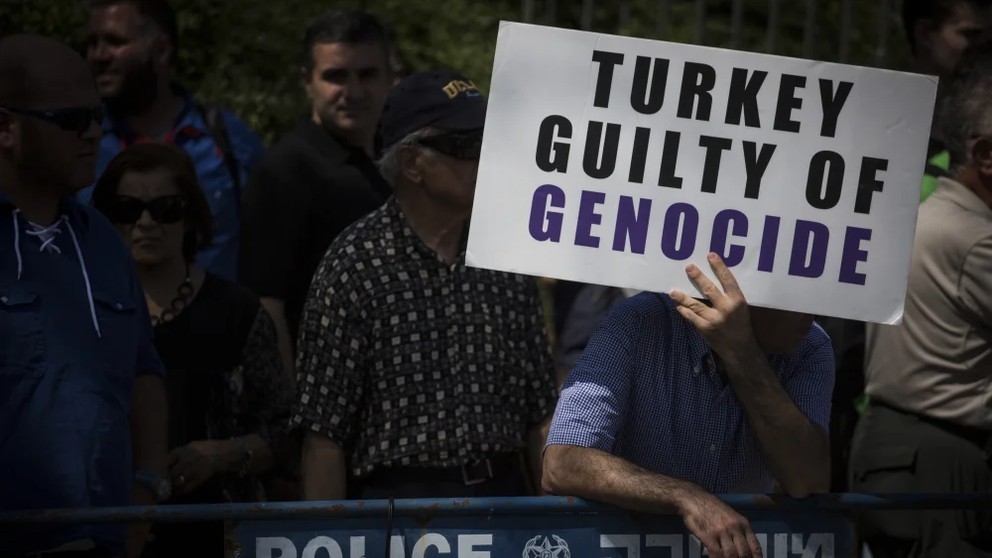
Members of Jerusalem’s Armenian community protest outside the Knesset following the Israeli government’s diplomatic agreement with Turkey, July 5, 2016. Photo courtesy of Hadas Parush/Flash90.
The Israeli Cabinet on Sunday, June 28, voted to recognize the genocide carried out against the Armenians, Assyrians and Greeks by Ottoman Turkey in the early 20th century.
Duty
“The government of Israel unanimously approved Foreign Minister Gideon Sa’ar’s proposal to recognize the Armenian Genocide,” Sa’ar’s office announced following the weekly Cabinet meeting in Jerusalem. “It is never too late to do the right thing,” he said in the statement.
Sa’ar had recently said that he would submit the resolution to the Cabinet, tweeting: “Recognizing the genocide perpetrated against the Armenian people in the final years of the Ottoman Empire is both a moral and historical duty.
“We must also firmly condemn any denial, minimization or distortion of the historical truth,” he added. “The resolution will subsequently be brought before the Knesset for a vote.”
To date, 34 countries, including the United States and Greece, have recognized the Armenian Genocide. Israel would be the 35th.
In August 2025, Israeli Prime Minister Benjamin Netanyahu for the first time publicly recognized the Armenian Genocide.
Asked by American podcaster Patrick Bet-David why Jerusalem has yet to recognize the genocide, Netanyahu said, “In fact, I think we have. I think the Knesset passed a resolution to that effect.”
On Aug. 1, 2016, lawmakers of the Knesset Education, Culture and Sports Committee issued a resolution that recognized the Armenian genocide, urging the government to acknowledge it as such.
Pressed on why no prime minister has publicly characterized the World War I-era events as genocide, Netanyahu said, “I just did. Here you go.”
ADVERTISEMENT
Nothing to loose?
A spokesperson for the prime minister’s office subsequently told JNS that it would not be adding to the comments made by Netanyahu.
In the past, Jerusalem’s Foreign Ministry assessed that recognition by the Israeli government would likely to lead to the expulsion of embassy staff in Ankara and the recalling of Turkey’s ambassador from Israel.
However, relations have soured since Turkish President Recep Tayyip Erdoğan became more hostile toward the Jewish state and closer to Hamas following the Palestinian terrorist organization’s cross-border attack on southern Israel on Oct. 7, 2023.
Israel’s Foreign Ministry recently sharply rebuked Erdoğan after he accused “Zionism” of threatening Turkey’s survival, calling the Turkish leader a “dictator” who persecutes opponents and backs jihadist groups.
U.S. President Donald Trump recently hinted that Washington is looking to move ahead with the sale of military equipment to Turkey.
Originally published at
JNS
ADVERTISEMENT
Israeli cabinet votes to recognize Armenian Genocide
A unanimous cabinet vote on Gideon Sa’ar’s proposal puts Israel on track to become the 35th country to recognize the Armenian Genocide.
JNS
2
mins read time
Originally published at
JNS
Members of Jerusalem’s Armenian community protest outside the Knesset following the Israeli government’s diplomatic agreement with Turkey, July 5, 2016. Photo courtesy of Hadas Parush/Flash90.
The Israeli Cabinet on Sunday, June 28, voted to recognize the genocide carried out against the Armenians, Assyrians and Greeks by Ottoman Turkey in the early 20th century.
Duty
“The government of Israel unanimously approved Foreign Minister Gideon Sa’ar’s proposal to recognize the Armenian Genocide,” Sa’ar’s office announced following the weekly Cabinet meeting in Jerusalem. “It is never too late to do the right thing,” he said in the statement.
Sa’ar had recently said that he would submit the resolution to the Cabinet, tweeting: “Recognizing the genocide perpetrated against the Armenian people in the final years of the Ottoman Empire is both a moral and historical duty.
“We must also firmly condemn any denial, minimization or distortion of the historical truth,” he added. “The resolution will subsequently be brought before the Knesset for a vote.”
To date, 34 countries, including the United States and Greece, have recognized the Armenian Genocide. Israel would be the 35th.
In August 2025, Israeli Prime Minister Benjamin Netanyahu for the first time publicly recognized the Armenian Genocide.
Asked by American podcaster Patrick Bet-David why Jerusalem has yet to recognize the genocide, Netanyahu said, “In fact, I think we have. I think the Knesset passed a resolution to that effect.”
On Aug. 1, 2016, lawmakers of the Knesset Education, Culture and Sports Committee issued a resolution that recognized the Armenian genocide, urging the government to acknowledge it as such.
Pressed on why no prime minister has publicly characterized the World War I-era events as genocide, Netanyahu said, “I just did. Here you go.”
ADVERTISEMENT
Nothing to loose?
A spokesperson for the prime minister’s office subsequently told JNS that it would not be adding to the comments made by Netanyahu.
In the past, Jerusalem’s Foreign Ministry assessed that recognition by the Israeli government would likely to lead to the expulsion of embassy staff in Ankara and the recalling of Turkey’s ambassador from Israel.
However, relations have soured since Turkish President Recep Tayyip Erdoğan became more hostile toward the Jewish state and closer to Hamas following the Palestinian terrorist organization’s cross-border attack on southern Israel on Oct. 7, 2023.
Israel’s Foreign Ministry recently sharply rebuked Erdoğan after he accused “Zionism” of threatening Turkey’s survival, calling the Turkish leader a “dictator” who persecutes opponents and backs jihadist groups.
U.S. President Donald Trump recently hinted that Washington is looking to move ahead with the sale of military equipment to Turkey.
Originally published at
JNS
ADVERTISEMENT
Israeli cabinet votes to recognize Armenian Genocide
A unanimous cabinet vote on Gideon Sa’ar’s proposal puts Israel on track to become the 35th country to recognize the Armenian Genocide.
JNS
2
mins read time
Originally published at
JNS
Members of Jerusalem’s Armenian community protest outside the Knesset following the Israeli government’s diplomatic agreement with Turkey, July 5, 2016. Photo courtesy of Hadas Parush/Flash90.
The Israeli Cabinet on Sunday, June 28, voted to recognize the genocide carried out against the Armenians, Assyrians and Greeks by Ottoman Turkey in the early 20th century.
Duty
“The government of Israel unanimously approved Foreign Minister Gideon Sa’ar’s proposal to recognize the Armenian Genocide,” Sa’ar’s office announced following the weekly Cabinet meeting in Jerusalem. “It is never too late to do the right thing,” he said in the statement.
Sa’ar had recently said that he would submit the resolution to the Cabinet, tweeting: “Recognizing the genocide perpetrated against the Armenian people in the final years of the Ottoman Empire is both a moral and historical duty.
“We must also firmly condemn any denial, minimization or distortion of the historical truth,” he added. “The resolution will subsequently be brought before the Knesset for a vote.”
To date, 34 countries, including the United States and Greece, have recognized the Armenian Genocide. Israel would be the 35th.
In August 2025, Israeli Prime Minister Benjamin Netanyahu for the first time publicly recognized the Armenian Genocide.
Asked by American podcaster Patrick Bet-David why Jerusalem has yet to recognize the genocide, Netanyahu said, “In fact, I think we have. I think the Knesset passed a resolution to that effect.”
On Aug. 1, 2016, lawmakers of the Knesset Education, Culture and Sports Committee issued a resolution that recognized the Armenian genocide, urging the government to acknowledge it as such.
Pressed on why no prime minister has publicly characterized the World War I-era events as genocide, Netanyahu said, “I just did. Here you go.”
ADVERTISEMENT
Nothing to loose?
A spokesperson for the prime minister’s office subsequently told JNS that it would not be adding to the comments made by Netanyahu.
In the past, Jerusalem’s Foreign Ministry assessed that recognition by the Israeli government would likely to lead to the expulsion of embassy staff in Ankara and the recalling of Turkey’s ambassador from Israel.
However, relations have soured since Turkish President Recep Tayyip Erdoğan became more hostile toward the Jewish state and closer to Hamas following the Palestinian terrorist organization’s cross-border attack on southern Israel on Oct. 7, 2023.
Israel’s Foreign Ministry recently sharply rebuked Erdoğan after he accused “Zionism” of threatening Turkey’s survival, calling the Turkish leader a “dictator” who persecutes opponents and backs jihadist groups.
U.S. President Donald Trump recently hinted that Washington is looking to move ahead with the sale of military equipment to Turkey.
Originally published at
JNS
ADVERTISEMENT
Israeli cabinet votes to recognize Armenian Genocide
A unanimous cabinet vote on Gideon Sa’ar’s proposal puts Israel on track to become the 35th country to recognize the Armenian Genocide.
JNS
2
mins read time
Originally published at
JNS
Members of Jerusalem’s Armenian community protest outside the Knesset following the Israeli government’s diplomatic agreement with Turkey, July 5, 2016. Photo courtesy of Hadas Parush/Flash90.
The Israeli Cabinet on Sunday, June 28, voted to recognize the genocide carried out against the Armenians, Assyrians and Greeks by Ottoman Turkey in the early 20th century.
Duty
“The government of Israel unanimously approved Foreign Minister Gideon Sa’ar’s proposal to recognize the Armenian Genocide,” Sa’ar’s office announced following the weekly Cabinet meeting in Jerusalem. “It is never too late to do the right thing,” he said in the statement.
Sa’ar had recently said that he would submit the resolution to the Cabinet, tweeting: “Recognizing the genocide perpetrated against the Armenian people in the final years of the Ottoman Empire is both a moral and historical duty.
“We must also firmly condemn any denial, minimization or distortion of the historical truth,” he added. “The resolution will subsequently be brought before the Knesset for a vote.”
To date, 34 countries, including the United States and Greece, have recognized the Armenian Genocide. Israel would be the 35th.
In August 2025, Israeli Prime Minister Benjamin Netanyahu for the first time publicly recognized the Armenian Genocide.
Asked by American podcaster Patrick Bet-David why Jerusalem has yet to recognize the genocide, Netanyahu said, “In fact, I think we have. I think the Knesset passed a resolution to that effect.”
On Aug. 1, 2016, lawmakers of the Knesset Education, Culture and Sports Committee issued a resolution that recognized the Armenian genocide, urging the government to acknowledge it as such.
Pressed on why no prime minister has publicly characterized the World War I-era events as genocide, Netanyahu said, “I just did. Here you go.”
ADVERTISEMENT
Nothing to loose?
A spokesperson for the prime minister’s office subsequently told JNS that it would not be adding to the comments made by Netanyahu.
In the past, Jerusalem’s Foreign Ministry assessed that recognition by the Israeli government would likely to lead to the expulsion of embassy staff in Ankara and the recalling of Turkey’s ambassador from Israel.
However, relations have soured since Turkish President Recep Tayyip Erdoğan became more hostile toward the Jewish state and closer to Hamas following the Palestinian terrorist organization’s cross-border attack on southern Israel on Oct. 7, 2023.
Israel’s Foreign Ministry recently sharply rebuked Erdoğan after he accused “Zionism” of threatening Turkey’s survival, calling the Turkish leader a “dictator” who persecutes opponents and backs jihadist groups.
U.S. President Donald Trump recently hinted that Washington is looking to move ahead with the sale of military equipment to Turkey.
ADVERTISEMENT
Originally published at
JNS
ADVERTISEMENT
Related News
World
Israel & Middle East
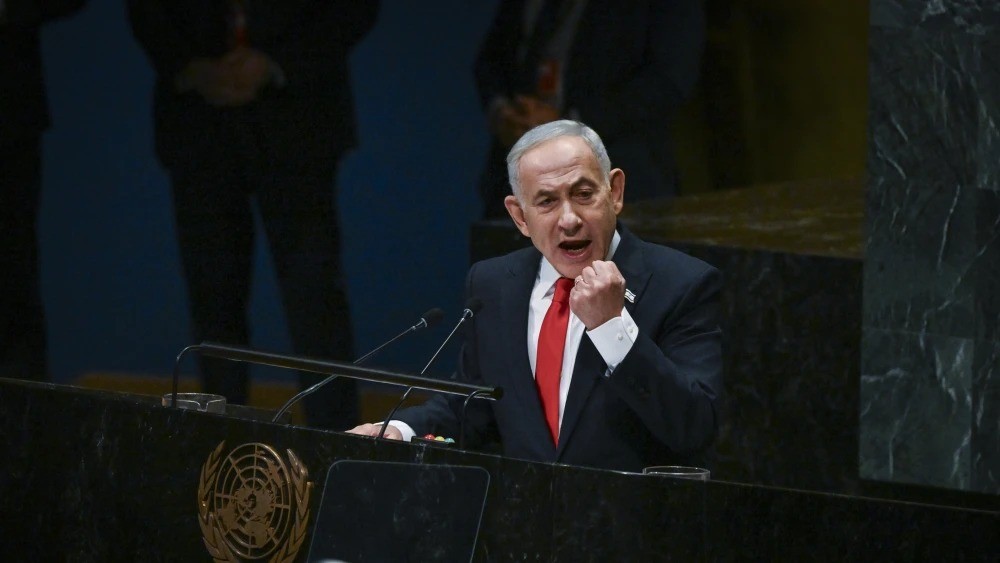
Full text: Netanyahu’s address at the U.N. General Assembly 2026
Read Prime Minister Benjamin Netanyahu’s complete remarks to world leaders in New York, from Iran and Oct. 7 to the fight against antisemitism.
JNS
September 28, 2026
World
Israel & Middle East
U.S. denies Palestinian representatives again at UN as dispute over ICC, terror payments deepens
The U.S. again barred Palestinian Authority officials from the UN, citing ICC provocations against Israel and unended terror payments.
David Isaac
September 24, 2026

World
Israel & Middle East
Photos give glimpse of how Israelis celebrated Sukkot more than 60 years ago
Four rare KKL-JNF archive photos show how Israelis celebrated Sukkot decades ago, from a Jerusalem sukkah to a festive outdoor gathering.
The Jewish World
September 24, 2026
World
Israel & Middle East
Full text: Netanyahu’s address at the U.N. General Assembly 2026
Read Prime Minister Benjamin Netanyahu’s complete remarks to world leaders in New York, from Iran and Oct. 7 to the fight against antisemitism.
JNS
September 28, 2026
World
Israel & Middle East
U.S. denies Palestinian representatives again at UN as dispute over ICC, terror payments deepens
The U.S. again barred Palestinian Authority officials from the UN, citing ICC provocations against Israel and unended terror payments.
David Isaac
September 24, 2026
World
Israel & Middle East
Photos give glimpse of how Israelis celebrated Sukkot more than 60 years ago
Four rare KKL-JNF archive photos show how Israelis celebrated Sukkot decades ago, from a Jerusalem sukkah to a festive outdoor gathering.
The Jewish World
September 24, 2026

World
Israel & Middle East
Israeli envoy to DC says doctors ‘fighting to save life’ of son after car-ramming attack
Ambassador Yechiel Leiter says his son Neria, wounded in a car-ramming attack in Samaria, needs a miracle as doctors fight to save his life.
Andrew Bernard
September 23, 2026

© 2026 The Jewish World · Since 1965 - The Capital Region's gateway to Jewish life
Designed and Developed by Ta-Da Studios
© 2026 The Jewish World · Since 1965 - The Capital Region's gateway to Jewish life
Designed and Developed by Ta-Da Studios
© 2026 The Jewish World · Since 1965 - The Capital Region's gateway to Jewish life
Designed and Developed by Ta-Da Studios
© 2026 The Jewish World · Since 1965 - The Capital Region's gateway to Jewish life
Designed and Developed by Ta-Da Studios