Israel has no choice but to risk open conflict
with Trump
Israel should prioritize its own security needs even if doing so means risking conflict with the Trump administration, a former official argues.
Michael Oren
3
mins read time
Originally published at
JNS
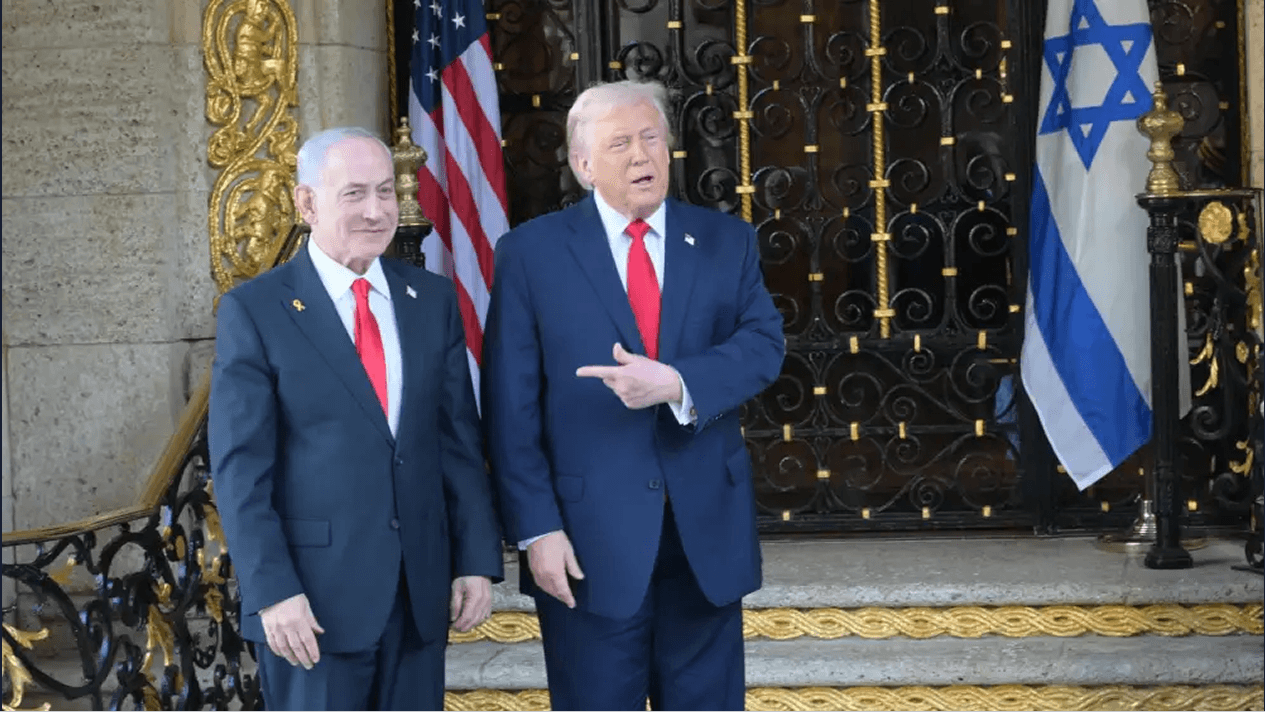
U.S. President Donald Trump and Israeli Prime Minister Benjamin Netanyahu meet at Mar-a-Lago in Palm Beach, Fla., Dec. 29, 2025. Photo courtesy Amos Ben-Gershom/GPO.
In my media interviews, I am often asked: “Has Israel become the 51st state of the U.S.?” With half a smile, I answer: “If only. American states have far more freedom and room to maneuver than Israel does.”
This situation is hardly new. Ever since U.S. President Dwight D. Eisenhower demanded that Israeli Prime Minister David Ben-Gurion halt the Israel Defense Forces’ campaign against Egypt in Sinai in 1956, and later withdraw from Gaza, the United States has consistently forced Israel to stop fighting and agree to a ceasefire.
Commands And Threats
That was true in the 1967 Six-Day War, which Israel wanted to continue for an eighth day; in the 1973 Yom Kippur War; in both Lebanon wars; and in all our operations in Gaza. Even pro-Israel presidents such as Lyndon B. Johnson, Richard Nixon and George W. Bush threatened severe consequences if Israel ignored their demands to cease fire.
In May 2021, on the eighth day of “Operation Guardian of the Walls” against Hamas, I received a phone call from a senior adviser to U.S. President Joe Biden, who asked me to convey an urgent message to Prime Minister Benjamin Netanyahu: “Israel must end the operation tonight, or risk losing American support.” Netanyahu was furious. He wanted to keep fighting for at least three more days. But he immediately complied. The operation ended that evening.
The only difference between U.S. President Donald Trump and previous presidents is his tendency to treat us publicly as vassals who must obey his every order. This is humiliating and demoralizing for Israel and, unfortunately, it strengthens our enemies. But that raises the question: Must Israel obey the White House’s demands under all circumstances and at any price?
ADVERTISEMENT
Israel’s Response
Historically, the answer has been “no.” U.S. presidents not only ordered Israel to stop fighting; they also opposed its decision to go to war in the first place. That was the case in every war from the establishment of the state until “Operation Rising Lion” last year. Yet Israel’s leaders, despite the risk of a rift with Washington, determined that our basic security was at stake and decided to act.
Ironically, every time Israel defied the White House and went to war—in 1948, for example, in 1967 and in the 1981 strike on Iraq’s nuclear reactor—we earned America’s respect. Every time we surrendered to pressure and showed restraint—in 1973 and in the 1991 Gulf War—we earned America’s contempt.
Israel Must Protect Self
This record is relevant today, when Hezbollah will undoubtedly violate any ceasefire and continue attacking us. Israel needs to defend and save the north, but in doing so, it risks not only war with Iran but also an open confrontation with President Trump. As in the past, Israel will have no choice but to act.
With its eyes wide open to the potential cost, Israel must show that it is neither a U.S. vassal nor its 51st state, but a sovereign country with an unshakable duty to defend its territory and its citizens. In the end, if history is our guide, Trump will respect us for it.
Originally published in “Israel Hayom.”
ADVERTISEMENT
Israel has no choice but to risk open conflict
with Trump
Israel should prioritize its own security needs even if doing so means risking conflict with the Trump administration, a former official argues.
Michael Oren
3
mins read time
Originally published at
JNS
U.S. President Donald Trump and Israeli Prime Minister Benjamin Netanyahu meet at Mar-a-Lago in Palm Beach, Fla., Dec. 29, 2025. Photo courtesy Amos Ben-Gershom/GPO.
In my media interviews, I am often asked: “Has Israel become the 51st state of the U.S.?” With half a smile, I answer: “If only. American states have far more freedom and room to maneuver than Israel does.”
This situation is hardly new. Ever since U.S. President Dwight D. Eisenhower demanded that Israeli Prime Minister David Ben-Gurion halt the Israel Defense Forces’ campaign against Egypt in Sinai in 1956, and later withdraw from Gaza, the United States has consistently forced Israel to stop fighting and agree to a ceasefire.
Commands And Threats
That was true in the 1967 Six-Day War, which Israel wanted to continue for an eighth day; in the 1973 Yom Kippur War; in both Lebanon wars; and in all our operations in Gaza. Even pro-Israel presidents such as Lyndon B. Johnson, Richard Nixon and George W. Bush threatened severe consequences if Israel ignored their demands to cease fire.
In May 2021, on the eighth day of “Operation Guardian of the Walls” against Hamas, I received a phone call from a senior adviser to U.S. President Joe Biden, who asked me to convey an urgent message to Prime Minister Benjamin Netanyahu: “Israel must end the operation tonight, or risk losing American support.” Netanyahu was furious. He wanted to keep fighting for at least three more days. But he immediately complied. The operation ended that evening.
The only difference between U.S. President Donald Trump and previous presidents is his tendency to treat us publicly as vassals who must obey his every order. This is humiliating and demoralizing for Israel and, unfortunately, it strengthens our enemies. But that raises the question: Must Israel obey the White House’s demands under all circumstances and at any price?
ADVERTISEMENT
Israel’s Response
Historically, the answer has been “no.” U.S. presidents not only ordered Israel to stop fighting; they also opposed its decision to go to war in the first place. That was the case in every war from the establishment of the state until “Operation Rising Lion” last year. Yet Israel’s leaders, despite the risk of a rift with Washington, determined that our basic security was at stake and decided to act.
Ironically, every time Israel defied the White House and went to war—in 1948, for example, in 1967 and in the 1981 strike on Iraq’s nuclear reactor—we earned America’s respect. Every time we surrendered to pressure and showed restraint—in 1973 and in the 1991 Gulf War—we earned America’s contempt.
Israel Must Protect Self
This record is relevant today, when Hezbollah will undoubtedly violate any ceasefire and continue attacking us. Israel needs to defend and save the north, but in doing so, it risks not only war with Iran but also an open confrontation with President Trump. As in the past, Israel will have no choice but to act.
With its eyes wide open to the potential cost, Israel must show that it is neither a U.S. vassal nor its 51st state, but a sovereign country with an unshakable duty to defend its territory and its citizens. In the end, if history is our guide, Trump will respect us for it.
Originally published in “Israel Hayom.”
ADVERTISEMENT
Israel has no choice but to risk open conflict
with Trump
Israel should prioritize its own security needs even if doing so means risking conflict with the Trump administration, a former official argues.
Michael Oren
3
mins read time
Originally published at
JNS
U.S. President Donald Trump and Israeli Prime Minister Benjamin Netanyahu meet at Mar-a-Lago in Palm Beach, Fla., Dec. 29, 2025. Photo courtesy Amos Ben-Gershom/GPO.
In my media interviews, I am often asked: “Has Israel become the 51st state of the U.S.?” With half a smile, I answer: “If only. American states have far more freedom and room to maneuver than Israel does.”
This situation is hardly new. Ever since U.S. President Dwight D. Eisenhower demanded that Israeli Prime Minister David Ben-Gurion halt the Israel Defense Forces’ campaign against Egypt in Sinai in 1956, and later withdraw from Gaza, the United States has consistently forced Israel to stop fighting and agree to a ceasefire.
Commands And Threats
That was true in the 1967 Six-Day War, which Israel wanted to continue for an eighth day; in the 1973 Yom Kippur War; in both Lebanon wars; and in all our operations in Gaza. Even pro-Israel presidents such as Lyndon B. Johnson, Richard Nixon and George W. Bush threatened severe consequences if Israel ignored their demands to cease fire.
In May 2021, on the eighth day of “Operation Guardian of the Walls” against Hamas, I received a phone call from a senior adviser to U.S. President Joe Biden, who asked me to convey an urgent message to Prime Minister Benjamin Netanyahu: “Israel must end the operation tonight, or risk losing American support.” Netanyahu was furious. He wanted to keep fighting for at least three more days. But he immediately complied. The operation ended that evening.
The only difference between U.S. President Donald Trump and previous presidents is his tendency to treat us publicly as vassals who must obey his every order. This is humiliating and demoralizing for Israel and, unfortunately, it strengthens our enemies. But that raises the question: Must Israel obey the White House’s demands under all circumstances and at any price?
ADVERTISEMENT
Israel’s Response
Historically, the answer has been “no.” U.S. presidents not only ordered Israel to stop fighting; they also opposed its decision to go to war in the first place. That was the case in every war from the establishment of the state until “Operation Rising Lion” last year. Yet Israel’s leaders, despite the risk of a rift with Washington, determined that our basic security was at stake and decided to act.
Ironically, every time Israel defied the White House and went to war—in 1948, for example, in 1967 and in the 1981 strike on Iraq’s nuclear reactor—we earned America’s respect. Every time we surrendered to pressure and showed restraint—in 1973 and in the 1991 Gulf War—we earned America’s contempt.
Israel Must Protect Self
This record is relevant today, when Hezbollah will undoubtedly violate any ceasefire and continue attacking us. Israel needs to defend and save the north, but in doing so, it risks not only war with Iran but also an open confrontation with President Trump. As in the past, Israel will have no choice but to act.
With its eyes wide open to the potential cost, Israel must show that it is neither a U.S. vassal nor its 51st state, but a sovereign country with an unshakable duty to defend its territory and its citizens. In the end, if history is our guide, Trump will respect us for it.
Originally published in “Israel Hayom.”
ADVERTISEMENT
Israel has no choice but to risk open conflict
with Trump
Israel should prioritize its own security needs even if doing so means risking conflict with the Trump administration, a former official argues.
Michael Oren
3
mins read time
Originally published at
JNS
U.S. President Donald Trump and Israeli Prime Minister Benjamin Netanyahu meet at Mar-a-Lago in Palm Beach, Fla., Dec. 29, 2025. Photo courtesy Amos Ben-Gershom/GPO.
In my media interviews, I am often asked: “Has Israel become the 51st state of the U.S.?” With half a smile, I answer: “If only. American states have far more freedom and room to maneuver than Israel does.”
This situation is hardly new. Ever since U.S. President Dwight D. Eisenhower demanded that Israeli Prime Minister David Ben-Gurion halt the Israel Defense Forces’ campaign against Egypt in Sinai in 1956, and later withdraw from Gaza, the United States has consistently forced Israel to stop fighting and agree to a ceasefire.
Commands And Threats
That was true in the 1967 Six-Day War, which Israel wanted to continue for an eighth day; in the 1973 Yom Kippur War; in both Lebanon wars; and in all our operations in Gaza. Even pro-Israel presidents such as Lyndon B. Johnson, Richard Nixon and George W. Bush threatened severe consequences if Israel ignored their demands to cease fire.
In May 2021, on the eighth day of “Operation Guardian of the Walls” against Hamas, I received a phone call from a senior adviser to U.S. President Joe Biden, who asked me to convey an urgent message to Prime Minister Benjamin Netanyahu: “Israel must end the operation tonight, or risk losing American support.” Netanyahu was furious. He wanted to keep fighting for at least three more days. But he immediately complied. The operation ended that evening.
The only difference between U.S. President Donald Trump and previous presidents is his tendency to treat us publicly as vassals who must obey his every order. This is humiliating and demoralizing for Israel and, unfortunately, it strengthens our enemies. But that raises the question: Must Israel obey the White House’s demands under all circumstances and at any price?
ADVERTISEMENT
Israel’s Response
Historically, the answer has been “no.” U.S. presidents not only ordered Israel to stop fighting; they also opposed its decision to go to war in the first place. That was the case in every war from the establishment of the state until “Operation Rising Lion” last year. Yet Israel’s leaders, despite the risk of a rift with Washington, determined that our basic security was at stake and decided to act.
Ironically, every time Israel defied the White House and went to war—in 1948, for example, in 1967 and in the 1981 strike on Iraq’s nuclear reactor—we earned America’s respect. Every time we surrendered to pressure and showed restraint—in 1973 and in the 1991 Gulf War—we earned America’s contempt.
Israel Must Protect Self
This record is relevant today, when Hezbollah will undoubtedly violate any ceasefire and continue attacking us. Israel needs to defend and save the north, but in doing so, it risks not only war with Iran but also an open confrontation with President Trump. As in the past, Israel will have no choice but to act.
With its eyes wide open to the potential cost, Israel must show that it is neither a U.S. vassal nor its 51st state, but a sovereign country with an unshakable duty to defend its territory and its citizens. In the end, if history is our guide, Trump will respect us for it.
Originally published in “Israel Hayom.”
ADVERTISEMENT
ADVERTISEMENT
Related News

World
Global
Azerbaijan is a Jewish story written in three alphabets
From Red Village to Baku, Azerbaijan’s Jews kept their identity through Soviet rule, a changing language and a close bond with Israel.
Rabbi Michael Freund
October 22, 2026
World
Global
Azerbaijan is a Jewish story written in three alphabets
From Red Village to Baku, Azerbaijan’s Jews kept their identity through Soviet rule, a changing language and a close bond with Israel.
Rabbi Michael Freund
October 22, 2026

World
Israel & Middle East
‘Fauda’ co-creator: Museums and media have ‘sacred mission’ to preserve truth of Oct. 7
Avi Issacharoff told a Jerusalem forensic conference that museums, media and even TV dramas must keep Oct. 7 from being rewritten or denied.
Steve Linde
October 22, 2026
World
Israel & Middle East
‘Fauda’ co-creator: Museums and media have ‘sacred mission’ to preserve truth of Oct. 7
Avi Issacharoff told a Jerusalem forensic conference that museums, media and even TV dramas must keep Oct. 7 from being rewritten or denied.
Steve Linde
October 22, 2026

World
Israel & Middle East
Made in Israel: Startup Nation’s cyber sector draws billions as AI reshapes security
Israeli cybersecurity firms raised about $4.3 billion in three quarters of 2026 as investors back companies that secure AI.
JNS
October 22, 2026
World
Israel & Middle East
Made in Israel: Startup Nation’s cyber sector draws billions as AI reshapes security
Israeli cybersecurity firms raised about $4.3 billion in three quarters of 2026 as investors back companies that secure AI.
JNS
October 22, 2026
World
Global
Azerbaijan is a Jewish story written in three alphabets
From Red Village to Baku, Azerbaijan’s Jews kept their identity through Soviet rule, a changing language and a close bond with Israel.
Rabbi Michael Freund
October 22, 2026
World
Israel & Middle East
‘Fauda’ co-creator: Museums and media have ‘sacred mission’ to preserve truth of Oct. 7
Avi Issacharoff told a Jerusalem forensic conference that museums, media and even TV dramas must keep Oct. 7 from being rewritten or denied.
Steve Linde
October 22, 2026
World
Israel & Middle East
Made in Israel: Startup Nation’s cyber sector draws billions as AI reshapes security
Israeli cybersecurity firms raised about $4.3 billion in three quarters of 2026 as investors back companies that secure AI.
JNS
October 22, 2026

World
Israel & Middle East
Black American pastors rebuke Obama for accusing Israel of taking land
A national group of black American pastors says Obama’s claim that Israel “took land off people” ignores the Jewish people’s ancient bond to the land.
Etgar Lefkovits
Mendi Glik
October 21, 2026

© 2026 The Jewish World · Since 1965 - The Capital Region's gateway to Jewish life
Designed and Developed by Ta-Da Studios
© 2026 The Jewish World · Since 1965 - The Capital Region's gateway to Jewish life
Designed and Developed by Ta-Da Studios
© 2026 The Jewish World · Since 1965 - The Capital Region's gateway to Jewish life
Designed and Developed by Ta-Da Studios
© 2026 The Jewish World · Since 1965 - The Capital Region's gateway to Jewish life
Designed and Developed by Ta-Da Studios