Thai farm workers attacked on Oct. 7 returning to Negev farms
Thai agricultural workers who survived Hamas attacks on Oct. 7 are returning to Negev farms, rebuilding their lives after 22 Thai and Nepalese…
The Jewish World
4
mins read time
Originally published at
The Jewish World
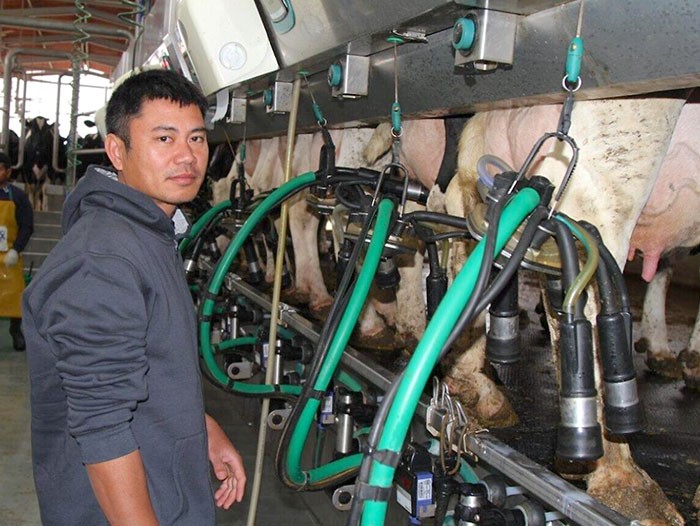
Korawit Kaeokoed milking cows at Kibbutz Alumim, near the Gaza Strip, Jan. 22, 2025. Photo courtesy of Rafi Babayan
KIBBUTZ ALUMIM—A Thai agriculture worker crouched on top of the refrigerator in the small room in the cowshed in the southern kibbutz of Alumim, eyeing the removable ceiling panels for an emergency getaway.
It was Oct. 7, 2023, and Hamas terrorists had stormed this agricultural community, less than 2.5 miles from the Gaza border, using guns, hand grenades and a rocket-propelled grenade launcher to attack a group of Thai foreign workers and Nepali agricultural students, killing 22 of them (12 Thai and 10 Nepalese citizens) and abducting others to Gaza. Their mobile caravan dormitories, nearest to the entry point of the terrorists, were adjacent to the cowshed. All had been set ablaze.
From his hiding place in the cowshed’s medicine room, Korawit Kaeokoed, 37, who had been milking the cows overnight before the attack got underway, messaged his wife in Thailand that he wouldn’t make it out alive.
Back to Thailand
Kaeokoed would remain hidden for the next 20 hours, using his sweatshirt, doused with a liquid solution normally used to prevent cows from becoming dehydrated, to cover his mouth to avoid breathing in the smoke that was spreading everywhere.
It was only early the next morning that he was rescued by kibbutz members who fought off the terrorist onslaught on this Orthodox village on that fateful autumn day 15 months ago. They managed to stop the invaders from reaching the kibbutz members’ living quarters and prevented a bigger massacre like those that took place in nearby communities.
Safe at last, Kaeokoed saw the scorched bodies of friends stretched on the ground outside the cowshed. The following week, he was among 9,000 Thais who returned to their country, out of the nearly 30,000 who were employed in Israel’s agricultural sector before the war.
Thirty-nine Thai citizens were killed in the Oct. 7 massacres, the third-largest group after Israelis and Americans.
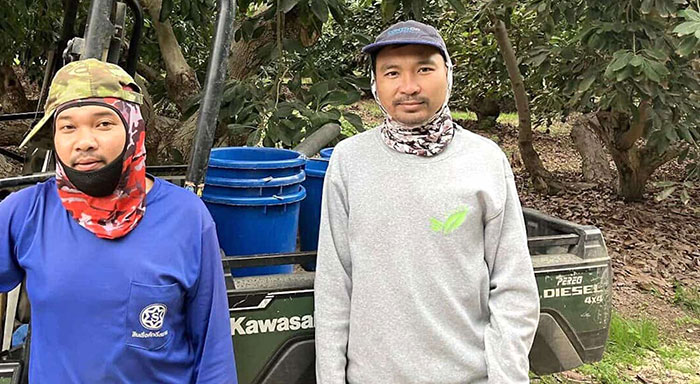
Thai workers in the avocado orchard at Kibbutz Alumim, near the Gaza Strip, Jan. 22, 2025. Photo courtesy of Rafi Babayan.
ADVERTISEMENT
Return
Almost all of the Thai workers who left Israel right after the assault have since returned, some like Kaeokoed to the communities that came under attack on Oct. 7. After less than three months at home, he was already back in Israel last January, even as the war against Hamas continued to rage.
“Israel good,” Kaeokoed told JNS recently at the newly rebuilt cowshed where he had his close encounter with death. “No work, no money in Thailand,” he added noting that he was glad to be back at the kibbutz supporting his family, who live in the impoverished north of the Southeast Asian country.
Remembers terror
He vividly remembers everything he went through, showing JNS where he hid and where he had urgently messaged his employer: “Gaza here, Gaza here,” when he first caught sight of the invader. The bullet marks left at the entrance to the rebuilt cowshed—and a remaining outer wall of the adjacent demolished dorm areas—are reminders of that black day.
“Now everything OK,” Kaeokoed said in his broken Hebrew.
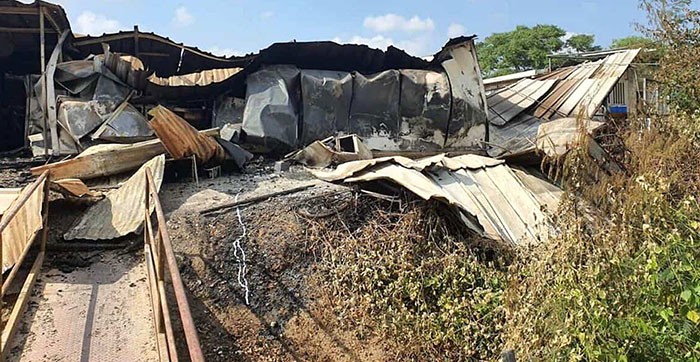
The cowshed at Kibbutz Alumim after the Hamas-led terrorist attacks on Oct. 7, 2023. Credit: Courtesy.
Unfinished story
Ten foreigners are among the more than 90 hostages, living and dead, still being held by Hamas in Gaza, including eight Thai workers as well as a Nepalese and Tanzanian student. Bipin Joshi, the 23-year-old Nepalese student who was abducted from this kibbutz, managed to pick up a terrorist grenade and throw it outside his bomb shelter, before being seized. Five Thai hostages were scheduled for release by Hamas for Jan, 30.
Last year, the community held a joint memorial for the slain workers and students, as well as the Israelis who were killed fighting off the intrusion, at the site of their former caravans.
Friends
For war-scarred kibbutz members, the return of the Thai workers during the war was a heartwarming surprise. “We were really shocked,” said Gilad Hunwald, 45, who runs the avocado sector at the kibbutz. “One day, all of a sudden I saw they had returned,” he said.
“I come back,” Kaeokoed told him.
“We are their [the Thais’] friends,” Hunwald told JNS.
Originally published at
The Jewish World
ADVERTISEMENT
Thai farm workers attacked on Oct. 7 returning to Negev farms
Thai agricultural workers who survived Hamas attacks on Oct. 7 are returning to Negev farms, rebuilding their lives after 22 Thai and Nepalese…
The Jewish World
4
mins read time
Originally published at
The Jewish World
Korawit Kaeokoed milking cows at Kibbutz Alumim, near the Gaza Strip, Jan. 22, 2025. Photo courtesy of Rafi Babayan
KIBBUTZ ALUMIM—A Thai agriculture worker crouched on top of the refrigerator in the small room in the cowshed in the southern kibbutz of Alumim, eyeing the removable ceiling panels for an emergency getaway.
It was Oct. 7, 2023, and Hamas terrorists had stormed this agricultural community, less than 2.5 miles from the Gaza border, using guns, hand grenades and a rocket-propelled grenade launcher to attack a group of Thai foreign workers and Nepali agricultural students, killing 22 of them (12 Thai and 10 Nepalese citizens) and abducting others to Gaza. Their mobile caravan dormitories, nearest to the entry point of the terrorists, were adjacent to the cowshed. All had been set ablaze.
From his hiding place in the cowshed’s medicine room, Korawit Kaeokoed, 37, who had been milking the cows overnight before the attack got underway, messaged his wife in Thailand that he wouldn’t make it out alive.
Back to Thailand
Kaeokoed would remain hidden for the next 20 hours, using his sweatshirt, doused with a liquid solution normally used to prevent cows from becoming dehydrated, to cover his mouth to avoid breathing in the smoke that was spreading everywhere.
It was only early the next morning that he was rescued by kibbutz members who fought off the terrorist onslaught on this Orthodox village on that fateful autumn day 15 months ago. They managed to stop the invaders from reaching the kibbutz members’ living quarters and prevented a bigger massacre like those that took place in nearby communities.
Safe at last, Kaeokoed saw the scorched bodies of friends stretched on the ground outside the cowshed. The following week, he was among 9,000 Thais who returned to their country, out of the nearly 30,000 who were employed in Israel’s agricultural sector before the war.
Thirty-nine Thai citizens were killed in the Oct. 7 massacres, the third-largest group after Israelis and Americans.
Thai workers in the avocado orchard at Kibbutz Alumim, near the Gaza Strip, Jan. 22, 2025. Photo courtesy of Rafi Babayan.
ADVERTISEMENT
Return
Almost all of the Thai workers who left Israel right after the assault have since returned, some like Kaeokoed to the communities that came under attack on Oct. 7. After less than three months at home, he was already back in Israel last January, even as the war against Hamas continued to rage.
“Israel good,” Kaeokoed told JNS recently at the newly rebuilt cowshed where he had his close encounter with death. “No work, no money in Thailand,” he added noting that he was glad to be back at the kibbutz supporting his family, who live in the impoverished north of the Southeast Asian country.
Remembers terror
He vividly remembers everything he went through, showing JNS where he hid and where he had urgently messaged his employer: “Gaza here, Gaza here,” when he first caught sight of the invader. The bullet marks left at the entrance to the rebuilt cowshed—and a remaining outer wall of the adjacent demolished dorm areas—are reminders of that black day.
“Now everything OK,” Kaeokoed said in his broken Hebrew.
The cowshed at Kibbutz Alumim after the Hamas-led terrorist attacks on Oct. 7, 2023. Credit: Courtesy.
Unfinished story
Ten foreigners are among the more than 90 hostages, living and dead, still being held by Hamas in Gaza, including eight Thai workers as well as a Nepalese and Tanzanian student. Bipin Joshi, the 23-year-old Nepalese student who was abducted from this kibbutz, managed to pick up a terrorist grenade and throw it outside his bomb shelter, before being seized. Five Thai hostages were scheduled for release by Hamas for Jan, 30.
Last year, the community held a joint memorial for the slain workers and students, as well as the Israelis who were killed fighting off the intrusion, at the site of their former caravans.
Friends
For war-scarred kibbutz members, the return of the Thai workers during the war was a heartwarming surprise. “We were really shocked,” said Gilad Hunwald, 45, who runs the avocado sector at the kibbutz. “One day, all of a sudden I saw they had returned,” he said.
“I come back,” Kaeokoed told him.
“We are their [the Thais’] friends,” Hunwald told JNS.
Originally published at
The Jewish World
ADVERTISEMENT
Thai farm workers attacked on Oct. 7 returning to Negev farms
Thai agricultural workers who survived Hamas attacks on Oct. 7 are returning to Negev farms, rebuilding their lives after 22 Thai and Nepalese…
The Jewish World
4
mins read time
Originally published at
The Jewish World
Korawit Kaeokoed milking cows at Kibbutz Alumim, near the Gaza Strip, Jan. 22, 2025. Photo courtesy of Rafi Babayan
KIBBUTZ ALUMIM—A Thai agriculture worker crouched on top of the refrigerator in the small room in the cowshed in the southern kibbutz of Alumim, eyeing the removable ceiling panels for an emergency getaway.
It was Oct. 7, 2023, and Hamas terrorists had stormed this agricultural community, less than 2.5 miles from the Gaza border, using guns, hand grenades and a rocket-propelled grenade launcher to attack a group of Thai foreign workers and Nepali agricultural students, killing 22 of them (12 Thai and 10 Nepalese citizens) and abducting others to Gaza. Their mobile caravan dormitories, nearest to the entry point of the terrorists, were adjacent to the cowshed. All had been set ablaze.
From his hiding place in the cowshed’s medicine room, Korawit Kaeokoed, 37, who had been milking the cows overnight before the attack got underway, messaged his wife in Thailand that he wouldn’t make it out alive.
Back to Thailand
Kaeokoed would remain hidden for the next 20 hours, using his sweatshirt, doused with a liquid solution normally used to prevent cows from becoming dehydrated, to cover his mouth to avoid breathing in the smoke that was spreading everywhere.
It was only early the next morning that he was rescued by kibbutz members who fought off the terrorist onslaught on this Orthodox village on that fateful autumn day 15 months ago. They managed to stop the invaders from reaching the kibbutz members’ living quarters and prevented a bigger massacre like those that took place in nearby communities.
Safe at last, Kaeokoed saw the scorched bodies of friends stretched on the ground outside the cowshed. The following week, he was among 9,000 Thais who returned to their country, out of the nearly 30,000 who were employed in Israel’s agricultural sector before the war.
Thirty-nine Thai citizens were killed in the Oct. 7 massacres, the third-largest group after Israelis and Americans.
Thai workers in the avocado orchard at Kibbutz Alumim, near the Gaza Strip, Jan. 22, 2025. Photo courtesy of Rafi Babayan.
ADVERTISEMENT
Return
Almost all of the Thai workers who left Israel right after the assault have since returned, some like Kaeokoed to the communities that came under attack on Oct. 7. After less than three months at home, he was already back in Israel last January, even as the war against Hamas continued to rage.
“Israel good,” Kaeokoed told JNS recently at the newly rebuilt cowshed where he had his close encounter with death. “No work, no money in Thailand,” he added noting that he was glad to be back at the kibbutz supporting his family, who live in the impoverished north of the Southeast Asian country.
Remembers terror
He vividly remembers everything he went through, showing JNS where he hid and where he had urgently messaged his employer: “Gaza here, Gaza here,” when he first caught sight of the invader. The bullet marks left at the entrance to the rebuilt cowshed—and a remaining outer wall of the adjacent demolished dorm areas—are reminders of that black day.
“Now everything OK,” Kaeokoed said in his broken Hebrew.
The cowshed at Kibbutz Alumim after the Hamas-led terrorist attacks on Oct. 7, 2023. Credit: Courtesy.
Unfinished story
Ten foreigners are among the more than 90 hostages, living and dead, still being held by Hamas in Gaza, including eight Thai workers as well as a Nepalese and Tanzanian student. Bipin Joshi, the 23-year-old Nepalese student who was abducted from this kibbutz, managed to pick up a terrorist grenade and throw it outside his bomb shelter, before being seized. Five Thai hostages were scheduled for release by Hamas for Jan, 30.
Last year, the community held a joint memorial for the slain workers and students, as well as the Israelis who were killed fighting off the intrusion, at the site of their former caravans.
Friends
For war-scarred kibbutz members, the return of the Thai workers during the war was a heartwarming surprise. “We were really shocked,” said Gilad Hunwald, 45, who runs the avocado sector at the kibbutz. “One day, all of a sudden I saw they had returned,” he said.
“I come back,” Kaeokoed told him.
“We are their [the Thais’] friends,” Hunwald told JNS.
Originally published at
The Jewish World
ADVERTISEMENT
Thai farm workers attacked on Oct. 7 returning to Negev farms
Thai agricultural workers who survived Hamas attacks on Oct. 7 are returning to Negev farms, rebuilding their lives after 22 Thai and Nepalese…
The Jewish World
4
mins read time
Originally published at
The Jewish World
Korawit Kaeokoed milking cows at Kibbutz Alumim, near the Gaza Strip, Jan. 22, 2025. Photo courtesy of Rafi Babayan
KIBBUTZ ALUMIM—A Thai agriculture worker crouched on top of the refrigerator in the small room in the cowshed in the southern kibbutz of Alumim, eyeing the removable ceiling panels for an emergency getaway.
It was Oct. 7, 2023, and Hamas terrorists had stormed this agricultural community, less than 2.5 miles from the Gaza border, using guns, hand grenades and a rocket-propelled grenade launcher to attack a group of Thai foreign workers and Nepali agricultural students, killing 22 of them (12 Thai and 10 Nepalese citizens) and abducting others to Gaza. Their mobile caravan dormitories, nearest to the entry point of the terrorists, were adjacent to the cowshed. All had been set ablaze.
From his hiding place in the cowshed’s medicine room, Korawit Kaeokoed, 37, who had been milking the cows overnight before the attack got underway, messaged his wife in Thailand that he wouldn’t make it out alive.
Back to Thailand
Kaeokoed would remain hidden for the next 20 hours, using his sweatshirt, doused with a liquid solution normally used to prevent cows from becoming dehydrated, to cover his mouth to avoid breathing in the smoke that was spreading everywhere.
It was only early the next morning that he was rescued by kibbutz members who fought off the terrorist onslaught on this Orthodox village on that fateful autumn day 15 months ago. They managed to stop the invaders from reaching the kibbutz members’ living quarters and prevented a bigger massacre like those that took place in nearby communities.
Safe at last, Kaeokoed saw the scorched bodies of friends stretched on the ground outside the cowshed. The following week, he was among 9,000 Thais who returned to their country, out of the nearly 30,000 who were employed in Israel’s agricultural sector before the war.
Thirty-nine Thai citizens were killed in the Oct. 7 massacres, the third-largest group after Israelis and Americans.
Thai workers in the avocado orchard at Kibbutz Alumim, near the Gaza Strip, Jan. 22, 2025. Photo courtesy of Rafi Babayan.
ADVERTISEMENT
Return
Almost all of the Thai workers who left Israel right after the assault have since returned, some like Kaeokoed to the communities that came under attack on Oct. 7. After less than three months at home, he was already back in Israel last January, even as the war against Hamas continued to rage.
“Israel good,” Kaeokoed told JNS recently at the newly rebuilt cowshed where he had his close encounter with death. “No work, no money in Thailand,” he added noting that he was glad to be back at the kibbutz supporting his family, who live in the impoverished north of the Southeast Asian country.
Remembers terror
He vividly remembers everything he went through, showing JNS where he hid and where he had urgently messaged his employer: “Gaza here, Gaza here,” when he first caught sight of the invader. The bullet marks left at the entrance to the rebuilt cowshed—and a remaining outer wall of the adjacent demolished dorm areas—are reminders of that black day.
“Now everything OK,” Kaeokoed said in his broken Hebrew.
The cowshed at Kibbutz Alumim after the Hamas-led terrorist attacks on Oct. 7, 2023. Credit: Courtesy.
Unfinished story
Ten foreigners are among the more than 90 hostages, living and dead, still being held by Hamas in Gaza, including eight Thai workers as well as a Nepalese and Tanzanian student. Bipin Joshi, the 23-year-old Nepalese student who was abducted from this kibbutz, managed to pick up a terrorist grenade and throw it outside his bomb shelter, before being seized. Five Thai hostages were scheduled for release by Hamas for Jan, 30.
Last year, the community held a joint memorial for the slain workers and students, as well as the Israelis who were killed fighting off the intrusion, at the site of their former caravans.
Friends
For war-scarred kibbutz members, the return of the Thai workers during the war was a heartwarming surprise. “We were really shocked,” said Gilad Hunwald, 45, who runs the avocado sector at the kibbutz. “One day, all of a sudden I saw they had returned,” he said.
“I come back,” Kaeokoed told him.
“We are their [the Thais’] friends,” Hunwald told JNS.
ADVERTISEMENT
Originally published at
The Jewish World
ADVERTISEMENT
Related News

Opinions
Columns
Get out your crystal ball! Take the 5787 Jewish pundit quiz
JNS columnist Jonathan S. Tobin reviews last year’s picks and previews the new Jewish year with his annual Rosh Hashanah pundit quiz.
Jonathan S. Tobin
September 17, 2026
Opinions
Columns
Why the Gaza plan is doomed to fail
Mitchell Bard argues Trump’s Gaza peace plan overlooks a crucial piece: reforming Palestinian schools that still teach incitement and hatred.
Mitchell Bard
September 3, 2026

Opinions
Israel & Middle East
Can the U.S. win a bloodless war?
A U.S. sanctions-and-strikes strategy against Iran may be insufficient without defeating the regime that controls its army.
Mitchell Bard
August 26, 2026
Opinions
Columns
Get out your crystal ball! Take the 5787 Jewish pundit quiz
JNS columnist Jonathan S. Tobin reviews last year’s picks and previews the new Jewish year with his annual Rosh Hashanah pundit quiz.
Jonathan S. Tobin
September 17, 2026
Opinions
Columns
Why the Gaza plan is doomed to fail
Mitchell Bard argues Trump’s Gaza peace plan overlooks a crucial piece: reforming Palestinian schools that still teach incitement and hatred.
Mitchell Bard
September 3, 2026
Opinions
Israel & Middle East
Can the U.S. win a bloodless war?
A U.S. sanctions-and-strikes strategy against Iran may be insufficient without defeating the regime that controls its army.
Mitchell Bard
August 26, 2026

Opinions
Columns
The Haredi challenge is becoming Israel’s national security crisis
Haredi exemptions, birthrates and political leverage are reshaping Israel’s military, economy and public life.
Mitchell Bard
July 30, 2026

© 2026 The Jewish World · Since 1965 - The Capital Region's gateway to Jewish life
Designed and Developed by Ta-Da Studios
© 2026 The Jewish World · Since 1965 - The Capital Region's gateway to Jewish life
Designed and Developed by Ta-Da Studios
© 2026 The Jewish World · Since 1965 - The Capital Region's gateway to Jewish life
Designed and Developed by Ta-Da Studios
© 2026 The Jewish World · Since 1965 - The Capital Region's gateway to Jewish life
Designed and Developed by Ta-Da Studios