Why I deleted my data from 23andMe
Woman with Ashkenazi ancestry deleted 23andMe data after bankruptcy announcement, citing concerns about genetic privacy and historical persecution.
Ricki Lewis
3
mins read time
Originally published at
The Jewish World
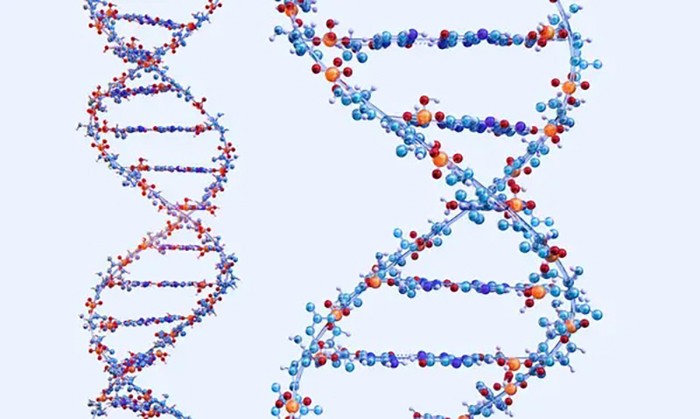
Ilustration of DNA molecules. Graphic courtesy of Sciencerf, dDeposit Photos
When consumer DNA testing company 23andMe announced on March 23 that it had filed for bankruptcy, I wasn’t alarmed — at first.
If someone wanted to know that I have a mutation for polycystic liver disease, or that I have more Neanderthal DNA than most folks, so be it. I’d never paid attention to the ancestry part of the picture. A pie chart of one color, depicting 100% Ashkenazi heritage, isn’t as interesting as a chart from someone who is, say, 10% Native American, 50% Nigerian, 30% Scottish, and a sprinkling of other ethnicities, like a multicolor fabric of entwined history.
Haunting parallels
But could those boring, one-color ancestry pie charts become a label, like yellow stars once were for being Jewish? That’s a growing concern as haunting parallels to 1930s Germany emerge here in the U.S. The alternate realities of Sinclair Lewis’s novel It Can’t Happen Here, Philip Roth’s The Plot Against America, and the TV series The Man In the High Castle, have become the stuff of nightmares.
Where do the pie charts come from? Algorithms deduce dozens of sites of origin by following families that go back at least five generations staying in the same place, and comparing their DNA data to people in other geographic regions.
But I didn’t need a pie chart to tell me I was Ashkenazi.
I knew the story of how my grandmother Sarah had escaped a pogrom in Russia, on the brink of adolescence, to come to the United States in 1905. She was lucky. A few years later, she escaped the Triangle Shirtwaist Factory Fire because she had a cold that Saturday morning and stayed home.
I think of being Ashkenazi as a cultural identity, not so much a sequence of DNA bases. I have curly hair, Ashkenazi facial features, love comedy and music, and appreciate stuffed derma and knishes.
ADVERTISEMENT
What could happen?
23andMe had indicated trouble brewing over six months ago. My half-sister Sara Jane alerted me in March to the news that the company could be up for sale. (We had found each other, and 10 other half-siblings, a few years ago thanks to Ancestry.com, confirmed through 23andMe.)
I told Sara Jane that I was proud of my Neanderthal heritage and my health was fine, but she reminded me of the one-colored ancestry pie chart in my 23andMe account. If another company takes over, what happens to the ethnicity report, the unicolor pie chart?
We don’t know.
But in this age of upheaval and uncertainty, a chart that indicates Ashkenazi Jewish ancestry can turn from a badge of pride to a source of concern, depending upon circumstances that we cannot predict.
I advise deleting your data.
Originally published at
The Jewish World
ADVERTISEMENT
Why I deleted my data from 23andMe
Woman with Ashkenazi ancestry deleted 23andMe data after bankruptcy announcement, citing concerns about genetic privacy and historical persecution.
Ricki Lewis
3
mins read time
Originally published at
The Jewish World
Ilustration of DNA molecules. Graphic courtesy of Sciencerf, dDeposit Photos
When consumer DNA testing company 23andMe announced on March 23 that it had filed for bankruptcy, I wasn’t alarmed — at first.
If someone wanted to know that I have a mutation for polycystic liver disease, or that I have more Neanderthal DNA than most folks, so be it. I’d never paid attention to the ancestry part of the picture. A pie chart of one color, depicting 100% Ashkenazi heritage, isn’t as interesting as a chart from someone who is, say, 10% Native American, 50% Nigerian, 30% Scottish, and a sprinkling of other ethnicities, like a multicolor fabric of entwined history.
Haunting parallels
But could those boring, one-color ancestry pie charts become a label, like yellow stars once were for being Jewish? That’s a growing concern as haunting parallels to 1930s Germany emerge here in the U.S. The alternate realities of Sinclair Lewis’s novel It Can’t Happen Here, Philip Roth’s The Plot Against America, and the TV series The Man In the High Castle, have become the stuff of nightmares.
Where do the pie charts come from? Algorithms deduce dozens of sites of origin by following families that go back at least five generations staying in the same place, and comparing their DNA data to people in other geographic regions.
But I didn’t need a pie chart to tell me I was Ashkenazi.
I knew the story of how my grandmother Sarah had escaped a pogrom in Russia, on the brink of adolescence, to come to the United States in 1905. She was lucky. A few years later, she escaped the Triangle Shirtwaist Factory Fire because she had a cold that Saturday morning and stayed home.
I think of being Ashkenazi as a cultural identity, not so much a sequence of DNA bases. I have curly hair, Ashkenazi facial features, love comedy and music, and appreciate stuffed derma and knishes.
ADVERTISEMENT
What could happen?
23andMe had indicated trouble brewing over six months ago. My half-sister Sara Jane alerted me in March to the news that the company could be up for sale. (We had found each other, and 10 other half-siblings, a few years ago thanks to Ancestry.com, confirmed through 23andMe.)
I told Sara Jane that I was proud of my Neanderthal heritage and my health was fine, but she reminded me of the one-colored ancestry pie chart in my 23andMe account. If another company takes over, what happens to the ethnicity report, the unicolor pie chart?
We don’t know.
But in this age of upheaval and uncertainty, a chart that indicates Ashkenazi Jewish ancestry can turn from a badge of pride to a source of concern, depending upon circumstances that we cannot predict.
I advise deleting your data.
Originally published at
The Jewish World
ADVERTISEMENT
Why I deleted my data from 23andMe
Woman with Ashkenazi ancestry deleted 23andMe data after bankruptcy announcement, citing concerns about genetic privacy and historical persecution.
Ricki Lewis
3
mins read time
Originally published at
The Jewish World
Ilustration of DNA molecules. Graphic courtesy of Sciencerf, dDeposit Photos
When consumer DNA testing company 23andMe announced on March 23 that it had filed for bankruptcy, I wasn’t alarmed — at first.
If someone wanted to know that I have a mutation for polycystic liver disease, or that I have more Neanderthal DNA than most folks, so be it. I’d never paid attention to the ancestry part of the picture. A pie chart of one color, depicting 100% Ashkenazi heritage, isn’t as interesting as a chart from someone who is, say, 10% Native American, 50% Nigerian, 30% Scottish, and a sprinkling of other ethnicities, like a multicolor fabric of entwined history.
Haunting parallels
But could those boring, one-color ancestry pie charts become a label, like yellow stars once were for being Jewish? That’s a growing concern as haunting parallels to 1930s Germany emerge here in the U.S. The alternate realities of Sinclair Lewis’s novel It Can’t Happen Here, Philip Roth’s The Plot Against America, and the TV series The Man In the High Castle, have become the stuff of nightmares.
Where do the pie charts come from? Algorithms deduce dozens of sites of origin by following families that go back at least five generations staying in the same place, and comparing their DNA data to people in other geographic regions.
But I didn’t need a pie chart to tell me I was Ashkenazi.
I knew the story of how my grandmother Sarah had escaped a pogrom in Russia, on the brink of adolescence, to come to the United States in 1905. She was lucky. A few years later, she escaped the Triangle Shirtwaist Factory Fire because she had a cold that Saturday morning and stayed home.
I think of being Ashkenazi as a cultural identity, not so much a sequence of DNA bases. I have curly hair, Ashkenazi facial features, love comedy and music, and appreciate stuffed derma and knishes.
ADVERTISEMENT
What could happen?
23andMe had indicated trouble brewing over six months ago. My half-sister Sara Jane alerted me in March to the news that the company could be up for sale. (We had found each other, and 10 other half-siblings, a few years ago thanks to Ancestry.com, confirmed through 23andMe.)
I told Sara Jane that I was proud of my Neanderthal heritage and my health was fine, but she reminded me of the one-colored ancestry pie chart in my 23andMe account. If another company takes over, what happens to the ethnicity report, the unicolor pie chart?
We don’t know.
But in this age of upheaval and uncertainty, a chart that indicates Ashkenazi Jewish ancestry can turn from a badge of pride to a source of concern, depending upon circumstances that we cannot predict.
I advise deleting your data.
Originally published at
The Jewish World
ADVERTISEMENT
Why I deleted my data from 23andMe
Woman with Ashkenazi ancestry deleted 23andMe data after bankruptcy announcement, citing concerns about genetic privacy and historical persecution.
Ricki Lewis
3
mins read time
Originally published at
The Jewish World
Ilustration of DNA molecules. Graphic courtesy of Sciencerf, dDeposit Photos
When consumer DNA testing company 23andMe announced on March 23 that it had filed for bankruptcy, I wasn’t alarmed — at first.
If someone wanted to know that I have a mutation for polycystic liver disease, or that I have more Neanderthal DNA than most folks, so be it. I’d never paid attention to the ancestry part of the picture. A pie chart of one color, depicting 100% Ashkenazi heritage, isn’t as interesting as a chart from someone who is, say, 10% Native American, 50% Nigerian, 30% Scottish, and a sprinkling of other ethnicities, like a multicolor fabric of entwined history.
Haunting parallels
But could those boring, one-color ancestry pie charts become a label, like yellow stars once were for being Jewish? That’s a growing concern as haunting parallels to 1930s Germany emerge here in the U.S. The alternate realities of Sinclair Lewis’s novel It Can’t Happen Here, Philip Roth’s The Plot Against America, and the TV series The Man In the High Castle, have become the stuff of nightmares.
Where do the pie charts come from? Algorithms deduce dozens of sites of origin by following families that go back at least five generations staying in the same place, and comparing their DNA data to people in other geographic regions.
But I didn’t need a pie chart to tell me I was Ashkenazi.
I knew the story of how my grandmother Sarah had escaped a pogrom in Russia, on the brink of adolescence, to come to the United States in 1905. She was lucky. A few years later, she escaped the Triangle Shirtwaist Factory Fire because she had a cold that Saturday morning and stayed home.
I think of being Ashkenazi as a cultural identity, not so much a sequence of DNA bases. I have curly hair, Ashkenazi facial features, love comedy and music, and appreciate stuffed derma and knishes.
ADVERTISEMENT
What could happen?
23andMe had indicated trouble brewing over six months ago. My half-sister Sara Jane alerted me in March to the news that the company could be up for sale. (We had found each other, and 10 other half-siblings, a few years ago thanks to Ancestry.com, confirmed through 23andMe.)
I told Sara Jane that I was proud of my Neanderthal heritage and my health was fine, but she reminded me of the one-colored ancestry pie chart in my 23andMe account. If another company takes over, what happens to the ethnicity report, the unicolor pie chart?
We don’t know.
But in this age of upheaval and uncertainty, a chart that indicates Ashkenazi Jewish ancestry can turn from a badge of pride to a source of concern, depending upon circumstances that we cannot predict.
I advise deleting your data.
ADVERTISEMENT
Originally published at
The Jewish World
ADVERTISEMENT
Related News

World
Israel & Middle East
Full text: Netanyahu’s address at the U.N. General Assembly 2026
Read Prime Minister Benjamin Netanyahu’s complete remarks to world leaders in New York, from Iran and Oct. 7 to the fight against antisemitism.
JNS
September 28, 2026

World
Israel & Middle East
Photos give glimpse of how Israelis celebrated Sukkot more than 60 years ago
Four rare KKL-JNF archive photos show how Israelis celebrated Sukkot decades ago, from a Jerusalem sukkah to a festive outdoor gathering.
The Jewish World
September 24, 2026

World
Religion & Philosophy
Walking into the new year: Who is with us?
Rabbi Yossy Goldman on the Chasidic parable of the King in the Field, and what should really drive us through the Days of Awe.
Rabbi Yossy Goldman
September 3, 2026
World
Israel & Middle East
Full text: Netanyahu’s address at the U.N. General Assembly 2026
Read Prime Minister Benjamin Netanyahu’s complete remarks to world leaders in New York, from Iran and Oct. 7 to the fight against antisemitism.
JNS
September 28, 2026
World
Israel & Middle East
Photos give glimpse of how Israelis celebrated Sukkot more than 60 years ago
Four rare KKL-JNF archive photos show how Israelis celebrated Sukkot decades ago, from a Jerusalem sukkah to a festive outdoor gathering.
The Jewish World
September 24, 2026
World
Religion & Philosophy
Walking into the new year: Who is with us?
Rabbi Yossy Goldman on the Chasidic parable of the King in the Field, and what should really drive us through the Days of Awe.
Rabbi Yossy Goldman
September 3, 2026

World
Israel & Middle East
Ukrainian President Zelenskyy honors Sharansky in Kyiv
Zelenskyy awarded Sharansky Ukraine’s Order of Merit for his Holocaust memory and outreach work.
Canaan Lidor
September 2, 2026

© 2026 The Jewish World · Since 1965 - The Capital Region's gateway to Jewish life
Designed and Developed by Ta-Da Studios
© 2026 The Jewish World · Since 1965 - The Capital Region's gateway to Jewish life
Designed and Developed by Ta-Da Studios
© 2026 The Jewish World · Since 1965 - The Capital Region's gateway to Jewish life
Designed and Developed by Ta-Da Studios
© 2026 The Jewish World · Since 1965 - The Capital Region's gateway to Jewish life
Designed and Developed by Ta-Da Studios