[Past event] Rare 17th-century Esther Scroll is returned to Ferrara, Italy for Purim exhibition
A 17th-century Esther Scroll returns to Ferrara, Italy, where it was made, in a MEIS show pairing the heroine with Renaissance and modern art.
The Jewish World
2
mins read time
Originally published at
The Jewish World
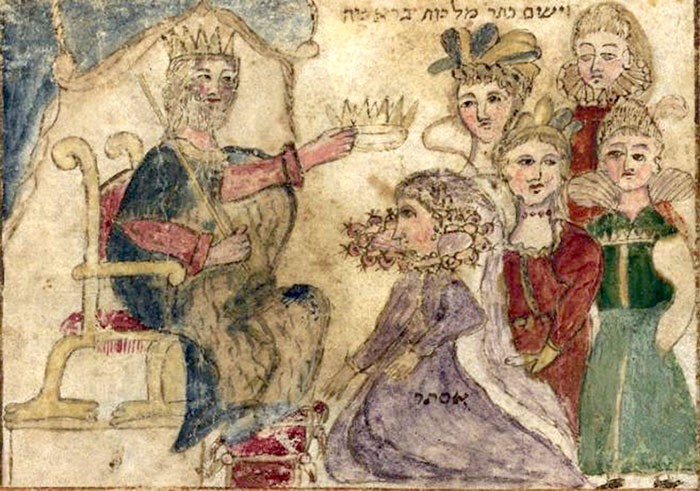
The coronation of Esther from the Moshe ben Avraham Pescarolo Esther Scroll, Ferrara, 1616. Image courtesy of National Library of Israel.
Editor’s note: This event has already taken place.
A rare 17th-century Esther Scroll, created in Ferrara, Italy, is returning to the city as part of a new exhibition at the National Museum of Italian Judaism and the Shoah (MEIS).
The exhibition, “Beautiful Esther: Purim, A Timeless Story,” explores the biblical heroine Queen Esther and the Jewish festival of Purim through Renaissance paintings, historical manuscripts, and contemporary art.
The scroll, crafted in 1616 by Moshe Ben Avraham Pescarol, is on loan from the National Library of Israel (NLI) in Jerusalem. It is considered one of the earliest known illuminated megillot in which the illustrations actively contribute to the storytelling rather than serving merely as decoration.
“The National Library of Israel is delighted to collaborate with MEIS on this exhibition, allowing the Italian public to view this exceptional piece in its place of origin,” said Oren Weinberg, CEO of NLI. “It testifies to the richness of Italian Jewish book heritage and provides a visually stunning account of Esther’s story.”
The exhibition showcases rare artworks including “Esther before Ahasuerus” (c. 1475-1480) by Jacopo del Sellaio and “Vashti Leaves the Royal Palace” (c. 1475) by Filippino Lippi. It also features an interactive section where visitors can engage with contemporary reinterpretations of the Purim story.
Curated by Amedeo Spagnoletto, Olga Melasecchi, and Marina Caffiero, the exhibition runs thru June 15.
Originally published at
The Jewish World
ADVERTISEMENT
[Past event] Rare 17th-century Esther Scroll is returned to Ferrara, Italy for Purim exhibition
A 17th-century Esther Scroll returns to Ferrara, Italy, where it was made, in a MEIS show pairing the heroine with Renaissance and modern art.
The Jewish World
2
mins read time
Originally published at
The Jewish World
The coronation of Esther from the Moshe ben Avraham Pescarolo Esther Scroll, Ferrara, 1616. Image courtesy of National Library of Israel.
Editor’s note: This event has already taken place.
A rare 17th-century Esther Scroll, created in Ferrara, Italy, is returning to the city as part of a new exhibition at the National Museum of Italian Judaism and the Shoah (MEIS).
The exhibition, “Beautiful Esther: Purim, A Timeless Story,” explores the biblical heroine Queen Esther and the Jewish festival of Purim through Renaissance paintings, historical manuscripts, and contemporary art.
The scroll, crafted in 1616 by Moshe Ben Avraham Pescarol, is on loan from the National Library of Israel (NLI) in Jerusalem. It is considered one of the earliest known illuminated megillot in which the illustrations actively contribute to the storytelling rather than serving merely as decoration.
“The National Library of Israel is delighted to collaborate with MEIS on this exhibition, allowing the Italian public to view this exceptional piece in its place of origin,” said Oren Weinberg, CEO of NLI. “It testifies to the richness of Italian Jewish book heritage and provides a visually stunning account of Esther’s story.”
The exhibition showcases rare artworks including “Esther before Ahasuerus” (c. 1475-1480) by Jacopo del Sellaio and “Vashti Leaves the Royal Palace” (c. 1475) by Filippino Lippi. It also features an interactive section where visitors can engage with contemporary reinterpretations of the Purim story.
Curated by Amedeo Spagnoletto, Olga Melasecchi, and Marina Caffiero, the exhibition runs thru June 15.
Originally published at
The Jewish World
ADVERTISEMENT
[Past event] Rare 17th-century Esther Scroll is returned to Ferrara, Italy for Purim exhibition
A 17th-century Esther Scroll returns to Ferrara, Italy, where it was made, in a MEIS show pairing the heroine with Renaissance and modern art.
The Jewish World
2
mins read time
Originally published at
The Jewish World
The coronation of Esther from the Moshe ben Avraham Pescarolo Esther Scroll, Ferrara, 1616. Image courtesy of National Library of Israel.
Editor’s note: This event has already taken place.
A rare 17th-century Esther Scroll, created in Ferrara, Italy, is returning to the city as part of a new exhibition at the National Museum of Italian Judaism and the Shoah (MEIS).
The exhibition, “Beautiful Esther: Purim, A Timeless Story,” explores the biblical heroine Queen Esther and the Jewish festival of Purim through Renaissance paintings, historical manuscripts, and contemporary art.
The scroll, crafted in 1616 by Moshe Ben Avraham Pescarol, is on loan from the National Library of Israel (NLI) in Jerusalem. It is considered one of the earliest known illuminated megillot in which the illustrations actively contribute to the storytelling rather than serving merely as decoration.
“The National Library of Israel is delighted to collaborate with MEIS on this exhibition, allowing the Italian public to view this exceptional piece in its place of origin,” said Oren Weinberg, CEO of NLI. “It testifies to the richness of Italian Jewish book heritage and provides a visually stunning account of Esther’s story.”
The exhibition showcases rare artworks including “Esther before Ahasuerus” (c. 1475-1480) by Jacopo del Sellaio and “Vashti Leaves the Royal Palace” (c. 1475) by Filippino Lippi. It also features an interactive section where visitors can engage with contemporary reinterpretations of the Purim story.
Curated by Amedeo Spagnoletto, Olga Melasecchi, and Marina Caffiero, the exhibition runs thru June 15.
Originally published at
The Jewish World
ADVERTISEMENT
[Past event] Rare 17th-century Esther Scroll is returned to Ferrara, Italy for Purim exhibition
A 17th-century Esther Scroll returns to Ferrara, Italy, where it was made, in a MEIS show pairing the heroine with Renaissance and modern art.
The Jewish World
2
mins read time
Originally published at
The Jewish World
The coronation of Esther from the Moshe ben Avraham Pescarolo Esther Scroll, Ferrara, 1616. Image courtesy of National Library of Israel.
Editor’s note: This event has already taken place.
A rare 17th-century Esther Scroll, created in Ferrara, Italy, is returning to the city as part of a new exhibition at the National Museum of Italian Judaism and the Shoah (MEIS).
The exhibition, “Beautiful Esther: Purim, A Timeless Story,” explores the biblical heroine Queen Esther and the Jewish festival of Purim through Renaissance paintings, historical manuscripts, and contemporary art.
The scroll, crafted in 1616 by Moshe Ben Avraham Pescarol, is on loan from the National Library of Israel (NLI) in Jerusalem. It is considered one of the earliest known illuminated megillot in which the illustrations actively contribute to the storytelling rather than serving merely as decoration.
“The National Library of Israel is delighted to collaborate with MEIS on this exhibition, allowing the Italian public to view this exceptional piece in its place of origin,” said Oren Weinberg, CEO of NLI. “It testifies to the richness of Italian Jewish book heritage and provides a visually stunning account of Esther’s story.”
The exhibition showcases rare artworks including “Esther before Ahasuerus” (c. 1475-1480) by Jacopo del Sellaio and “Vashti Leaves the Royal Palace” (c. 1475) by Filippino Lippi. It also features an interactive section where visitors can engage with contemporary reinterpretations of the Purim story.
Curated by Amedeo Spagnoletto, Olga Melasecchi, and Marina Caffiero, the exhibition runs thru June 15.
Originally published at
The Jewish World
ADVERTISEMENT
Related News

Culture
Arts & Entertainment
A golem and a jinni find love on the Lower East Side
Mindy Holland revisits Helene Wecker’s Golem and the Jinni trilogy as its final book, The Gates of Midnight, arrives.
Mindy Holland
October 8, 2026

Culture
Arts & Entertainment
Yiddish Book Center offers memoir writing course and study of writer Rokhl Feygenberg
A new online course pairs close reading of a Yiddish memoir with hands-on writing exercises over four Tuesday evenings on Zoom.
The Jewish World
October 1, 2026

Culture
Arts & Entertainment
How to oppose the ‘final solution’
Mindy Holland reviews Dara Horn’s provocative new book on antisemitism, curiosity, and why Jewish peoplehood needs defending.
Mindy Holland
September 24, 2026
Culture
Arts & Entertainment
A golem and a jinni find love on the Lower East Side
Mindy Holland revisits Helene Wecker’s Golem and the Jinni trilogy as its final book, The Gates of Midnight, arrives.
Mindy Holland
October 8, 2026
Culture
Arts & Entertainment
Yiddish Book Center offers memoir writing course and study of writer Rokhl Feygenberg
A new online course pairs close reading of a Yiddish memoir with hands-on writing exercises over four Tuesday evenings on Zoom.
The Jewish World
October 1, 2026
Culture
Arts & Entertainment
How to oppose the ‘final solution’
Mindy Holland reviews Dara Horn’s provocative new book on antisemitism, curiosity, and why Jewish peoplehood needs defending.
Mindy Holland
September 24, 2026

Culture
Food & Travel
Trio of observances: 9/11, Shabbat and Rosh Hashanah
Ethel G. Hofman marks a rare trifecta of 9/11, Shabbat and Rosh Hashanah with recipes for a sweet new year, from crown challah to honey cake.
Ethel G. Hofman
September 10, 2026

© 2026 The Jewish World · Since 1965 - The Capital Region's gateway to Jewish life
Designed and Developed by Ta-Da Studios
© 2026 The Jewish World · Since 1965 - The Capital Region's gateway to Jewish life
Designed and Developed by Ta-Da Studios
© 2026 The Jewish World · Since 1965 - The Capital Region's gateway to Jewish life
Designed and Developed by Ta-Da Studios
© 2026 The Jewish World · Since 1965 - The Capital Region's gateway to Jewish life
Designed and Developed by Ta-Da Studios