[Past event] Historian Paul Lear to review “Where the Holocaust Came to America,” at Beth Shalom
The Saratoga Jewish Cultural Festival brings historian Paul Lear to Beth Shalom July 26 to discuss the WWII refugee shelter at Fort Ontario.
The Jewish World
2
mins read time
Originally published at
The Jewish World

Refugee families at Fort Ontario Emergency Refugee Shelter, Oswego, 1944. Photo courtesy of the Safe Haven Museum and Education Center.
Editor’s note: This event has already taken place.
Historian Paul Lear to review “Where the Holocaust Came to America,” at Beth Shalom
SARATOGA SPRINGS–The Saratoga Jewish Cultural Festival (SJCF) will present “Where The Holocaust Came To America,” featuring historian Paul Lear, on Sunday, July 26 at 11 a.m. The program will be held at Beth Shalom Synagogue, 688 Clifton Park Center Rd., Clifton Park.
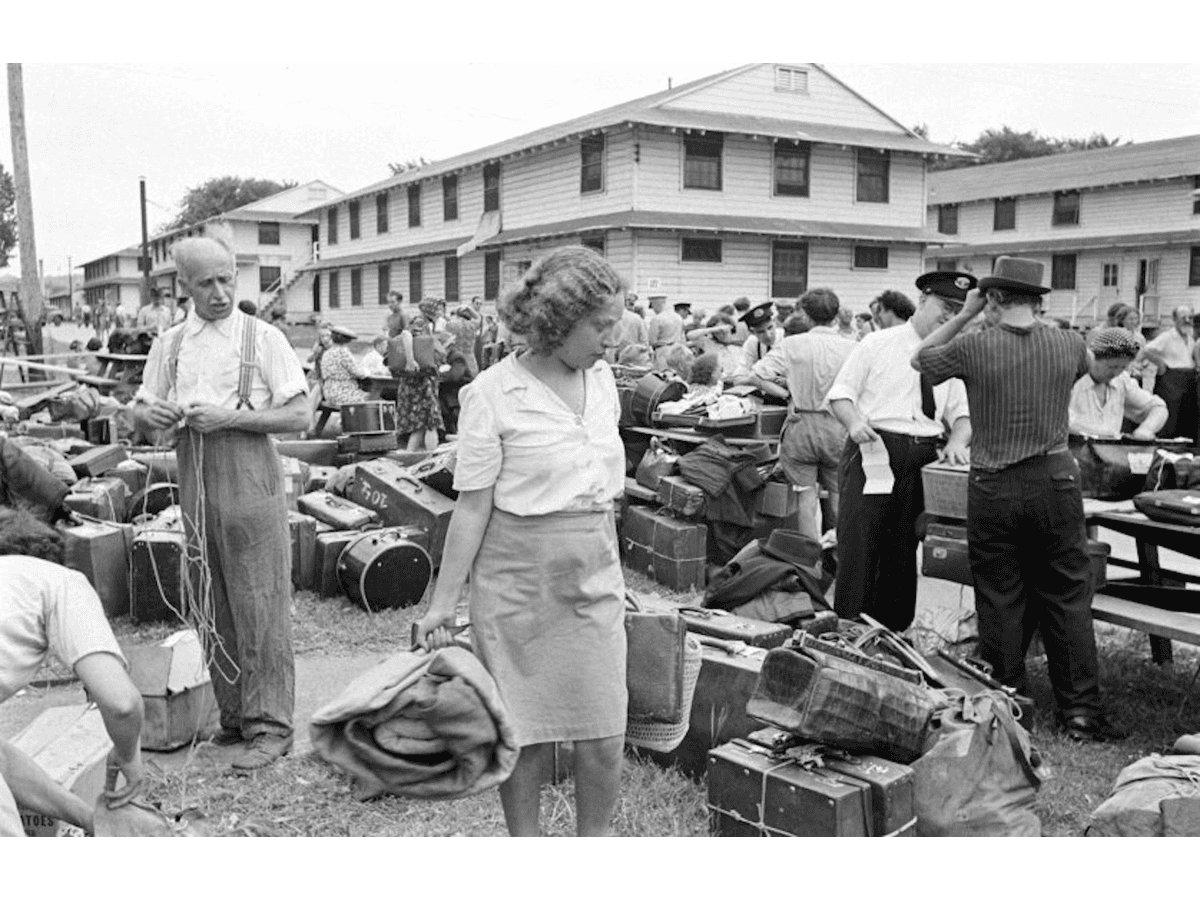
The Fort Ontario Emergency Refugee Shelter in Oswego was one of the “havens” for Jewish refugees designated as a core objective of the War Refugee Board. Most havens or camps were located in allied countries or neutral territories in Europe or around the Mediterranean. Photo courtesy of Historic Fort Ontario.
The Fort Ontario Emergency Refugee Shelter was the only U.S. camp for Holocaust refugees. Lear will describe the camp’s history, President Franklin D. Roosevelt’s role in its creation, and efforts to preserve the site as a National Historical Park.
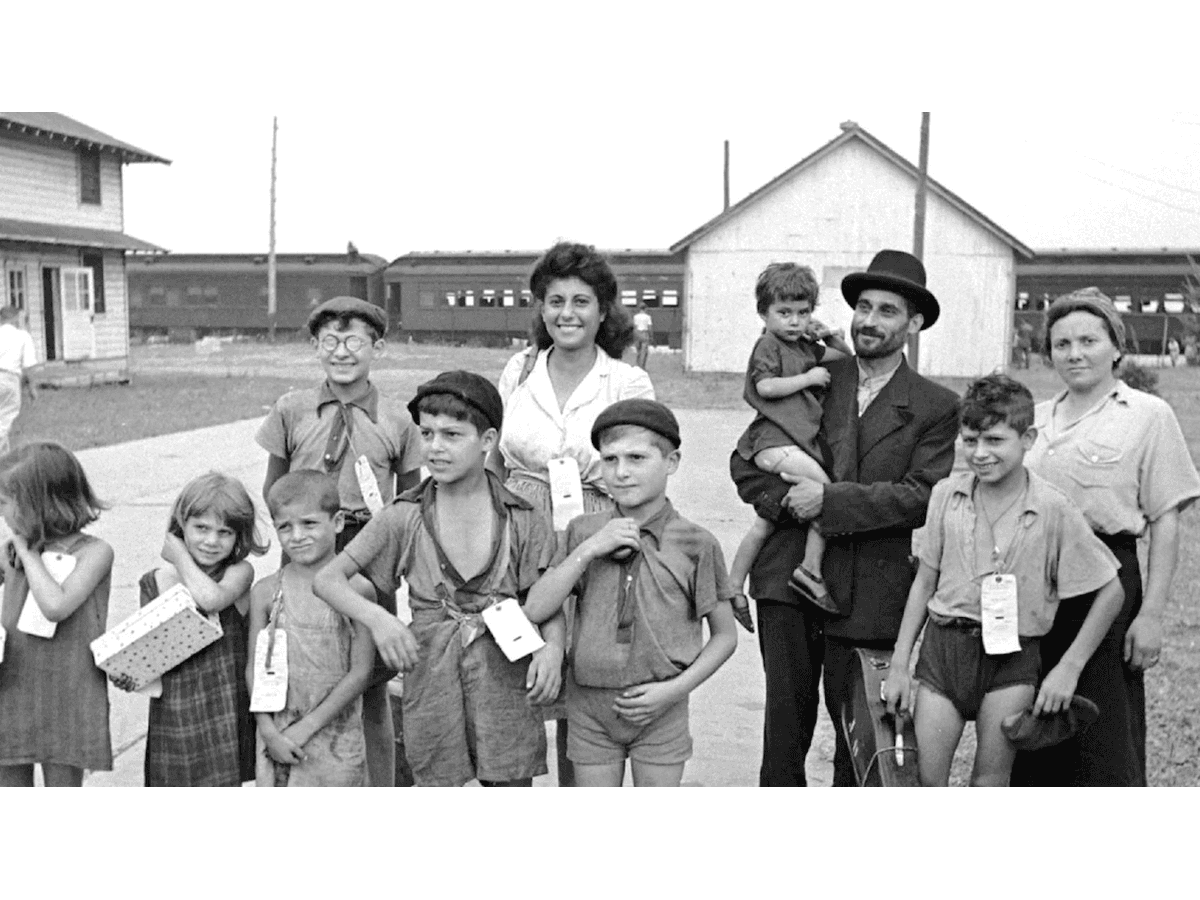
Refugee families at Fort Ontario Emergency Refugee Shelter, Oswego, 1944. Photo courtesy of the Safe Haven Museum and Education Center.
The Safe Haven Museum and Education Center in Oswego, tells the story of the 982 mainly Jewish refugees who fled Europe in the U.S. government’s “Safe Haven” program. They came to the refugee shelter in August 1944.
“Safe Haven” was the only official U.S. government activity to rescue Jewish refugees from the Nazi Holocaust during the war. The refugees were brought from Italy but originated from many parts of Europe.
They were placed in Fort Ontario behind barbed wire and were guarded by armed American soldiers. The U.S. granted them no official status. They were told they would be returned to their homelands after the war and would have no rights regarding re-entry into the United States.
“It was crystal clear to those inside and outside government that the United States had no formal policy for the immigration of the Jewish refugees from Europe. “The local community of Oswego was openly hostile to those in the camp, and integration with the local residents was strictly forbidden and restricted by the military,” says Phyllis Wang, coordinator of SJCF.
However, under political pressure, at the war’s end the refugees were allowed to remain in the United States.
There will be a reception prior to the program. An admission/donation is requested of $10. Pre-registration is required here.
Originally published at
The Jewish World
ADVERTISEMENT
[Past event] Historian Paul Lear to review “Where the Holocaust Came to America,” at Beth Shalom
The Saratoga Jewish Cultural Festival brings historian Paul Lear to Beth Shalom July 26 to discuss the WWII refugee shelter at Fort Ontario.
The Jewish World
2
mins read time
Originally published at
The Jewish World
Refugee families at Fort Ontario Emergency Refugee Shelter, Oswego, 1944. Photo courtesy of the Safe Haven Museum and Education Center.
Editor’s note: This event has already taken place.
Historian Paul Lear to review “Where the Holocaust Came to America,” at Beth Shalom
SARATOGA SPRINGS–The Saratoga Jewish Cultural Festival (SJCF) will present “Where The Holocaust Came To America,” featuring historian Paul Lear, on Sunday, July 26 at 11 a.m. The program will be held at Beth Shalom Synagogue, 688 Clifton Park Center Rd., Clifton Park.
The Fort Ontario Emergency Refugee Shelter in Oswego was one of the “havens” for Jewish refugees designated as a core objective of the War Refugee Board. Most havens or camps were located in allied countries or neutral territories in Europe or around the Mediterranean. Photo courtesy of Historic Fort Ontario.
The Fort Ontario Emergency Refugee Shelter was the only U.S. camp for Holocaust refugees. Lear will describe the camp’s history, President Franklin D. Roosevelt’s role in its creation, and efforts to preserve the site as a National Historical Park.
Refugee families at Fort Ontario Emergency Refugee Shelter, Oswego, 1944. Photo courtesy of the Safe Haven Museum and Education Center.
The Safe Haven Museum and Education Center in Oswego, tells the story of the 982 mainly Jewish refugees who fled Europe in the U.S. government’s “Safe Haven” program. They came to the refugee shelter in August 1944.
“Safe Haven” was the only official U.S. government activity to rescue Jewish refugees from the Nazi Holocaust during the war. The refugees were brought from Italy but originated from many parts of Europe.
They were placed in Fort Ontario behind barbed wire and were guarded by armed American soldiers. The U.S. granted them no official status. They were told they would be returned to their homelands after the war and would have no rights regarding re-entry into the United States.
“It was crystal clear to those inside and outside government that the United States had no formal policy for the immigration of the Jewish refugees from Europe. “The local community of Oswego was openly hostile to those in the camp, and integration with the local residents was strictly forbidden and restricted by the military,” says Phyllis Wang, coordinator of SJCF.
However, under political pressure, at the war’s end the refugees were allowed to remain in the United States.
There will be a reception prior to the program. An admission/donation is requested of $10. Pre-registration is required here.
Originally published at
The Jewish World
ADVERTISEMENT
[Past event] Historian Paul Lear to review “Where the Holocaust Came to America,” at Beth Shalom
The Saratoga Jewish Cultural Festival brings historian Paul Lear to Beth Shalom July 26 to discuss the WWII refugee shelter at Fort Ontario.
The Jewish World
2
mins read time
Originally published at
The Jewish World
Refugee families at Fort Ontario Emergency Refugee Shelter, Oswego, 1944. Photo courtesy of the Safe Haven Museum and Education Center.
Editor’s note: This event has already taken place.
Historian Paul Lear to review “Where the Holocaust Came to America,” at Beth Shalom
SARATOGA SPRINGS–The Saratoga Jewish Cultural Festival (SJCF) will present “Where The Holocaust Came To America,” featuring historian Paul Lear, on Sunday, July 26 at 11 a.m. The program will be held at Beth Shalom Synagogue, 688 Clifton Park Center Rd., Clifton Park.
The Fort Ontario Emergency Refugee Shelter in Oswego was one of the “havens” for Jewish refugees designated as a core objective of the War Refugee Board. Most havens or camps were located in allied countries or neutral territories in Europe or around the Mediterranean. Photo courtesy of Historic Fort Ontario.
The Fort Ontario Emergency Refugee Shelter was the only U.S. camp for Holocaust refugees. Lear will describe the camp’s history, President Franklin D. Roosevelt’s role in its creation, and efforts to preserve the site as a National Historical Park.
Refugee families at Fort Ontario Emergency Refugee Shelter, Oswego, 1944. Photo courtesy of the Safe Haven Museum and Education Center.
The Safe Haven Museum and Education Center in Oswego, tells the story of the 982 mainly Jewish refugees who fled Europe in the U.S. government’s “Safe Haven” program. They came to the refugee shelter in August 1944.
“Safe Haven” was the only official U.S. government activity to rescue Jewish refugees from the Nazi Holocaust during the war. The refugees were brought from Italy but originated from many parts of Europe.
They were placed in Fort Ontario behind barbed wire and were guarded by armed American soldiers. The U.S. granted them no official status. They were told they would be returned to their homelands after the war and would have no rights regarding re-entry into the United States.
“It was crystal clear to those inside and outside government that the United States had no formal policy for the immigration of the Jewish refugees from Europe. “The local community of Oswego was openly hostile to those in the camp, and integration with the local residents was strictly forbidden and restricted by the military,” says Phyllis Wang, coordinator of SJCF.
However, under political pressure, at the war’s end the refugees were allowed to remain in the United States.
There will be a reception prior to the program. An admission/donation is requested of $10. Pre-registration is required here.
Originally published at
The Jewish World
ADVERTISEMENT
[Past event] Historian Paul Lear to review “Where the Holocaust Came to America,” at Beth Shalom
The Saratoga Jewish Cultural Festival brings historian Paul Lear to Beth Shalom July 26 to discuss the WWII refugee shelter at Fort Ontario.
The Jewish World
2
mins read time
Originally published at
The Jewish World
Refugee families at Fort Ontario Emergency Refugee Shelter, Oswego, 1944. Photo courtesy of the Safe Haven Museum and Education Center.
Editor’s note: This event has already taken place.
Historian Paul Lear to review “Where the Holocaust Came to America,” at Beth Shalom
SARATOGA SPRINGS–The Saratoga Jewish Cultural Festival (SJCF) will present “Where The Holocaust Came To America,” featuring historian Paul Lear, on Sunday, July 26 at 11 a.m. The program will be held at Beth Shalom Synagogue, 688 Clifton Park Center Rd., Clifton Park.
The Fort Ontario Emergency Refugee Shelter in Oswego was one of the “havens” for Jewish refugees designated as a core objective of the War Refugee Board. Most havens or camps were located in allied countries or neutral territories in Europe or around the Mediterranean. Photo courtesy of Historic Fort Ontario.
The Fort Ontario Emergency Refugee Shelter was the only U.S. camp for Holocaust refugees. Lear will describe the camp’s history, President Franklin D. Roosevelt’s role in its creation, and efforts to preserve the site as a National Historical Park.
Refugee families at Fort Ontario Emergency Refugee Shelter, Oswego, 1944. Photo courtesy of the Safe Haven Museum and Education Center.
The Safe Haven Museum and Education Center in Oswego, tells the story of the 982 mainly Jewish refugees who fled Europe in the U.S. government’s “Safe Haven” program. They came to the refugee shelter in August 1944.
“Safe Haven” was the only official U.S. government activity to rescue Jewish refugees from the Nazi Holocaust during the war. The refugees were brought from Italy but originated from many parts of Europe.
They were placed in Fort Ontario behind barbed wire and were guarded by armed American soldiers. The U.S. granted them no official status. They were told they would be returned to their homelands after the war and would have no rights regarding re-entry into the United States.
“It was crystal clear to those inside and outside government that the United States had no formal policy for the immigration of the Jewish refugees from Europe. “The local community of Oswego was openly hostile to those in the camp, and integration with the local residents was strictly forbidden and restricted by the military,” says Phyllis Wang, coordinator of SJCF.
However, under political pressure, at the war’s end the refugees were allowed to remain in the United States.
There will be a reception prior to the program. An admission/donation is requested of $10. Pre-registration is required here.
Originally published at
The Jewish World
ADVERTISEMENT
Related News

Local
Arts & Entertainment
Capital Region Curated: October 12-18
Alan Koslow’s weekly guide to Capital Region campus events, with Nobel economist Claudia Goldin, the Sagrada Família architect and more.
Alan Koslow
October 10, 2026

Local
Community News
Bethlehem Chabad hosts over 100 women in mega challah bake
115 women and girls gathered in Delmar for an Israeli-style evening of food, games, new mitzvah pledges and challah braiding.
Dr. Susie Rosenberg
October 8, 2026

Local
Events
‘Ain’t No Back to a Merry-Go-Round’ to be shown Oct. 15 at Albany Institute of History & Art
Director Ilana Trachtman will take questions after a screening of her film on the 1960 Glen Echo carousel protest, with a kosher reception.
The Jewish World
October 7, 2026
Local
Arts & Entertainment
Capital Region Curated: October 12-18
Alan Koslow’s weekly guide to Capital Region campus events, with Nobel economist Claudia Goldin, the Sagrada Família architect and more.
Alan Koslow
October 10, 2026
Local
Community News
Bethlehem Chabad hosts over 100 women in mega challah bake
115 women and girls gathered in Delmar for an Israeli-style evening of food, games, new mitzvah pledges and challah braiding.
Dr. Susie Rosenberg
October 8, 2026
Local
Events
‘Ain’t No Back to a Merry-Go-Round’ to be shown Oct. 15 at Albany Institute of History & Art
Director Ilana Trachtman will take questions after a screening of her film on the 1960 Glen Echo carousel protest, with a kosher reception.
The Jewish World
October 7, 2026

Local
Arts & Entertainment
Capital Region Curated: October 5-11
Alan Koslow’s weekly guide to Capital Region campus events, with American diplomacy at UAlbany, the Flaherty Film Seminar, EMPAC audio and more.
Alan Koslow
October 3, 2026

© 2026 The Jewish World · Since 1965 - The Capital Region's gateway to Jewish life
Designed and Developed by Ta-Da Studios
© 2026 The Jewish World · Since 1965 - The Capital Region's gateway to Jewish life
Designed and Developed by Ta-Da Studios
© 2026 The Jewish World · Since 1965 - The Capital Region's gateway to Jewish life
Designed and Developed by Ta-Da Studios
© 2026 The Jewish World · Since 1965 - The Capital Region's gateway to Jewish life
Designed and Developed by Ta-Da Studios